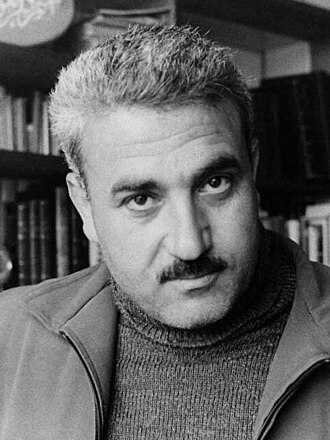
At a Glance
Lydda and the Expulsion: The Making of a Revolutionary
George Habash was born in 1926 in Lydda — the Arabic name for Lod, the ancient city on the coastal plain of Palestine that sits approximately fifteen kilometres southeast of Tel Aviv. Lydda was one of Palestine's most historically significant Arab cities: a place of ancient origin, a centre of Arab commerce and culture, home to the Church of Saint George that gave the Crusaders and Christians their patron saint and that sat at the heart of the city's Greek Orthodox Christian community into which Habash was born. His father was a merchant of the established middle class, and Habash grew up in the comfortable circumstances of a prominent Lydda family with connections and resources sufficient to send him to the American University of Beirut for his medical education.
In July 1948, Israeli military forces under the command of Yigal Allon and Yitzhak Rabin expelled the entire Arab population of Lydda — approximately 50,000 people — in one of the largest single acts of Palestinian displacement of the 1948 war. The population was ordered to leave; some were shot; the survivors walked in the summer heat toward Jordanian-controlled territory, a march that killed an unknown number from heat, thirst, and exhaustion. George Habash was twenty-one years old. He walked out of Lydda with his family and watched his city recede behind him.
His younger sister died during the flight. This loss — the sister who died in the expulsion, the city that was taken, the life that was destroyed in a matter of days — was the biographical experience from which Habash's entire political analysis grew. He was not a theorist who came to Palestinian politics through intellectual engagement with anticolonial literature; he was a man whose family had been expelled, whose sister had died, whose home was gone, and who had drawn the most direct possible conclusions about what had happened and what needed to be done about it. The analysis he subsequently developed — systematic, Marxist, uncompromising — was always grounded in that personal experience.
The American University of Beirut and the Arab Nationalist Movement
Habash completed his medical degree at the American University of Beirut in 1951 — studying in Lebanon while Palestine was under Israeli administration and the refugee crisis was settling into the permanent condition it has remained. At the AUB he encountered the political ferment of Lebanese and Arab student life in the early 1950s and began the organisational work that would define his career. In 1952, he co-founded the Arab Nationalist Movement — the Harakat al-Qawmiyyin al-Arab — as a pan-Arab political organisation committed to the principle that Palestinian liberation required first the achievement of Arab unity: that only a united Arab nation, drawing on the combined resources and political will of the entire Arab world, could reverse the establishment of Israel and restore Palestinian rights.
The ANM's pan-Arab nationalism of the 1950s reflected the dominant political current of the period — the Nasserist idea that Arab strength lay in unity and that the fragmentation of the Arab world into separate states, each susceptible to individual manipulation by Western imperial powers, was the primary obstacle to Arab self-determination. Habash was a committed Nasserist in this period, seeing in Gamal Abdel Nasser's Egypt the most powerful available instrument of Arab unity and in Nasser's confrontation with Western imperial power over the Suez Canal the most promising recent example of what Arab political mobilisation could achieve.
He also practised medicine during this period — working as a paediatrician in the Palestinian refugee camps of Jordan, where the conditions of refugee life were creating the social realities that his political analysis described. The camps provided direct and daily contact with the Palestinian population whose liberation he was organising toward, and the experience of medical work in conditions of extreme poverty and structural powerlessness deepened both his humanitarian commitment and his political conviction that the Palestinian situation demanded radical change rather than incremental accommodation.
1967 and the Birth of the PFLP: From Pan-Arabism to Marxism
The Six Day War of June 1967 — in which Israeli forces destroyed the armies of Egypt, Jordan, and Syria in six days and captured the West Bank, Gaza, the Sinai, and the Golan Heights — was the political catastrophe that destroyed pan-Arab nationalism as a credible ideological framework and forced a fundamental rethinking of Palestinian political strategy. The Arab states that had been expected to reverse the Nakba and restore Palestinian rights had instead suffered the most humiliating military defeat in modern Arab history. The pan-Arab nationalist strategy — wait for Arab unity, let the Arab states do it — had failed as completely as it was possible to fail.
Habash's response was to discard the framework that had failed — pan-Arab nationalism as the primary vehicle — and rebuild Palestinian politics on a different theoretical foundation. In December 1967, he founded the Popular Front for the Liberation of Palestine by merging the Palestinian branch of the ANM with two smaller organisations. The PFLP adopted a Marxist-Leninist ideological framework that analysed the Palestinian situation through the lens of anti-colonial class struggle: Zionism was understood not as an independent political phenomenon but as a settler-colonial project embedded in and supported by Western imperialism, and Palestinian liberation therefore required not merely military resistance to Israel but the broader transformation of the Middle East's political economy through revolutionary struggle against the Arab reactionary regimes that collaborated with Western imperialism as well as against Israel itself.
This analysis — more systematic and more theoretically demanding than the straightforward Palestinian nationalism of Fatah — gave the PFLP a distinctive ideological identity that attracted Palestinian intellectuals, students, and politically conscious workers who found Fatah's political pragmatism insufficiently rigorous. It also aligned the PFLP with the global left of the late 1960s: the PFLP's Marxism connected it to Cuban, Vietnamese, and other Third World liberation movements, to European New Left organisations, and to the broader international solidarity networks that were building in the late 1960s around anticolonial and revolutionary politics.
The Hijackings and Wadi Haddad: International Operations
The PFLP's operational distinctiveness in the late 1960s and early 1970s was the series of airline hijackings that it used to force international attention onto the Palestinian cause and to demonstrate that Palestinian resistance could not be contained within the boundaries of the Middle East. The operations were directed by Wadi Haddad — Habash's co-founder and the PFLP's operations chief — who developed the tactical and logistical frameworks for operations that included the simultaneous hijacking of three Western airlines to Jordan in September 1970 (the Dawson's Field affair), the hijacking of an Air France flight to Entebbe in 1976, and numerous other operations across the period.
Habash's relationship to the hijacking operations was complex — he provided political sanction as Secretary-General while Haddad directed the operational specifics, and there were periods of tension between Habash's political judgments about the strategic utility of particular operations and Haddad's operational autonomy. The Dawson's Field affair — the simultaneous hijacking of three aircraft and their destruction after the evacuation of passengers, which was timed to coincide with the Jordanian political crisis that became Black September — was the most dramatic of the PFLP's early operations and the one that produced the most significant immediate political consequences, triggering the confrontation between the PLO and the Jordanian army that ended the Palestinian guerrilla presence in Jordan.
Habash's own position on the hijacking strategy evolved across the 1970s: he acknowledged their tactical effectiveness in forcing international attention but was also aware of the strategic costs in terms of international condemnation and the political isolation that the PFLP's identification with civilian hostage-taking produced. After Haddad's death in 1978 — under disputed circumstances, possibly poisoned by Israeli intelligence — the PFLP's most ambitious external operations effectively ended, and the organisation focused increasingly on operations in the occupied territories.
Oslo and the Last Decades: The Refusal That Time Vindicated
The Oslo Accords of 1993 — the secret negotiations between the PLO and Israel that produced a framework for Palestinian self-government in parts of the West Bank and Gaza — were the most consequential political development in Palestinian politics since the Nakba, and George Habash opposed them absolutely. His opposition was not emotional or reactive but systematic and theoretically grounded: Oslo, in his analysis, required the PLO to recognise Israel's right to exist without any Israeli recognition of Palestinian rights of return, to accept Palestinian autonomous authority over fragmented territories without sovereignty, and to abandon the Palestinian refugees of 1948 — the majority of the Palestinian people — in exchange for a self-governance arrangement in the occupied territories that fell far short of genuine independence.
He resigned as PFLP Secretary-General in 2000, his health increasingly compromised by the strokes that had been progressively diminishing his physical capacity since the 1980s, but he remained a political figure and public intellectual — writing, giving interviews, and maintaining the analysis that Oslo had been a mistake and that the Palestinian Authority's collaboration with the Oslo framework was producing exactly the outcome he had predicted: not a viable Palestinian state but a permanent occupation dressed in the language of self-governance.
The subsequent collapse of the Oslo process in the Second Intifada, the failure to establish a Palestinian state, and the continuing Israeli settlement expansion that made a viable Palestinian state progressively less geographically feasible all broadly confirmed his analysis — not in the sense that his preferred alternative of total liberation had become more achievable, but in the sense that the accommodation he had warned against had not delivered what its advocates promised. He died in Amman in January 2008, mourned across the Palestinian left as the most intellectually serious voice that Palestinian radical politics had produced.
Legacy: The Doctor Who Would Not Accept Less
George Habash's historical significance is inseparable from the specific content of his political analysis — and that analysis has proven more durable than his critics predicted and more influential than his marginalisation within the Oslo process suggested. His understanding of Zionism as a settler-colonial project embedded in Western imperialism became the foundational framework of Palestinian academic and political thought, absorbed into the scholarly literature on settler colonialism and adopted by solidarity movements globally. His insistence that Palestinian liberation required addressing the rights of the 1948 refugees — not merely improving conditions in the occupied territories — identified the central unresolved question of the conflict that subsequent events have confirmed remains unresolved.
The moral complexity of his legacy — the PFLP's operations that killed civilians, the hijackings that terrorised passengers, the alignment with operations that cannot be morally justified by political purpose — is real and must be part of any honest assessment. Habash himself acknowledged complexity in his later years, though he never renounced the fundamental analysis or the legitimacy of Palestinian armed resistance to occupation. He was not a man who found easy accommodation between his convictions and the moral costs of acting on them, and the willingness to bear those costs — however one assesses the specific choices — was itself a form of moral seriousness that distinguished him from figures who avoided difficulty by avoiding commitment.
He was the Palestinian left's most important voice for half a century — the man who refused to let Palestinian politics settle into the comfortable pragmatism that would have required forgetting what had been lost in Lydda in July 1948. Korea has had its equivalent figures; so has Ireland; so has every people whose dispossession was thorough enough that accepting less than its reversal required a form of self-betrayal that some individuals could not perform. Habash was that kind of figure for Palestine, and Palestine has mourned him accordingly.