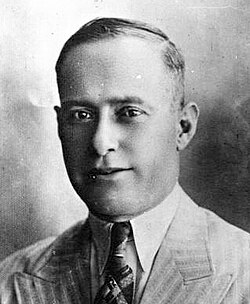
At a Glance
(2) Palestine Arab Revolt (1936–1939): entered Palestine with a volunteer force of several hundred fighters in August 1936; commanded Arab armed bands in northern Palestine; withdrew under British pressure in 1936; returned briefly in 1938
(3) Iraqi revolt (1941): participated in the pro-Axis Rashid Ali al-Gaylani government's brief war against British forces in Iraq
(4) Palestine 1948: commanded the Arab Liberation Army (Jaysh al-Inqadh al-Arabi) — the Arab League's volunteer force — from January to October 1948
Tripoli Origins and the Ottoman Military Formation
Fawzi al-Qawuqji was born in 1890 in Tripoli — the ancient port city on the Mediterranean coast of what is now northern Lebanon, then part of the Ottoman Empire's Syrian provinces. His education followed the path of the Ottoman military system: attendance at the Ottoman Military Academy in Istanbul, commission as an officer, and the professional formation in a military culture that combined the institutional traditions of a major empire with the specific pressures and contradictions of the late Ottoman period, when the empire was visibly weakening and the question of what would replace it was beginning to preoccupy its educated and military classes.
Al-Qawuqji served as an Ottoman officer in the years before and during the First World War, gaining the practical military experience — logistics, command, the management of irregular and regular forces in difficult terrain — that would define his subsequent career. His switch from Ottoman service to the Arab Revolt forces in 1917 followed the pattern of many Arab officers who concluded that the Arab nationalist future required breaking with the Ottoman imperial framework, and it placed him in the tradition of the Sharif Hussein's uprising that would reshape the political map of the Middle East.
The post-war settlement — the division of the Arab world between British and French Mandates in defiance of the promises of Arab independence — produced the series of anti-colonial uprisings that would occupy the remainder of al-Qawuqji's active military life. He was, in a sense, the professional soldier of Arab anti-colonialism: the man who showed up wherever Arab forces were fighting European colonial power and contributed whatever military expertise and personal courage he possessed to the effort. The results were consistently unsuccessful against the superior military resources of the colonial powers, but the effort was genuine and the courage undeniable.
The Great Syrian Revolt: The First Resistance Campaign
The Great Syrian Revolt of 1925–1927 — the uprising against the French Mandate that Sultan al-Atrash launched from the Druze Mountain — was al-Qawuqji's first major engagement as an anti-colonial resistance commander. He participated in the revolt and led his own armed column in operations against French forces in parts of northern Syria, demonstrating the combination of personal military competence and willingness to take the field that would characterise his subsequent career. The revolt was ultimately suppressed by French military force, including the notorious bombardment of Damascus, and al-Qawuqji went into exile as the French consolidated their Mandate authority.
The Syrian revolt was the first of four Arab resistance campaigns in which al-Qawuqji would play a significant military role — a pattern of engagement and defeat, exile and re-emergence, that traced the arc of Arab anti-colonial struggle across the interwar decades. Each campaign exposed him to different terrain, different adversaries, and different political contexts; each added to his practical military knowledge while confirming the structural constraints that limited what any individual military commander could achieve against the resources that European colonial powers could bring to bear.
Palestine 1936: The Volunteer Commander
The Arab Revolt in Palestine of 1936–1939 brought al-Qawuqji into the Palestinian theatre for the first time — not as a Palestinian but as a pan-Arab volunteer, a soldier who came to Palestine because he understood the Arab revolt against British authority and Zionist immigration as part of the same struggle for Arab self-determination that he had been fighting in Syria. In August 1936, he entered Palestine at the head of a volunteer force of several hundred fighters drawn from Syria, Iraq, and Transjordan — the first significant organised volunteer military force to enter Palestine from outside in support of the Palestinian Arab uprising.
He commanded Arab armed bands in northern Palestine — in the Samaria and Galilee hills — conducting guerrilla operations against British military forces and providing military support to the Palestinian uprising during its most intense phase. His presence was politically controversial as well as militarily significant: the Palestinian Arab leadership under the Husaynis regarded outside volunteers with a mixture of gratitude and suspicion, aware that armed outside commanders brought their own agendas and command structures that complicated the already difficult task of maintaining Palestinian military and political coherence.
Under British military pressure, al-Qawuqji withdrew from Palestine in late 1936 — before the revolt's eventual suppression in 1939. He returned briefly in 1938 but did not remain for the revolt's final phase. His Palestine 1936 campaign established him as the most experienced and capable pan-Arab volunteer military commander — a reputation that would bring him back to Palestine in 1948 in a much larger role.
Iraq, Germany, and the Second World War
The most controversial episode of al-Qawuqji's career was his participation in the pro-Axis Rashid Ali al-Gaylani revolt in Iraq in 1941 — a brief attempt by Iraqi nationalist officers, with German encouragement, to break British control of Iraq and align the country with the Axis powers. The revolt was militarily crushed within weeks by British forces; al-Qawuqji escaped and made his way to Germany, where he spent the war years under German patronage.
The German connection has been the most contested element of his legacy — al-Qawuqji's wartime collaboration with Nazi Germany, however instrumentally motivated, raises uncomfortable questions about the relationship between Arab anti-colonialism and fascism in the 1930s and 1940s that his admirers have sometimes minimised and his critics have sometimes exaggerated. The context was the specific Arab strategic calculus of the period: Britain and France were the colonial powers occupying Arab territory, and Germany's enemies were Britain and France. Arab nationalists who saw strategic opportunity in German support for their anti-British objectives were making a calculation that had precedents in the history of anti-colonial resistance movements and that reflected the specific conditions of the 1940s rather than ideological affinity with Nazi ideology.
The calculation was catastrophically wrong in its assessment of Germany's eventual intentions toward the Arab world and in its misreading of which side would win the war. Al-Qawuqji emerged from the war years politically discredited in Western eyes and having spent five years on the losing side of the largest military conflict in history — but he was still the most experienced Arab military commander available when the Arab League needed someone to lead the volunteer force it was assembling for Palestine in 1947.
The Arab Liberation Army: Palestine 1948
The Arab Liberation Army — Jaysh al-Inqadh al-Arabi — was the Arab League's answer to the Palestinian military crisis of late 1947 and early 1948: a volunteer force recruited across the Arab world to enter Palestine before the British Mandate ended and support Palestinian resistance against Haganah operations. Al-Qawuqji was appointed its commander in December 1947 and crossed into Palestine in January 1948 at the head of approximately 3,000 to 5,000 volunteers — a mixed force of Syrian, Iraqi, Yugoslav Muslim, and other Arab fighters with varying levels of military training and equipment.
The ALA operated primarily in northern Palestine — in the Jezreel Valley, the Galilee hills, and the area around Haifa — and its record in the 1948 war was one of intermittent engagement and significant defeat. The most consequential battle was at Mishmar HaEmek in April 1948, where ALA forces attempting to capture a kibbutz in the Jezreel Valley were repulsed by Haganah defenders and then driven back in a Haganah counteroffensive that exposed the ALA's tactical limitations. The battle damaged al-Qawuqji's military reputation and demonstrated that the ALA, despite its experienced commander, lacked the training, coordination, and heavy weapons to overcome organised Haganah defensive and offensive operations.
The structural problems al-Qawuqji faced were formidable and ultimately insuperable. The ALA was politically controlled by the Arab League — which meant that its operations were subject to the competing interests of multiple Arab states whose coordination was more nominal than real. Its weapons and supplies were inadequate for sustained conventional operations. Its volunteers ranged from experienced fighters to untrained enthusiasts, and creating a coherent military force from this mixture in the field was an organisational challenge that even a more supportive political environment could not have fully solved. And the ALA operated in a political landscape where Palestinian political leadership — particularly the Husayni faction — regarded al-Qawuqji with suspicion and friction rather than as a partner whose success served Palestinian interests.
In October 1948, Israeli Operation Hiram swept through the Galilee in a rapid offensive that destroyed the remaining ALA forces in northern Palestine and drove them across the Lebanese border. Al-Qawuqji withdrew with his surviving forces and the ALA was effectively ended as a military force. He was fifty-seven years old and his active military career was over.
The Memoirs and the Historical Record
Al-Qawuqji spent his final decades in Beirut, writing the memoirs that would become an important if imperfect primary source on the Arab military perspective of the 1948 war. Published posthumously, the memoirs reflect the limitations and biases inherent in any self-authored account — al-Qawuqji's account of his own decisions is inevitably selective and self-justifying — but they provide detail on the operational and political environment of the ALA's campaign that is not available from other sources.
The modern historical assessment of al-Qawuqji's 1948 command is mixed and reflects genuine complexity. The structural weaknesses of the ALA — inadequate weapons, political fragmentation, the absence of unified Arab command — were real constraints that no individual commander could have overcome. The specific tactical decisions he made, and the occasions on which he failed to exploit opportunities or overcautiously avoided engagement, are more legitimately criticisable. The historian Laila Parsons's biography, which draws on al-Qawuqji's own papers as well as Israeli, British, and Arab archival sources, provides the most thorough available assessment and concludes that his career embodies both the genuine courage and the structural failure of Arab anti-colonial resistance in the 1936–1948 period.
Legacy: The Soldier Who Outlasted His Causes
Fawzi al-Qawuqji's historical significance lies less in any specific achievement than in what his career as a whole represents: the trajectory of pan-Arab anti-colonial military resistance across the three decades between the Great Syrian Revolt and the 1948 Nakba. He fought in four successive Arab uprisings against European colonial power — Syria, Palestine, Iraq, Palestine again — and was defeated in all of them. The defeats were not primarily the product of individual military failure but of structural conditions: the technological and organisational superiority of the colonial military powers, the political fragmentation of the Arab resistance movements, the absence of the unified command and adequate weapons supply that sustained military operations required.
His career also embodies the pan-Arab dimension of the Palestinian struggle — the reality that the resistance to the loss of Palestine was not simply a Palestinian national movement but a pan-Arab cause that drew fighters and commanders from across the Arab world and that was understood, by those who participated in it, as part of the broader Arab struggle against European colonial domination. Al-Qawuqji was Lebanese, not Palestinian, and he fought in Palestine not because it was his country but because he understood Arab Palestine's defence as the Arab cause's latest and most urgent theatre.
He died in Beirut in 1977 at eighty-six — the Lebanese civil war consuming the city around him as he lived out his final years — having survived every military defeat of his extraordinarily eventful career and outlasted most of the men and causes he had served. The memoirs he left behind ensure that the Arab military perspective on the 1948 war has at least one senior commander's account, however partial and self-serving, available to the historians who must weigh it against the full complexity of the evidence.