At a Glance
Jaffa to Exile: The Nakba and Its Children
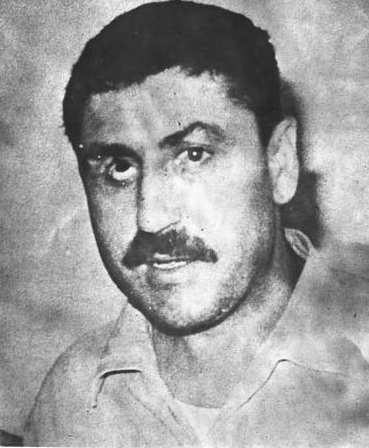
Salah Khalaf was born in 1933 in Jaffa — the great Arab port city on the Mediterranean coast of Palestine, the commercial and cultural capital of Palestinian Arab life that had grown through the late Ottoman and British Mandate periods into a city of cosmopolitan vitality and economic importance. Jaffa in the 1930s was a place of newspapers, trade, cafés, political organisations, and the dense social life of a major Arab Mediterranean city, and Khalaf grew up in its middle-class Muslim milieu with the expectations and possibilities that such an environment provided.
In 1948, when he was fourteen years old, those expectations and possibilities were obliterated. Jaffa fell during the first Arab-Israeli war — its Arab population fled or was expelled in the chaos and violence of late April and early May 1948, driven from the city by military pressure and the mass panic that followed news of the Deir Yassin massacre. The Khalaf family became refugees, joining the hundreds of thousands of Palestinians who fled their homes in 1948 and were never permitted to return — the Nakba, the catastrophe, that defined Palestinian political consciousness for the generations that followed.
The experience of displacement — of being fourteen years old in a city that was home and finding, within days, that the city was gone and you were a refugee in Gaza with nothing — was the foundational political experience of Abu Iyad's life and of the generation of Palestinian leaders who would build the PLO. The Nakba was not an abstraction for them but a lived reality, a before and after that gave their political commitments the quality of personal as well as national grievance. The right of return — the insistence that Palestinian refugees had the right to return to the homes and properties from which they had been expelled — was, for Abu Iyad and his generation, not a negotiating position but a demand rooted in their own biographies.
Cairo, Arafat, and the Founding of Fatah
The Khalaf family eventually made their way to Egypt, where Salah was able to pursue his education at Cairo University. Cairo in the early 1950s was the political and intellectual capital of the Arab world — the city where Gamal Abdel Nasser was building his revolutionary pan-Arab nationalist movement, where the Egyptian Muslim Brotherhood was developing its Islamist political programme, and where Palestinian students exiled by the Nakba were beginning to build the organisational networks that would eventually produce the PLO.
It was in Cairo that Khalaf met Yasser Arafat — a Palestinian student from a wealthy family who had grown up partly in Gaza and partly in Cairo and who was already demonstrating the organisational energy and political ambition that would make him the dominant figure of Palestinian politics for fifty years. Together with other Palestinian students including Khalil al-Wazir — who would become Abu Jihad — they organised the Palestinian Students' Union, building the network of relationships and political commitments that would eventually crystallise into Fatah.
Fatah — the Palestinian National Liberation Movement, its Arabic acronym deliberately reversed to avoid the literal meaning of "death" — was founded in the late 1950s by this Cairo generation of Palestinian activists: Arafat, Khalaf, Wazir, and a small group of others who were convinced that Palestinian liberation could not be achieved through reliance on Arab state action and that Palestinians needed to build their own independent military and political capacity. The organisation's founding ideology insisted on Palestinian independence from Arab state patronage, on armed struggle as the primary means of asserting Palestinian national existence, and on the mobilisation of the Palestinian people themselves — the fedayin, the self-sacrificers — as the movement's primary resource.
Building the PLO's Shadow State: Intelligence and Clandestine Operations
As Fatah grew from a small clandestine organisation into the dominant force within the Palestine Liberation Organisation — a transformation accomplished through the late 1960s, culminating in the Palestinian guerrilla groups' takeover of the PLO after the 1967 war — Abu Iyad's specific role became the construction and management of the Palestinian intelligence and security apparatus. This was the unglamorous but essential work of building the organisational infrastructure that any serious political and military movement required: counterintelligence to protect the organisation's communications and personnel from Israeli intelligence operations, intelligence gathering to monitor both Israeli activities and the behaviour of Arab governments whose relationship to the PLO ranged from hostile to unreliable, and the clandestine operations capacity that could be deployed when the political situation required it.
He became the head of Jihaz al-Razd — Fatah's intelligence service — and built it into a sophisticated organisation with networks across the Palestinian diaspora, the Arab world, and beyond. The work required qualities that were different from but complementary to Arafat's political gifts: analytical intelligence, operational security discipline, the ability to assess human reliability, and the willingness to make hard decisions about the organisation's security that political leaders preferred not to be directly involved in. Abu Iyad possessed these qualities in abundance, and he applied them with a thoroughness that made the PLO's clandestine infrastructure significantly more resilient than it would otherwise have been.
Black September: The Munich Operation and Its Consequences
The expulsion of the PLO from Jordan in September 1970 — the events known as Black September, in which the Jordanian army under King Hussein moved to destroy the Palestinian guerrilla presence that had effectively become a state within a state in Jordan — was the political and military catastrophe that triggered the most controversial chapter of Abu Iyad's career. Thousands of Palestinian fighters were killed in the fighting with the Jordanian army; the PLO's military infrastructure in Jordan was destroyed; and the organisation was forced to relocate to Lebanon, further from the Palestinian territories it was fighting to liberate.
Abu Iyad was the principal architect of Black September — the clandestine operations organisation, officially distinct from Fatah's formal structures, that was established in the aftermath of the Jordanian expulsion to strike at Israeli and Jordanian targets in a campaign designed to demonstrate that the PLO could not be expelled and ignored. The most significant Black September operation was the Munich Olympics attack of September 1972, in which eleven Israeli athletes and officials were killed during the West German government's failed rescue attempt. Abu Iyad later partially acknowledged his role in directing Black September operations, engaging in a complex retrospective analysis that acknowledged the strategic failures of the Munich approach — specifically, that it damaged the PLO's international standing without advancing the Palestinian political cause — while also insisting on the context of the desperation that had produced it.
The Munich operation's legacy is one of the most contested questions in the history of Palestinian resistance — condemned by those who see it as a crime that permanently associated Palestinian resistance with terrorism in international opinion, defended by those who argue that it succeeded in forcing international attention onto the Palestinian cause at a moment when the world was otherwise indifferent. Abu Iyad's own retrospective assessment — that the international strategy of armed operations against civilian targets was counterproductive and needed to be replaced by a political strategy oriented toward negotiation — was itself a significant political evolution that placed him increasingly at odds with the more radical factions of Palestinian politics in the 1980s.
Strategic Evolution: Toward Politics and Away from Violence
The most important dimension of Abu Iyad's political biography, and the one that distinguishes him most sharply from the image of a PLO intelligence chief and Black September organiser, is the trajectory of his political thought across the 1970s and 1980s toward an increasingly clear-eyed assessment of what Palestinian armed struggle had achieved and what it had not. His 1978 memoir Without a Homeland, produced in dialogue with the French journalist Eric Rouleau, was a remarkable document of political self-examination — a senior PLO leader publicly analysing the movement's strategic choices and failures with a frankness that was unusual in Palestinian political discourse and that reflected a genuine intellectual evolution rather than merely tactical repositioning.
He moved progressively toward the position that the PLO needed to accept a two-state solution — an independent Palestinian state in the West Bank and Gaza alongside Israel — as the achievable goal, rather than maintaining the formal maximalist position of a single democratic state across all of historic Palestine. This was not a popular position within the PLO's more radical factions, and it brought him into conflict with figures like George Habash and Wadi Haddad of the PFLP, who rejected compromise with Israel as a matter of principle.
He also became, in his final years, one of the most persistent and publicly outspoken critics of the political violence that radical Palestinian factions — and particularly the Abu Nidal Organisation, which had broken from the PLO and was operating as a mercenary assassination and bombing service for various Arab intelligence agencies — were using against Palestinian moderates and others. He warned repeatedly that these organisations posed a fundamental threat to the PLO and to Palestinian political interests, and he identified specific individuals he believed were connected to Abu Nidal's operations within PLO security structures. This warning proved to be his death sentence.
Assassination: The Night Before the Gulf War
The PLO's decision to align with Saddam Hussein's Iraq during the Gulf crisis of 1990–1991 — driven primarily by Arafat's calculation that Palestinian public opinion strongly supported Iraq and that Iraqi patronage was strategically valuable — was one of the most damaging political decisions in PLO history. Abu Iyad was among the most vocal internal critics of the alignment, arguing that it would cost the PLO its Gulf state funding, damage its international standing, and align Palestinian national interests with a regime that had its own reasons for using Palestinian politics as a geopolitical tool.
On the night of 14 January 1991 — the night before the US-led coalition air campaign against Iraq began — Abu Iyad was shot dead in Tunis along with two other senior PLO officials by Hamzah Abu Zeid, a bodyguard who was connected to the Abu Nidal Organisation. The timing — the eve of the Gulf War's air campaign — and the identity of the assassin pointed toward a carefully planned operation designed to remove the PLO's most intellectually serious voices at a moment of maximum Palestinian political crisis.
The assassination removed from Palestinian political life the man who had most consistently combined operational experience with strategic thinking — who understood both how power worked at the level of intelligence operations and clandestine politics, and what the long-term political consequences of different strategic choices would be. His warnings about infiltration, about the strategic incoherence of violence without political purpose, and about the Gulf alignment's consequences proved accurate in the months and years that followed. He had been killed for being right about exactly the things he had warned about.
Legacy: The Strategist the PLO Could Not Afford to Lose
Abu Iyad occupies a morally complex position in Palestinian history — and he knew it, and engaged with the complexity more honestly than most. His role in Black September and the Munich operation is part of his record and cannot be erased; his later evolution toward political negotiation and his criticism of terrorism as a strategic instrument are equally part of it. The combination — the man who organised Munich and the man who warned against exactly the kind of operations that Munich represented — is the historical reality, and it reflects the actual trajectory of Palestinian political thought across the decades of dispossession and struggle rather than a simple narrative in either direction.
What is beyond dispute is his importance to the PLO as an institution — the organisational intelligence, the clandestine capacity, and the political seriousness that he brought to the movement across four decades. His assassination in 1991, at fifty-seven, removed a figure whose analytical clarity and willingness to speak uncomfortable truths within the Palestinian political leadership was irreplaceable. The PLO that navigated the Oslo process in the years that followed did so without the voice that had most consistently argued for what Oslo was supposed to be — and without the security intelligence that had most thoroughly warned about the forces trying to prevent it.