At a Glance
Salt Origins and the Arab Nationalist Formation
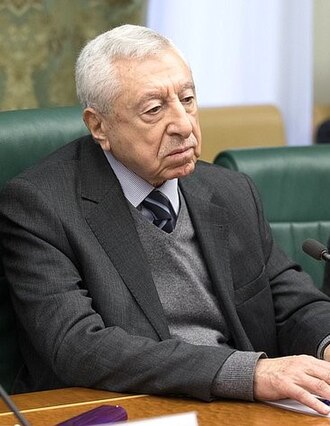
Nayef Hawatmeh was born in 1938 in Salt — the ancient hilltop town in what was then Transjordan, east of the Jordan River, that served as one of the most historically and culturally significant Arab towns of the region. His background was Jordanian-Palestinian, and his political consciousness was shaped by the Nakba's impact on his wider community even though his family were not among the 1948 refugees: the transformation of hundreds of thousands of Palestinians into destitute refugees in Jordan and Lebanon was a lived reality in the social environment of Salt and other Jordanian towns, and it produced the political formation that directed his subsequent career.
He joined the Arab Nationalist Movement in the late 1950s — the same organisation that brought together George Habash, Wadi Haddad, and the generation of Palestinian leftists who would build the PFLP after 1967. Within the ANM, Hawatmeh was part of the current that was developing the most systematic Marxist analysis of the Palestinian and Arab situation — arguing that liberation required not just national independence but social transformation, that the class structures of Arab society were as much an obstacle to liberation as European colonialism, and that a genuine liberation movement needed to be democratically organised and mass-based rather than led by a vanguard elite.
These positions — democratic internal culture, class analysis, mass mobilisation — would define his subsequent differences with Habash and the PFLP and would shape the distinctive character of the DFLP that he built after the 1969 split.
The Split from the PFLP and the Founding of the DFLP
In February 1969 — less than two years after the PFLP's founding — Hawatmeh led a faction out of the organisation in a split that reflected genuine and substantive political differences rather than mere personal rivalry. The PFLP under Habash was, in Hawatmeh's analysis, too hierarchical in its internal organisation, too willing to concentrate decision-making authority in a small leadership circle, and too ready to allow military operations to substitute for the patient political work of building mass organisations and class consciousness among the Palestinian population. The PFLP's airline hijacking programme, which was being developed by Wadi Haddad, exemplified the tendency Hawatmeh opposed: spectacular operations that generated international attention but did not advance the political mobilisation of the Palestinian masses.
The organisation he founded — the Popular Democratic Front for the Liberation of Palestine, later simplified to the Democratic Front for the Liberation of Palestine — was built on the principles his PFLP experience had confirmed were necessary: democratic internal decision-making, systematic political education alongside military training, emphasis on mass mobilisation and labour organising in the Palestinian refugee communities and the occupied territories, and a Marxist analysis that connected Palestinian national liberation to the broader struggle against imperialism and class oppression in the Arab world.
The DFLP attracted Palestinian intellectuals, students, and trade unionists who found Fatah's pragmatic nationalism insufficiently analytical and the PFLP's authoritarianism incompatible with their democratic commitments. It established a presence in the Palestinian refugee communities of Lebanon and Jordan, built connections with Palestinian workers in the occupied territories, and developed the theoretical frameworks for Palestinian democratic socialist politics that made it the most intellectually serious organisation in the Palestinian left.
The Two-State Pioneer: 1973 and the Road Not Taken
The most historically significant political position that Hawatmeh and the DFLP took was their 1973 advocacy of a Palestinian national authority on any liberated Palestinian territory — the first official Palestinian political position that accepted, by implication, the existence of Israel alongside a Palestinian state. This position, adopted twenty years before the Oslo Accords would enshrine it as the basis of Palestinian-Israeli negotiations, was the product of Hawatmeh's strategic analysis: the maximalist position of a single democratic state across all of historic Palestine was not achievable in any foreseeable political horizon, and insisting on it as the only acceptable outcome prevented Palestinian politics from pursuing the objectives that were actually achievable.
The position was immediately controversial within the PLO. Fatah was formally committed to the single democratic state position, however inconsistently applied in practice. The PFLP rejected any accommodation with Israel's existence as a matter of principle. The DFLP's two-state position was attacked from both flanks — as naively moderate by the radical factions and as insufficiently aligned with Palestinian consensus by the Fatah mainstream. Hawatmeh held the position despite the political pressure, continued arguing for it through the 1970s and 1980s, and watched as the broader PLO slowly moved toward the same framework — Arafat's 1988 proclamation of Palestinian independence and implicit acceptance of two states, and then the Oslo Accords of 1993, both representing the eventual adoption by the PLO mainstream of the position the DFLP had pioneered fifteen and twenty years earlier respectively.
The vindication was mixed at best. The Oslo process that adopted the two-state framework did not produce the viable Palestinian state that Hawatmeh had envisioned — it produced a Palestinian Authority with limited autonomy over fragmented territories under continuing Israeli military control and relentless settlement expansion that made a contiguous Palestinian state progressively less geographically feasible. Hawatmeh's critique of Oslo was that it had accepted the two-state principle without the necessary guarantees — on settlements, on borders, on Jerusalem, on refugees — that would make a Palestinian state genuinely sovereign and viable. He was right about this too, and the subsequent history of the Oslo process confirmed it.
The Ma'alot Massacre and the Costs of Operations
The most controversial episode of Hawatmeh's career was the DFLP's Ma'alot operation of May 1974, in which DFLP operatives took hostages at an Israeli school in Ma'alot in northern Israel. The intended political objective was the exchange of Palestinian prisoners held by Israel. When Israeli forces stormed the school, twenty-two Israeli schoolchildren were killed in the crossfire and attempted escape. The operation was condemned internationally as an atrocity — the killing of children in a school was impossible to defend on political grounds regardless of the stated objectives — and it inflicted severe damage on the DFLP's international standing and on the broader Palestinian movement's political credibility.
Hawatmeh's response to the Ma'alot operation over subsequent years was to acknowledge the tragedy of the children's deaths while defending the operation's intended purpose — the release of Palestinian prisoners. He expressed regret about the civilian casualties without abandoning the position that Palestinian armed operations against Israel were legitimate. This position — distinguishing between the intended objective and the tragic outcome — satisfied few critics and reflected the genuine moral complexity of a movement conducting armed operations under conditions that made civilian casualties nearly impossible to prevent.
The Ma'alot operation's legacy has shadowed the DFLP's otherwise intellectually serious political tradition, and it represents the point at which the moral complexity of Palestinian armed resistance — the gap between political intention and operational consequence — is most starkly exposed. Hawatmeh has never fully resolved this tension, and neither has the Palestinian national movement more broadly.
Legacy: The Democratic Voice That Palestinian Politics Needed and Marginalised
Nayef Hawatmeh's career is the story of a political figure who was consistently more strategically prescient than his contemporaries acknowledged and consistently less politically influential than his prescience deserved. He was right about the two-state framework in 1973. He was right about the need for democratic internal organisation in Palestinian political movements. He was right that military operations divorced from political strategy would ultimately damage the Palestinian cause. He was right that Oslo needed stronger guarantees to produce a viable state. Each of these positions was either ahead of its time or ahead of the political consensus that eventually, too slowly and too incompletely, moved toward it.
The DFLP he built has remained small — consistently outweighed by Fatah's organisational resources and occasionally outflanked by Hamas's mass appeal — but intellectually significant, maintaining the democratic socialist tradition in Palestinian politics that larger and more powerful organisations have periodically abandoned for pragmatism or ideology. In a Palestinian political landscape often polarised between Fatah's nationalist pragmatism and Hamas's Islamist resistance, the DFLP's consistent advocacy of democratic socialist politics with serious engagement with strategic questions represents something worth preserving.
He is still alive, still leading the DFLP from Amman, still arguing for the Palestinian democratic politics he has been arguing for since 1969. The Palestinian state he spent his life working toward has not materialised. The democratic internal culture he built into the DFLP has not been adopted by the Palestinian Authority. The two-state framework he pioneered has been formally accepted but not implemented. The career he has led is the career of a man who was right about the important things and did not live to see them achieved — a common enough fate for principled political figures, and no less honourable for its frequency.