At a Glance
The Druze Mountain and the Al-Atrash Dynasty
The Jabal al-Druze — the Druze Mountain, now officially named Jabal al-Arab — is a volcanic basalt plateau rising from the Syrian steppe south of Damascus, a harsh and formidable landscape of black rock, scattered villages, and a tradition of fierce autonomy that had resisted the Ottoman Empire's periodic attempts at centralisation throughout the nineteenth century. The Druze community that inhabited it — followers of a distinct Islamic offshoot faith that had developed in eleventh-century Egypt and migrated to the mountains of the Levant — had maintained their communal independence through a combination of geographic remoteness, military capacity, and the shrewd political navigation of their leading families.
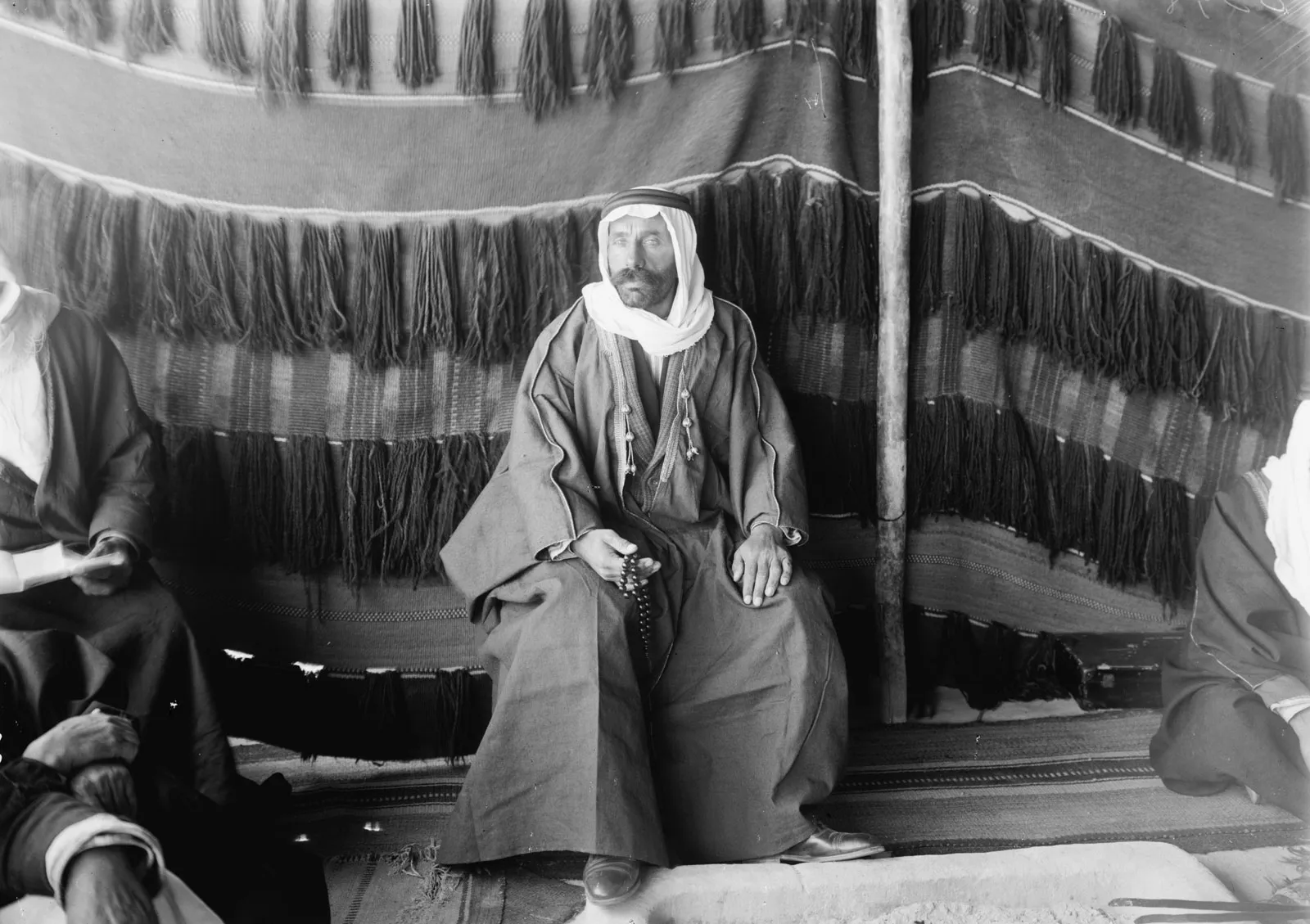
The al-Atrash family had been the paramount leadership of the Jabal al-Druze since at least the mid-nineteenth century — the clan whose authority was recognised across the mountain's villages and whose decisions on matters of peace, war, and external relations carried the weight of communal consensus. Sultan al-Atrash was born into this leadership in 1891, the son of Shibli al-Atrash, who was himself a significant figure in the mountain's political life. The family tradition was one of armed resistance to external authority: Sultan's grandfather had fought the Ottomans; his father would die at Ottoman hands. The example was set before Sultan was old enough to consciously absorb it, and it shaped his entire political formation.
Shibli al-Atrash was hanged by the Ottoman authorities in 1910 — executed for leading Druze resistance to Ottoman attempts to impose conscription and direct administrative control on the Jabal al-Druze. Sultan was nineteen when his father was killed. The experience was formative in the most direct possible sense: it established, in concrete and personal terms, what external authority meant and what resistance to it cost. It also established the framework within which Sultan would understand his subsequent confrontations with imperial power — not as abstract political choices but as the continuation of a family and communal tradition of refusing subordination that went back generations.
The French Mandate and the Logic of Revolt
The French Mandate that was imposed on Syria after 1920 — following the defeat of Faysal's Arab kingdom at Maysalun and the expulsion of the Arab government from Damascus — adopted a deliberate policy toward the Druze Mountain that combined administrative separation with provocative interference. The French policy of dividing Greater Syria into separate administrative units gave the Jabal al-Druze its own administration — notionally to protect Druze communal autonomy, actually to prevent it from integrating into a unified Syrian national politics that might challenge French authority across the whole territory. The Druze Mountain was governed by a French officer who held effective power while a Druze advisory council provided a veneer of local participation.
The policy generated constant friction. The Druze Mountain was not a passive community content to manage its internal affairs under French supervision: it was a community with a strong tradition of armed autonomy, a leadership class accustomed to real rather than nominal authority, and a population that resented both the French presence and the tax and conscription obligations that came with it. Sultan al-Atrash represented the most intransigent wing of the Druze leadership — those who refused any accommodation with French authority as a matter of principle and who maintained, throughout the early Mandate years, the posture of potential armed resistance that the French found threatening and periodically attempted to suppress.
The immediate trigger for the 1925 revolt was the French administrator Captain Gabriel Carbillet — a particularly aggressive French officer who had been appointed governor of the Jabal al-Druze and who pursued a programme of forced labour, administrative reorganisation, and social engineering that the Druze leadership found intolerable. Druze notables who went to Damascus to complain were arrested. Sultan al-Atrash, who had refused to attend the meeting where the arrests were made, concluded that negotiation had been exhausted and that armed resistance was the only remaining option.
The Revolt Begins: From the Mountain to the Nation
Sultan al-Atrash launched the Great Syrian Revolt in July 1925 with an attack on a French column at al-Kafr that destroyed a company of French-led Senegalese troops — one of the most striking early military victories of any anti-colonial revolt in the interwar period. The attack was a demonstration that Druze mountain fighters, using the terrain they knew intimately against troops unfamiliar with the landscape, could defeat a conventionally superior enemy force. More attacks followed in rapid succession, and within weeks the French had lost effective control of much of the Jabal al-Druze.
What transformed a local Druze uprising into the Great Syrian Revolt was Sultan al-Atrash's deliberate decision to frame the revolt in pan-Syrian, pan-Arab nationalist terms rather than as a defence of Druze communal interests. His proclamation of revolt — addressed not to the Druze community alone but to Syrians of all communities — explicitly invoked Syrian national identity, the principles of the Arab Revolt, and the aspiration for independence that united Syrian Arabs, Druze, Christians, and others in opposition to French colonial rule. This framing was a strategic choice of the first importance: it invited the participation of the Arab nationalist movement in Damascus and other cities, transforming a communal uprising into a national one, and it directly countered the French policy of communal division by asserting a Syrian identity that transcended sectarian boundaries.
The response was significant. In the autumn of 1925, the revolt spread to the Ghouta — the agricultural oasis surrounding Damascus — and to the city itself, where Arab nationalist fighters linked to the Syrian National Bloc and other organisations joined the uprising. The ancient Midan quarter of Damascus — a working-class neighbourhood with strong nationalist sympathies — became a centre of urban resistance. French forces, unable to suppress the uprising through conventional military operations in the countryside, made the fateful decision to bombard Damascus in October 1925 and again in May 1926 — artillery and aircraft attacks on civilian residential areas that killed hundreds and destroyed entire city blocks.
The Bombardment of Damascus: An Empire's Self-Exposure
The French decision to bombard Damascus was the revolt's most consequential event — not militarily, where it helped the French regain control of the city, but politically and internationally, where it transformed the revolt's significance. The images and reports of artillery and aerial bombardment of one of the oldest continuously inhabited cities in the world — a city of mosques, souqs, and residential neighbourhoods that had nothing military about them — shocked international opinion across the world. French politicians who opposed the colonial lobby in Paris were given powerful ammunition. The League of Nations, under whose authority France administered the Syrian Mandate, was forced to address questions about whether the Mandate power's conduct was consistent with its obligations. The Arab and Muslim world was outraged. In Syria itself, the bombardment that was intended to break the revolt's popular support had the opposite effect: it demonstrated, in the most vivid possible terms, what French rule meant and what resistance to it was for.
Sultan al-Atrash had not ordered the bombardment. He had provoked the revolt that the French suppressed by bombarding civilians. The moral accounting was clear to contemporaries and has remained clear to historians: the French had committed acts of collective punishment against a civilian population, and the responsibility for that punishment lay with those who ordered it, not with the resistance fighters who had given them the pretext they chose to exploit in this fashion. The bombardment became the defining atrocity of the French Mandate in Syrian memory, and it attached permanently to Sultan al-Atrash's legacy the quality of a man whose resistance had exposed the true character of colonial power.
Exile, Return, and the Long Arc of Independence
By 1927, superior French military resources — reinforcements drawn from across the French colonial empire, aircraft, armoured vehicles, and the systematic destruction of the economic infrastructure that sustained the revolt's rural base — had suppressed the military operations of the Great Syrian Revolt. Sultan al-Atrash refused to surrender or accept a negotiated submission that would acknowledge French authority. He crossed into Transjordan with his remaining fighters and then moved to the Najd region of the Arabian Peninsula — exile rather than defeat, maintaining the position that he had not accepted the legitimacy of French rule and would not do so.
He spent a decade in exile before negotiations — mediated by various Arab intermediaries and reflecting the French recognition that permanent exile of the revolt's leader was diplomatically costly — produced the conditions for his return to Syria in the late 1930s. He returned to the Jabal al-Druze and resumed his position as the mountain's paramount political figure, now operating within the framework of the Mandate's political structures while maintaining his fundamental opposition to French sovereignty over Syria.
The years of the Second World War brought the Free French administration, their promises of Syrian independence, and the eventual British and American pressure that forced France to withdraw its forces and recognise Syrian independence in 1946. Sultan al-Atrash had spent twenty-one years — from the launch of the revolt in 1925 to the independence he had fought for in 1946 — working toward this outcome. The proclamation of Syrian independence was the vindication of his revolt, however long delayed and however imperfect the independence that emerged from the Mandate's end.
Legacy: The Revolt That Shaped a Nation
Sultan al-Atrash lived for another thirty-six years after Syrian independence — long enough to see the country pass through military coups, union with Egypt and its dissolution, the catastrophe of the 1967 war, and the consolidation of Hafez al-Assad's authoritarian order. He remained throughout this period a figure of enormous moral authority — the last living link to the revolt that had established Syrian national resistance as a political tradition, and a man whose personal integrity and independence from factional politics gave him a standing that successive governments found it advisable to honour rather than challenge.
The Great Syrian Revolt's historical significance operates at multiple levels. Militarily, it demonstrated that an anti-colonial uprising beginning from a marginal geographic and demographic base could spread across a diverse national territory if its leadership was capable of articulating a genuinely inclusive national programme — which Sultan al-Atrash's proclamation had done by grounding the Druze uprising in pan-Syrian national identity. Politically, it established the tradition of armed resistance to the French Mandate as the foundational act of Syrian national consciousness, and it gave the National Bloc politicians who subsequently negotiated independence the moral capital of a population that had demonstrated its willingness to fight. Internationally, the bombardment of Damascus created a political liability for French Mandate policy that constrained French options for the remainder of the Mandate period and contributed to the eventually successful pressure for independence.
Sultan al-Atrash himself embodies a model of resistance leadership that is rare in anti-colonial history: the commander who launched an uprising without a realistic prospect of military victory, who sustained it for two years through personal authority and military skill, who accepted exile rather than surrender, and who lived long enough to see the independence he had fought for — surviving not only the revolt's immediate suppression but the entire subsequent history of the Mandate and the early decades of Syrian independence. The ninety-one years of his life were, in their arc, a vindication: the man who refused to accept French sovereignty over Syria in 1925 died in an independent Syria in 1982, having outlasted the empire that had tried to suppress him.