At a Glance
Charles County, Family Loss, and the Architecture of Bondage
Josiah Henson's memoir opens with a series of family losses that established, with brutal efficiency, the central truth of enslaved life: that the relationships of love and kinship that gave human existence its meaning were precisely the relationships that slavery was designed to destroy. His father's mutilation and sale south, his mother's sale at public auction with her children standing around her, his own purchase by a stranger who took him away from what remained of his family — these events, occurring before Henson was ten years old, were his first lessons in what it meant to be property rather than person, and they were lessons that no subsequent experience could entirely overwrite.
The specific violence of his father's punishment — the ear cut off, the hundred lashes administered for the crime of striking a white man who had sexually assaulted his wife — was paradigmatic in its structure: the enslaved man who struck back against a violation of his family was punished not for the act of resistance but for the presumption of resistance, for the assertion that an enslaved person's family had any standing that a white man was obligated to respect. The punishment was designed to teach not just the individual but the entire community of enslaved people on the plantation that such assertions were fatal — that the slave system's logic was absolute and that resistance to it, however morally justified, would be met with a response calibrated to prevent future resistance rather than to achieve justice.
Henson spent his enslaved years on the Riley plantation in Maryland and then, after a series of transfers that reflected the fluid economics of slavery, in Kentucky, where his enslaver Isaac Riley's financial difficulties eventually led to the threat of sale that prompted Henson's escape. He had served Riley with a fidelity that he later reflected on with a complicated mixture of pride and regret — he had been, by his own account, a trusted and capable manager of Riley's plantation affairs, supervising other enslaved people and managing agricultural operations with a competence that Riley had come to depend on. The fidelity he showed Riley was genuine within its limits, but it was also the product of a system that offered no alternatives, and the moment when Riley's financial desperation threatened to sell him south — to sever the last connections of family and community that his enslaved life had built — was the moment when the limits of that fidelity were reached.
The Long Road to Freedom: Ohio, Lake Erie, and Upper Canada
The escape that Henson organised in September 1830 was a family escape — not merely his own liberation but the liberation of his wife Charlotte and their four children, the youngest of whom was an infant. The logistical challenge of moving a family of six through hostile territory from Kentucky to Canada, without maps, without guaranteed safe houses, and without the resources that more well-connected escapees sometimes had access to, was formidable, and Henson's account of the journey in his memoir is one of the most detailed and most moving descriptions of an Underground Railroad escape available in the literature.
They crossed the Ohio River with the assistance of a boatman who agreed to take them across, then moved northward through Ohio on foot and by whatever transport they could find, relying on the Underground Railroad network whose conductors provided them with shelter, food, and directions at various points along the route. The journey to Lake Erie took weeks; the crossing of the lake, in a small boat in the early autumn when the lake could be treacherous, was itself a significant undertaking. When they reached the Canadian shore of Lake Erie and Henson set foot on British soil for the first time, he recorded in his memoir the overwhelming physical and emotional experience of standing in a country where his family was legally free — where no fugitive slave law applied, where no slave catcher had legal authority, and where the children he had carried across the lake were not property but persons.
He was forty-one years old. He had spent four decades in slavery, and in those forty years he had learned everything that survival in that system required: how to manage people, how to run an agricultural operation, how to negotiate the social complexities of the plantation world, how to maintain the dignity and the sense of self that the system was designed to destroy. These skills, developed in the service of his enslavers, were the skills he would spend the next fifty years deploying in the service of his own community.
The Dawn Settlement: Building Freedom's Infrastructure
The Dawn Settlement that Henson co-founded in Dresden, Ontario in the late 1830s and early 1840s was one of the most ambitious experiments in Black community-building in nineteenth-century North America. It was built on land purchased collectively by its founders and governed by principles of self-determination and collective ownership that distinguished it from the charity-dependent model of many other refugee settlements. At its centre was the British-American Institute, a school that provided academic education and vocational training to the escaped slaves and their children who made up the settlement's population.
The school's curriculum was intentionally comprehensive: academic subjects — reading, writing, arithmetic, history — alongside vocational training in carpentry, blacksmithing, agriculture, and other practical trades. The combination was designed to produce what Henson and his co-founders understood that freedom required: not merely literacy but economic self-sufficiency, not merely the absence of slavery but the positive capacity for independent and dignified life that the slave system had systematically denied. The sawmill and the grist mill that the settlement built were expressions of the same vision — the creation of economic infrastructure that would make the community self-sustaining rather than dependent on external charity or on the volatile goodwill of the surrounding white Canadian community.
At its peak, the Dawn Settlement had several hundred residents and was one of the most successful Black communities in Canada West. It was never without its difficulties — funding was chronically inadequate, management disputes divided the community, and the surrounding white community's hostility to a prosperous and self-governing Black settlement created constant friction. But as a demonstration of what escaped slaves could build when given land, education, and the freedom to govern their own affairs, it was one of the most powerful refutations available of the slave system's claim that Black people were incapable of self-direction.
The Memoir and Harriet Beecher Stowe: A Complex Literary Inheritance
Henson published his first memoir — The Life of Josiah Henson, Formerly a Slave, Now an Inhabitant of Canada — in 1849, and it was this text that Harriet Beecher Stowe read in the period when she was developing the material that would become Uncle Tom's Cabin. She later acknowledged Henson as one of the inspirations for the character of Uncle Tom, and she visited the Dawn Settlement and met Henson personally during the composition of the novel. The connection between Henson's biography and Stowe's fiction became, after the novel's publication, one of the most debated questions in the literary and historical literature surrounding both.
The relationship between the real man and the fictional character was from the beginning complicated, because Stowe's Uncle Tom bore only partial resemblance to the man whose life had partially inspired him. The Uncle Tom of the novel was a figure of Christian submission and suffering — a man whose response to the violence and injustice of slavery was patient endurance and spiritual transcendence, whose most celebrated quality was his willingness to forgive his oppressors and to accept martyrdom rather than compromise his Christian principles. This was not Josiah Henson. Henson was a man of practical intelligence, organisational capacity, and determined community-building whose response to slavery had been to escape it, to build an alternative to it, and to spend decades bearing witness against it. He was not submissive; he was resourceful. He was not passive; he was energetic. He was not the Uncle Tom that Stowe's readers knew; he was something considerably more interesting and considerably more challenging.
The later use of "Uncle Tom" as a term of contempt for Black people who accommodated themselves to white supremacy — a usage that emerged from the novel's characterisation of Tom as a man who died rather than betray other enslaved people but who did so through Christian submission rather than active resistance — has made Henson's relationship to Stowe's character even more complex and more uncomfortable than it was in 1852. He spent years after the novel's publication insisting on the connection between himself and Tom, partly because the connection gave him fame and fundraising capacity, and partly because he understood the character more generously than subsequent generations have. But the gap between the man and the character is real, and it matters: Josiah Henson was not Uncle Tom, and the history of what he actually did deserves to be understood on its own terms rather than through the distorting lens of Stowe's fiction.
Decades of Fundraising, Lecturing, and Bearing Witness
The years between his escape in 1830 and his death in 1883 were years of relentless travel and advocacy. Henson crossed the Atlantic multiple times on fundraising missions for the Dawn Settlement and for the broader cause of Black education and self-sufficiency in Canada. He lectured in Britain, where the antislavery movement had enormous popular support and where the specific story of escaped American slaves who had built self-governing communities in Canada — demonstrating simultaneously the failure of American democracy and the capacity of Black people for freedom — was received with enthusiasm and with donations.
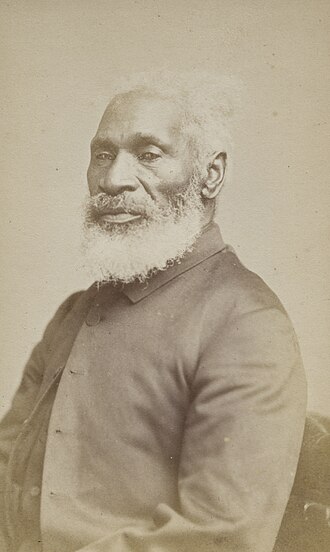
His British audiences were responding not only to the abstract cause of antislavery but to the specific, embodied testimony of a man who had been enslaved and who had built something remarkable from his freedom. The physical reality of his disabled arms — permanently crippled by the beating he had received as an enslaved man — was a visible reminder of what slavery had done to his body, and his presence on a British platform as a man of evident intelligence, dignity, and achievement was a visible refutation of the racial ideology that had justified that violence. He was, in the most literal sense, his own best argument.
His multiple memoirs — the 1849 original, expanded versions published in 1858 and 1881 — traced the evolution of his understanding of his own story and its significance over the course of his long life. The 1881 version, published when he was ninety-one years old, was the fullest and most reflective of the accounts, drawing on five decades of public life and bearing witness to place his escape and his community-building in the broader context of the Black freedom struggle that had been the defining project of his era.
Queen Victoria, Windsor Castle, and the Distance Travelled
The meeting between Josiah Henson and Queen Victoria at Windsor Castle in 1877 — when Henson was eighty-seven years old and the Queen was fifty-seven — became one of the most frequently retold episodes of his later life, celebrated in both the British and American press as a symbol of the distance that a man born in slavery in Maryland could travel in the course of a long and determined existence. Victoria, who was deeply committed to the antislavery cause and whose reign had seen the abolition of slavery throughout the British Empire in 1834, received Henson with what contemporary accounts describe as genuine warmth and expressed admiration for his story and his work.
The symbolic weight of the meeting was not lost on either participant. Henson was a man who had been born as property — legally less than a person, owned by another human being, subject to sale at any moment — and who was now being received by the most powerful monarch in the world as a guest worthy of her personal attention. Victoria was a queen whose empire had abolished slavery forty-three years earlier and who met in Henson a living representative of the institution's human cost and of the extraordinary capacity for achievement that freedom made possible when extended to those it had been denied.
The meeting was also a fundraising occasion — Henson was in Britain partly to raise money for the Dawn Settlement, and the Queen's reception gave him a platform and a credential that he used to considerable effect in subsequent British engagements. He had been exploiting his fame and his story in service of the settlement for decades; the Windsor Castle meeting was the most prestigious platform he had ever occupied, and he used it with the practical intelligence that had characterised his entire career.
Legacy: The Man Behind the Myth and the Community He Built
Josiah Henson died on 5 May 1883, in Dresden, Ontario — the town where he had built his community and where he had spent the latter decades of a life that had begun eighty-nine years earlier on a Maryland slave plantation. He was, by the time of his death, the most famous escaped slave in the world — more famous, in popular cultural terms, than Frederick Douglass, because of his connection to Uncle Tom's Cabin and because of the decades of British and American publicity that connection had generated. His fame was a complicated inheritance, entangled with a fictional character who did not fully represent him and with a cultural narrative about Black suffering and Christian submission that obscured the practical, entrepreneurial, community-building dimensions of his actual career.
The Dawn Settlement that he founded outlasted him and eventually became the site of the Uncle Tom's Cabin Historic Site in Dresden, Ontario, which preserves his house and commemorates both his life and the broader history of Black settlement in Canada that the Dawn Settlement represented. It is one of the most significant monuments to the Underground Railroad's Canadian dimension — a reminder that the freedom the Underground Railroad delivered was not merely freedom from slavery but freedom to build, to govern, and to live the full human life that slavery had denied.
His story challenges the comfortable narratives that the abolitionist movement sometimes told about itself and about the people it was trying to help. He was not rescued by white abolitionists; he rescued himself and his family. He was not sustained by white philanthropy; he built an institution and a community that generated its own resources and governed its own affairs. He was not the passive recipient of freedom; he was its active architect. These facts do not diminish the movement or the people in it who helped; they add to the record a dimension that the movement's self-mythology sometimes obscured: the Black agency, the Black intelligence, and the Black capacity for institution-building that were always the most fundamental resources in the struggle for freedom.