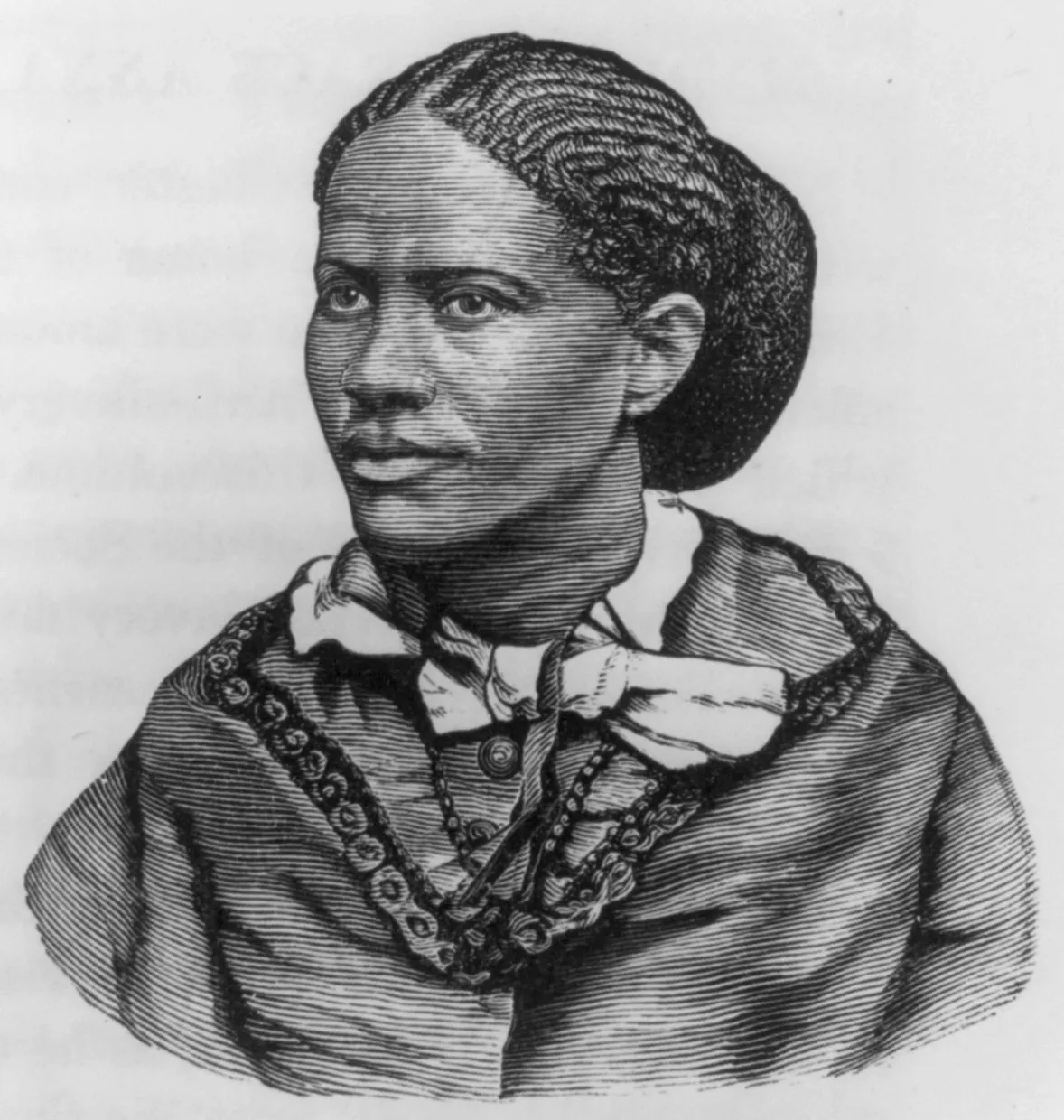
At a Glance
Baltimore, William Watkins, and the Education That Produced a Poet
The Baltimore in which Frances Watkins grew up was a city of extraordinary contradictions — one of the largest free Black communities in antebellum America, coexisting uncomfortably with the slave markets and the slave economy that were also fundamental to the city's commercial life. Baltimore's free Black community had built, over generations, a network of churches, schools, mutual aid societies, and cultural institutions that gave its members a degree of stability and civic life that was unusual for Black Americans of the era. It was also a community that lived always with the knowledge of its fragility — that free Black people in a slave state were never entirely safe, that the line between freedom and enslavement could be crossed by the operation of a fraudulent claim or a corrupt court, and that the institution whose destruction the community desired was also the institution whose proximity defined every aspect of their daily lives.
William Watkins's school was one of the most important educational institutions in Baltimore's free Black community — a school that provided its students with the classical education, the biblical grounding, and the moral formation that Watkins believed were the foundations of both personal excellence and political effectiveness. He was himself a man of considerable intellectual gifts and deep political commitments, and the education he provided his niece was shaped by both. Frances's immersion in English literature, in the King James Bible, in the antislavery arguments that circulated through her uncle's household, and in the discussions of politics and morality that were part of the daily life of his school gave her the intellectual resources she would draw on throughout her career.
She left Baltimore in 1850, moving to Ohio and then to Pennsylvania, partly because Maryland had passed a law in 1853 that made it illegal for free Black people who had left the state to return — a law that effectively barred her from her hometown for the rest of her life, a personal manifestation of the slave system's expanding reach that confirmed in her the conviction that slavery's threat was not merely to the enslaved but to the entire fabric of Black life in America, free and enslaved alike. The loss of Baltimore, the city where she had grown up and where her uncle's school had been her home, was a grief that sharpened her political commitments in ways that purely theoretical opposition to slavery could not have produced.
The Poems: Accessibility, Power, and the Art of Political Verse
Frances Watkins's poetry was, in the best sense, popular art — it was written to be understood and felt by the widest possible audience, not to demonstrate the poet's technical sophistication or to reward close reading by specialists, but to move people, to make them see and feel the reality of slavery and its effects on human beings in ways that changed their emotional and moral relationship to the institution. Her most celebrated poems — "The Slave Mother," "Eliza Harris," "The Slave Auction" — are not subtle in their argument; they are direct, emotionally powerful, and rhetorically effective in the way that the best political poetry always is.
"The Slave Mother" presents a scene that was common and well-known — the separation of a mother from her child through sale — and renders it with an emotional immediacy that was designed to make it impossible for white readers to maintain the comfortable distance from slavery that they might otherwise have preserved. The poem does not argue against slavery in abstract terms; it makes the argument through the specific, particular, embodied grief of a specific woman whose specific child is being taken from her, and it does so in language accessible enough that no formal education was required to feel its force.
"Eliza Harris" — inspired by the famous escape-across-the-ice scene in Harriet Beecher Stowe's Uncle Tom's Cabin — extended the reach of Stowe's narrative into poetic form, maintaining the emotional power of the original while translating it into a different medium and adding Harper's own voice to the testimony of what slavery did to human beings. The poem appeared in abolitionist newspapers and was recited by Harper at her lectures, creating a virtuous circle between her literary and political work that helped each reinforce the other.
The extraordinary sales figures for her collections — fifty thousand copies of Poems on Miscellaneous Subjects in its first decade, numbers that made her one of the best-selling poets in America regardless of race or gender — reflected both the genuine quality of her work and the specific political moment in which it appeared. The 1850s were years of escalating crisis over slavery — the Fugitive Slave Act, the Kansas-Nebraska Act, the Dred Scott decision — and the antislavery movement was creating a mass market for literature that engaged with the crisis in forms accessible to ordinary readers. Harper's poetry served this market while transcending it, producing work that was genuinely literary in ways that made it endure beyond the specific political context that had generated it.
Lecturing and the Body as Argument
Harper's effectiveness as an antislavery lecturer was inseparable from her physical presence — from the experience, for white Northern audiences, of sitting in a hall and watching a Black woman speak with eloquence, authority, and moral clarity about the institution whose victims were usually absent or present only as objects of pity. She was, in the most literal sense, a counter-example to the racist ideology that sustained slavery — her intelligence, her education, her articulateness, and her dignity all contradicted the claims about Black inferiority that the slave system required for its ideological legitimacy, and she was aware of this and used it deliberately.
She spoke from the experience of living as a free Black woman in a slave state — not from the experience of slavery itself, which she had not endured, but from the experience of freedom under constant threat, of the daily reality of a society organised around the subordination of people who looked like her, of the particular vulnerability of Black women to the violence and the sexual exploitation that slavery systematically enabled. This experience was different from that of the escaped slave who testified to the horrors of personal bondage, but it was no less powerful as testimony, and it addressed aspects of slavery's reality — particularly its effects on Black women — that escaped-slave testimony often left unspoken.
Her tour of the former Confederate states after the Civil War extended the lecturing career in new directions and new dangers. She was speaking not to Northern white audiences who were sympathetic to antislavery but suspicious of Black equality, but to Southern Black audiences who were navigating the extraordinary and terrifying transition from enslavement to formal freedom in conditions where the former slaveholders still held most of the economic and social power and where the violence directed at those who exercised their new rights was systematic and deadly. Her letters from this tour — published in the antislavery press and eventually collected — are among the most important documents in the history of the Reconstruction South.
Iola Leroy and the Literature of Reconstruction
The novel Harper published in 1892 — Iola Leroy, or Shadows Uplifted — was a work of deliberate political purpose as well as genuine literary achievement. Its protagonist, Iola Leroy, is a woman of mixed racial heritage who has been raised as white, discovers her Black ancestry, is sold into slavery during the Civil War, and after emancipation chooses to identify with and work for the Black community rather than availing herself of the possibility of passing into white society. The choice that Iola makes — to claim her Blackness and to use her education and abilities in the service of the people from whom she comes — is the novel's central argument: that the educated Black elite has a responsibility to the broader Black community, that the ability to pass into whiteness does not constitute a permission to abandon Black people to their fate, and that genuine equality requires not the assimilation of exceptional individuals into white society but the transformation of the society itself.
The novel engaged directly with the debates that were central to Black intellectual life in the 1890s — the debates between Booker T. Washington's accommodationist vision of Black advancement through industrial education and economic self-sufficiency within the existing racial order, and the more confrontational position that would be associated with W.E.B. Du Bois and that insisted on the full assertion of Black political and civil rights. Harper's position was closer to Du Bois's than to Washington's — the novel's concern with education, political consciousness, and the refusal to accept second-class citizenship aligned it with the tradition of Black radicalism rather than Black accommodationism — but she expressed it in a form accessible to a broad audience and without the academic register that sometimes limited Du Bois's reach.
Black Women's Rights and the NACW
Harper's participation in the founding of the National Association of Colored Women in 1896 was the culmination of decades of work in the Black women's club movement — the network of literary societies, mutual aid organisations, church groups, and civic associations through which Black women had built the institutional infrastructure of Black civic life in the post-Reconstruction era. The NACW brought this network together in a national organisation with the explicit agenda of addressing both the racial injustice that affected all Black people and the specific vulnerabilities and needs of Black women.
Her position at the 1869 Equal Rights Association convention — where she directly challenged the mainstream suffrage movement's willingness to prioritise women's suffrage over Black men's suffrage, and to sacrifice Black women's interests in both — was a defining moment in the history of the relationship between the women's rights movement and the Black freedom movement. Her argument was not that women's suffrage was unimportant; she had been advocating for it for years. Her argument was that a women's suffrage movement that was willing to use racist arguments, to accept the support of white Southern women who were committed to Black disenfranchisement, and to build its coalition by sacrificing the rights of Black people was not the universalist movement it claimed to be and could not be trusted to deliver the equality it promised.
She died on 22 February 1911 in Philadelphia, having lived long enough to see the promise of Reconstruction systematically betrayed and the rights of Black Americans in the South systematically destroyed, but also having helped build the institutional foundations — the NACW, the Black women's club movement, the tradition of Black women's political organising — that would sustain the long struggle for equality through the decades to come. She was one of the most important figures in the history of American reform, and her relative obscurity in the popular memory of the movement reflects precisely the intersecting marginalisations — of race and gender — that she spent her life opposing.