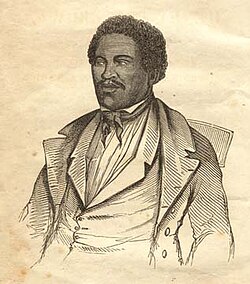
At a Glance
Louisa County, Richmond, and the Tobacco Factory World
Henry Brown grew up in the Virginia Piedmont — a region of mixed farming and tobacco cultivation whose enslaved population was the labour force that made it productive — and was brought to Richmond as a young man to work in the tobacco manufacturing industry that was one of the city's principal economic activities. The tobacco factories of antebellum Richmond were unusual institutions in the landscape of American slavery: they were urban, industrial workplaces that brought large numbers of enslaved people together in conditions quite different from the relative isolation of plantation field labour, and they operated under an economic arrangement — the hiring-out system — that gave enslaved workers a degree of social autonomy that was uncommon in the rural South.
Under the hiring-out system, enslaved people were rented to factory owners by their enslavers for annual fees; the factory owners then supervised their work and in some cases paid them small wages above the hire fee that the workers were sometimes permitted to keep in whole or in part. The system was economically beneficial to enslavers — it monetised their human property more efficiently than direct use — and it created for the hired-out workers a social world that was more fluid and more connected than the plantation world. Enslaved tobacco workers in Richmond could develop friendships across enslavers' property lines, communicate information across the city, attend church, form social organisations, and in some cases save enough money to purchase small luxuries or, in exceptional circumstances, their own freedom.
Brown worked in this world for years before his escape, and the connections and the modest resources it gave him were essential to what he eventually did. He knew people across Richmond's enslaved community; he had access to information about the city's commercial infrastructure, including the express companies that handled freight shipments; and he had developed, through years of observation in a city that was a major hub of the domestic slave trade, an acute understanding of the economics of the institution that held him — including, crucially, the understanding that the same commercial networks that moved goods, money, and enslaved people around the country could potentially be used to move a free person out of bondage.
The Catalyst: Nancy and the Children
The immediate catalyst for Brown's decision to attempt the box escape was the sale of his wife Nancy and their three children to a Methodist minister in North Carolina — an event that was devastating personally and clarifying politically. Brown had been married to Nancy for years, and their family was the emotional centre of his enslaved life in Richmond. The sale separated them permanently: Nancy and the children went south, Brown remained in Richmond, and the possibility of reunion was effectively zero. He never saw them again.
The sale of his family illustrated with brutal specificity what Brown already knew in general: that the enslaved had no legal claim to their family relationships, that marriages between enslaved people had no standing in law, that children born to enslaved parents were the property of their parents' enslavers and could be separated from their parents and from each other at any time for any economic reason. Brown's grief was the grief of a man whose family had been taken from him by a system that did not recognise his right to have a family, and his subsequent decision to escape was inseparable from that grief — not merely a desire for freedom in the abstract but a response to the most concrete and personal demonstration of what the absence of freedom actually meant.
He described this loss throughout his subsequent career as an abolitionist speaker and performer, using it not for sentimental effect but as testimony — as specific, particular evidence of what the institution of slavery did to human beings that no abstract argument about the immorality of slavery could replace. The sale of his wife and children was the event that made his escape necessary, and it was also the event that gave his subsequent career as an abolitionist witness its most emotionally powerful material.
The Plan: Twenty-Seven Hours in a Box
The plan that Brown developed — with the essential assistance of Samuel Smith and James Caesar Anthony Smith — was audacious in its simplicity and terrifying in its physical demands. He would have himself sealed inside a wooden crate and shipped as freight from Richmond to Philadelphia, relying on the commercial infrastructure of the Adams Express Company to carry him to freedom in the same way it carried any other package. The plan required the construction of a suitable crate, the arrangement of shipping through contacts Brown had cultivated, and — most fundamentally — Brown's willingness to spend the better part of a day and night in a wooden box with a single air hole, unable to move or call for help if something went wrong.
Samuel Smith, the white shoe dealer who built the box and arranged the shipping, was taking enormous legal risks. Virginia law made it a serious crime to assist the escape of enslaved people, and Smith's involvement in the conspiracy was direct and undeniable. His subsequent arrest — after he attempted to repeat the feat for two other enslaved people, was betrayed, and was sentenced to more than six years in prison — demonstrated exactly what the legal consequences of what he had done were. He served his sentence without implicating Brown, a loyalty that cost him years of his life and that Brown acknowledged publicly in his subsequent career.
The morning of 23 March 1849, Brown was sealed into the crate. He carried a small quantity of water, a few biscuits, and a tool for making additional air holes if the single existing one proved insufficient. The crate was labelled with his destination and with instructions to keep it right-side-up — instructions that were ignored repeatedly during the journey. At one point, Brown later reported, the box was placed upside down and remained in that position for so long that the blood pooled in his head and he feared he was dying; he forced himself to shift his weight until the box moved to a more bearable position. He endured the cold, the confinement, the disorientation of being unable to see, and the fear of discovery for twenty-seven hours before the box was delivered to its address in Philadelphia and opened by the people who were waiting for it.
Philadelphia, William Still, and the Immediate Aftermath
The Philadelphia Anti-Slavery Society, which received the box on the morning of 24 March 1849, was one of the most important institutions in the Underground Railroad network, and William Still — its corresponding secretary and the man who was present when Brown's box was opened — was one of the network's most meticulous record-keepers. Still documented the arrivals at the society's offices with a care and a detail that was unusual for an operation that generally relied on the destruction of evidence for its security, and his records of what he witnessed when Henry Brown's box was opened are among the most vivid documents in the history of the Underground Railroad.
Brown's emergence from the box — the moment of sitting upright, speaking, and then singing a psalm of thanksgiving — was immediately understood by those present as an extraordinary event. Within days, the story had circulated through the abolitionist network; within weeks, it was being told at antislavery meetings across the North; within months, Brown had published his memoir and was performing the story of his escape on the abolitionist lecture circuit. The box itself was exhibited at antislavery meetings, with Brown sometimes re-enacting his emergence from it, turning the physical object of his escape into a prop in an ongoing performance of liberation that gave audiences an experience of the Underground Railroad that no amount of abstract argument could have provided.
The Mirror of Slavery and the Invention of Abolitionist Theatre
The panoramic painting that Brown commissioned and toured under the title the "Mirror of Slavery" was one of the most ambitious antislavery media projects of the antebellum era — a series of large canvases depicting scenes from American slavery, the history of the slave trade, and Brown's own escape, which he exhibited in a darkened room while providing live narrative commentary and musical accompaniment. The panorama format was a popular entertainment form of the 1840s and 1850s — large-scale paintings depicting landscapes, historical events, or exotic destinations were exhibited as commercial spectacles across the North and in Britain — and Brown's genius was to adapt this entertainment format for abolitionist purposes, using its capacity for visual spectacle and emotional impact in service of a political message.
The Mirror of Slavery toured New England in 1849 and 1850, drawing large audiences and considerable press attention. It worked on multiple levels simultaneously: as entertainment, satisfying the popular appetite for the panorama format; as testimony, providing visual evidence of slavery's realities that audiences who had never been South could not otherwise access; and as performance, with Brown's live presence as an escaped slave who had physically endured what the paintings depicted giving the exhibition an emotional authenticity that no purely visual medium could achieve on its own. His commentary on the paintings — delivered in his own voice, with his own authority as a witness — transformed the panorama from passive spectacle into active argument.
The decision to take the Mirror of Slavery to Britain in 1850 was driven partly by the passage of the Fugitive Slave Act in September of that year, which made it legally dangerous for escaped slaves to remain in the United States. Brown sailed for England and spent the next seventeen years performing across Britain — not only the panorama, which he continued to exhibit and update, but an evolving stage act that incorporated mesmerism demonstrations, magic shows, and various other entertainment forms into a performance framework that consistently included the story of his escape and his testimony about slavery. His British audiences were enormous and enthusiastic, and his career in Britain was considerably longer and more financially successful than his American career had been.
Seventeen Years in Britain: Performance, Reinvention, and Survival
The British years of Brown's career are the least well-documented and in some ways the most interesting aspect of his life — a long period of professional performance and personal reinvention during which he developed the varied stage persona that combined abolitionist testimony with popular entertainment in ways that challenged the conventional boundaries between political advocacy and commercial showmanship. He performed in industrial cities, in market towns, in seaside resorts, and in the halls of evangelical antislavery societies; he adapted his act to his audiences, adding and removing elements as the circumstances demanded; and he survived — financially, personally, and politically — in a country where the abolitionist cause was popular but where an American escaped slave's long-term welcome was never entirely guaranteed.
His incorporation of mesmerism into his stage act in the 1850s was controversial within the abolitionist community, which tended to regard entertainment-based approaches to political advocacy with suspicion. Critics argued that Brown was trivialising the serious business of antislavery by mixing it with circus-like entertainments; supporters argued that he was reaching audiences that the conventional lecture format could not access, and that the money he earned from the entertainment aspects of his shows helped sustain the more directly political elements. The tension between these positions was never fully resolved, and it reflects a more general disagreement within the abolitionist movement about the appropriate relationship between political advocacy and popular culture that remains relevant to the history of social movements more broadly.
He married a British woman during his time in Britain — having accepted, necessarily, that his first wife Nancy was lost to him forever — and appears to have built a relatively stable domestic life alongside his peripatetic performing career. The details of his British domestic life are not well-documented, but the fact that he remained in Britain for seventeen years rather than returning to America as soon as it was safe to do so suggests that he had found there a life that suited him — a professional and personal environment in which his story and his performance skills could sustain both his livelihood and his sense of purpose.
Return to North America and the Long Afterlife of the Box
Brown returned to North America in the early 1870s, settling eventually in Canada and continuing to perform a version of his act through the 1870s. By this point the Civil War had been fought and won, slavery had been abolished by constitutional amendment, and the specific political urgency that had given the box escape its original power had been formally resolved. But Brown's story had by this point taken on a life of its own that transcended the immediate political moment — it was not merely a story about the Underground Railroad but a story about human ingenuity, human endurance, and the lengths to which people will go to claim their freedom, and these themes did not lose their resonance simply because the specific institution that had produced them had been abolished.
His later performances in Canada combined the escape story with magic shows and other entertainment, adapting the formula that had sustained him in Britain to a North American audience that was, in the post-Civil War period, simultaneously fascinated by the history of slavery and uncertain about what to do with that fascination. He performed until at least the mid-1870s; the record of his activities after that becomes increasingly sparse, and the date and place of his death are unknown. The most commonly cited date is around 1897, but this is an estimate rather than a documented fact — a final uncertainty about a life that had been, in its central episode, so precisely documented that every inch of the box could be described and every hour of the journey accounted for.
Legacy: The Box as Metaphor and the Performance of Liberation
Henry Box Brown's place in the history of American abolitionism is unusual because it rests on a single act rather than on a lifetime of organising or writing. He did not build a movement, run a network, or produce a body of writing that shaped subsequent thought; he did one thing, and he did it with such conceptual brilliance and physical courage that it became, and has remained, one of the most resonant stories in the entire history of American slavery and resistance. The image of a man shipping himself to freedom in a wooden crate captures, in the most literal and the most metaphorical terms simultaneously, the fundamental human refusal to accept the condition of unfreedom — the insistence on claiming liberty through whatever means are available, however extreme, however uncomfortable, however unlikely to succeed.
The box escape has proven remarkably durable as a cultural artefact. It has been retold in children's books, adapted for theatre, analysed in academic scholarship, and referenced in contemporary art and literature in ways that demonstrate its capacity to carry meaning beyond the specific historical moment that produced it. Brown understood this durability from the beginning — his decision to make the escape the centrepiece of a performing career rather than simply a biographical fact reflected his grasp of the story's symbolic power — and he spent decades exploiting it in ways that were commercially opportunistic and politically serious at the same time.
He was, among the figures of the Underground Railroad era, perhaps the most modern in his instincts: the first abolitionist to understand that the performance of liberation — the theatrical re-enactment of the escape story, the panoramic display of slavery's horrors, the live presence of a man who had literally packaged himself as freight and been delivered to freedom — was not a compromise with the serious business of antislavery advocacy but a form of that advocacy suited to a mass audience in an era of popular entertainment. His multimedia approach to abolitionist theatre anticipated the forms of political performance that have characterised social movements ever since.