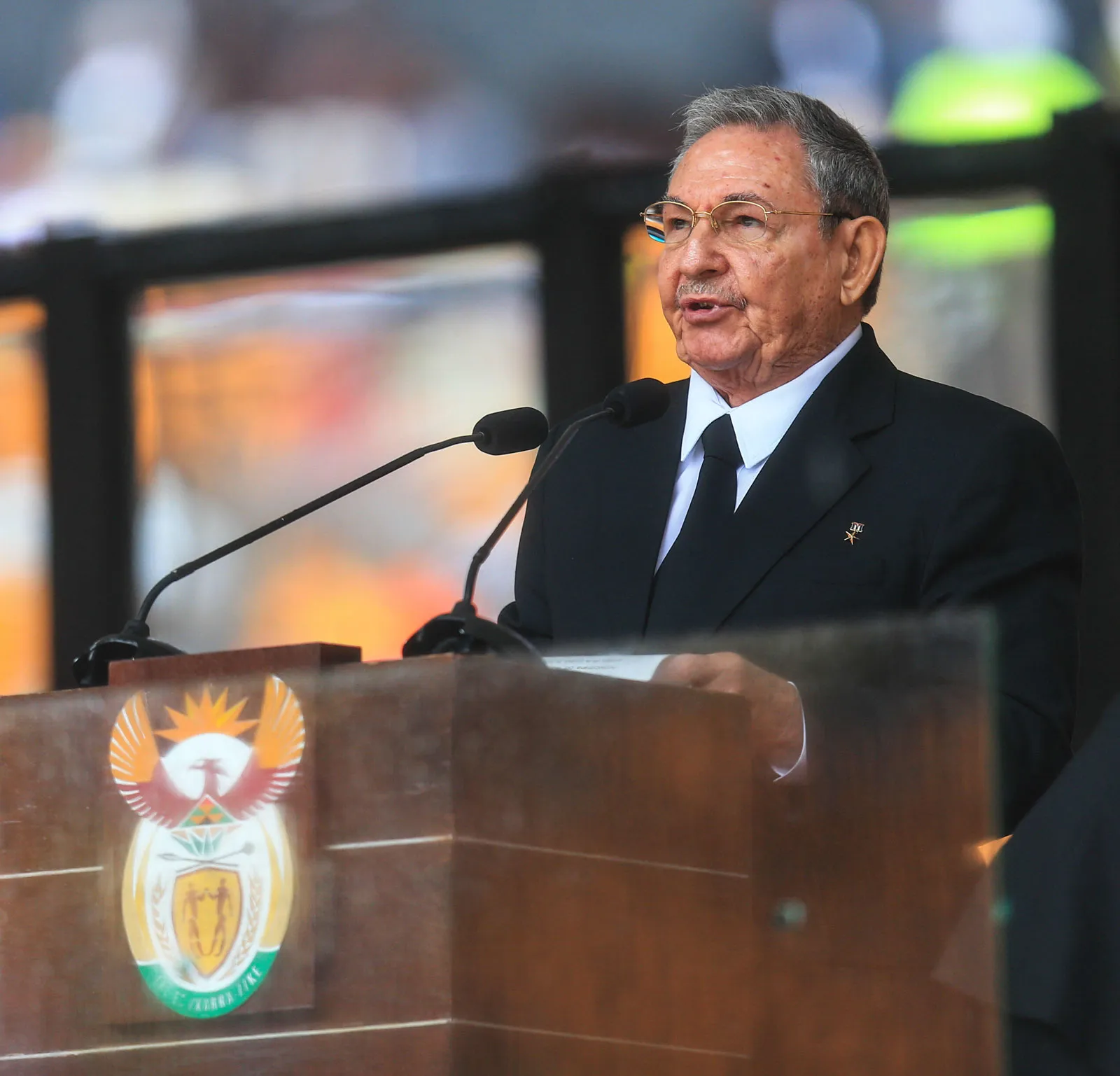
Birán, the Younger Brother, and the Formation in Fidel's Shadow
The question of what it meant to be Raúl Castro — to be, from birth, the younger brother of a person of Fidel Castro's force and presence and organisational energy — is one that the historical record does not fully answer, because Raúl Castro was not the kind of person who produced the memoir or the autobiography or the extensive personal interview that would make the answer recoverable. What is recoverable is the pattern of his choices: the decision to follow Fidel into the movement, to take on the organisational and institutional roles that Fidel's more public style of leadership left vacant, to build and manage the structures while his brother gave the speeches. Whether this division of labour reflected a freely chosen complementarity between two people whose abilities happened to be complementary, or something more complicated about what it meant to grow up as the younger sibling of a person of extraordinary dominant character, is not a question the available evidence resolves.
What is clear is that Raúl's political formation was, in some respects, more explicitly ideological than Fidel's. While Fidel's political philosophy was eclectic in its early years — shaped by Cuban nationalism, by the independence tradition, by the student political culture of the University of Havana, but not initially by any systematic Marxist commitment — Raúl made contact with communist ideas and with the youth wing of the Popular Socialist Party earlier and more directly. He visited Eastern Europe as a student in the early 1950s, before Moncada, and developed connections with international communist organisations that his brother maintained more cautiously in the period when the political cost of explicit communist identification was high. After 1959, when Cuba's alignment with the Soviet Union made those connections useful rather than costly, Raúl's earlier ideological formation became one of his political assets rather than a liability.
Moncada, the Isle of Pines, and the Road to Mexico
Raúl Castro participated in the Moncada attack of July 1953 as part of the group attacking the Palace of Justice — a secondary target to the main assault on the barracks itself. He survived the attack and the immediate aftermath, was captured, tried, and sentenced to thirteen years imprisonment — a shorter sentence than the fifteen years given to Fidel. He was imprisoned on the Isle of Pines with the other surviving Moncadistas, where the conditions of a political prison in Batista's Cuba were severe enough to clarify political commitments but not so severe as to physically destroy the prisoners, who were released under general amnesty in May 1955.
The period in Mexico that followed was the formative phase of the revolution's organisational preparation, and Raúl's contribution to it included an introduction that proved decisive: it was Raúl who introduced Ernesto Guevara to the network of Cuban exiles in Mexico City, facilitating the encounter with Fidel that resulted in Guevara's recruitment to the Granma expedition. This single act of social connection — bringing together two people whose subsequent relationship would shape the Cuban Revolution's entire first decade — was characteristic of Raúl's operational style: less the dramatic gesture, more the patient construction of the relationships and the structures on which dramatic gestures can be built.
He sailed on the Granma in November 1956 as one of the eighty-two, survived the landing and the Alegría de Pío ambush, and reached the Sierra Maestra as part of the core group that rebuilt the rebel army from approximately twelve survivors. He was twenty-five years old and had already been arrested, imprisoned, amnestied, exiled to Mexico, and returned to Cuba to restart a revolution that had nearly been destroyed in its first two weeks. The subsequent two years in the mountains would add the specific military experience that the rest of his career was built on.
The Second Front and the Military Commander
Raúl's command of the Second Eastern Front — designated after Frank País's murder as the Frank País Front — from March 1958 onward was his most important independent operational achievement and the clearest demonstration that his military abilities were genuine rather than merely derived from proximity to his brother. The Second Front operated in the northern Sierra Maestra and the area around Guantánamo, a theatre that was distinct from Fidel's command in the southern Sierra and that required independent logistical and operational management rather than the close coordination that the single Sierra Maestra command structure provided.
He proved capable of both the military and the political dimensions of guerrilla command — the tactical operations against Spanish forces and the political work among the civilian population that sustained the guerrilla base. He was also, in the Second Front, more willing than the other column commanders to use methods of social and political control that were harsher than the general approach the Sierra Maestra campaign had adopted: the Second Front's treatment of alleged informants and collaborators was at times more severe than what Fidel or Guevara authorised in their respective commands, a pattern that reflected the more directly authoritarian dimension of Raúl's political style that would become more visible after 1959.
His Second Front also achieved something that had strategic value beyond its immediate military significance: the harassment of the American naval base at Guantánamo Bay and the brief detention of American citizens associated with the base's operations, which created a diplomatic incident that embarrassed the Batista government and demonstrated the rebel army's capacity to affect American interests directly — a demonstration that had significant implications for the subsequent evolution of US-Cuban relations.
Building the Revolutionary Armed Forces: Cuba's Most Durable Institution
After 1959, Raúl Castro's most consequential contribution to the Cuban Revolution was the construction of the Fuerzas Armadas Revolucionarias — the FAR, the Cuban Revolutionary Armed Forces — into the most professional, most capable, and most institutionally stable military organisation in Latin America. This was not an inevitable outcome of the revolution's military victory. The rebel army that entered Havana in January 1959 was a collection of guerrilla columns with different command traditions, different political orientations, and the specific organisational incoherence of an armed movement that had been fighting a guerrilla war rather than building an institution. The Batista army that it was partly absorbing was demoralised, politically tainted, and structurally incompatible with the revolution's political culture.
Raúl spent the decade after the revolution building from these unpromising materials a professional military: standardising training and doctrine, establishing the military educational institutions that created a new officer corps, developing the relationship with the Soviet Union that provided the equipment, technical assistance, and military doctrine that the FAR required to become a modern armed force rather than a large guerrilla organisation. By the mid-1960s, the FAR was the institutional backbone of the Cuban state — the organisation that provided not just military security but the administrative capacity and the disciplined institutional culture that the civilian government often lacked.
The Angola campaign — Cuba's military intervention in support of the MPLA government in Angola from 1975 through 1991, which at its peak involved approximately fifty to sixty thousand Cuban soldiers and several thousand military advisers — was Raúl's most ambitious overseas military undertaking and, by the standards of counterinsurgency and conventional warfare in sub-Saharan Africa, one of the more successful military campaigns conducted by any developing country in the Cold War era. The Battle of Cuito Cuanavale in 1988, in which Cuban and Angolan forces defeated a South African Defence Force offensive, was one of the most significant conventional military engagements in southern African history and is credited by Nelson Mandela and others with accelerating the political process that produced the independence of Namibia and contributed to the conditions that made the end of apartheid possible. Raúl directed this campaign from Havana with the methodical operational management that was his military signature.
Managing the Soviet Relationship and Surviving Its Collapse
Raúl Castro was Cuba's principal manager of the relationship with the Soviet Union throughout the Cold War — more involved in the operational details of the military and economic relationship, more trusted by the Soviet military and intelligence establishments, and more consistently present in Moscow than his brother. The Soviet subsidy of the Cuban economy — approximately five billion dollars per year at the peak — was the financial foundation on which the social programmes of the revolution rested, and the management of the relationship that produced that subsidy was one of the most important functions of the Cuban government. Raúl managed it with the combination of ideological reliability and practical negotiating effectiveness that the Soviets valued, and the relationship was largely stable through the various crises — the Missile Crisis, the periods of Cuban military adventurism in Latin America that the Soviets found inconvenient, the tensions over Cuba's support for national liberation movements that the Soviet Union preferred to manage diplomatically — that tested it.
The collapse of the Soviet Union between 1989 and 1991 removed those subsidies and produced the período especial — the Special Period in Time of Peace — which was the most severe economic crisis the revolution had faced and which threatened its survival in ways that neither the Bay of Pigs nor the American embargo had. The FAR, under Raúl's management, played a central role in Cuba's response to the Special Period: military enterprises were restructured to produce goods for the domestic market, military land was converted to food production, and the FAR's institutional discipline was applied to the problem of managing scarcity in ways that the civilian government apparatus was less capable of managing. Cuba survived the Special Period. It was not inevitable that it would.
The Presidency and the Limited Opening
When Fidel transferred power to Raúl in February 2008 — formally, constitutionally, after the health crisis of 2006 had made the informal transfer of daily authority a permanent reality — the question that observers most frequently asked was whether the change would produce meaningful political or economic change in Cuba. The answer, over the subsequent ten years, was: economic change, carefully managed; political change, almost none.
The economic reforms that Raúl oversaw were the most significant since the revolution: the expansion of self-employment categories, the legalisation of small private businesses in limited sectors, the permission for Cubans to buy and sell property and cars, the expansion of internet access, and — most dramatically in international terms — the restoration of diplomatic relations with the United States in December 2014 and the opening of embassies in 2015, reversing fifty years of complete diplomatic rupture. The Obama administration's engagement with Cuba was the most significant American policy shift toward the island since the 1959 revolution, and it was made possible by Raúl's willingness to negotiate in ways that Fidel had never permitted.
These reforms improved daily life for many Cubans, created a small but significant private sector, and altered the relationship between the Cuban state and the Cuban economy in ways that the post-Raúl government has not fully reversed. What they did not produce was political liberalisation: the Communist Party maintained its monopoly on political organisation, dissidents continued to be imprisoned, the press remained state-controlled, and the fundamental structure of the Cuban political system was unchanged. Raúl's reforms were the reforms of a communist pragmatist managing a system in crisis rather than the reforms of a politician who believed in political pluralism.
After Fidel and the Question of the Revolution's Future
Fidel Castro died on 25 November 2016, eight and a half years after formally transferring power to Raúl. The death of the revolution's founding figure — the man whose personal authority had been the central organising fact of Cuban politics for nearly sixty years — was both an ending and a test: a test of whether the Cuban state that Raúl had spent decades building as an institution could survive the removal of the personality that had been its symbolic centre. Raúl's management of the transition suggested that the institutional answer was yes: the state apparatus functioned, the party maintained its coherence, the military remained stable, and the political succession proceeded without the chaos that some external observers had anticipated.
Raúl stepped down from the presidency in April 2018, transferring power to Miguel Díaz-Canel — the first Cuban head of state since 1959 who had not been a member of the revolutionary generation that fought in the Sierra Maestra. He retained the position of First Secretary of the Communist Party until April 2021, maintaining a formal role in the political system while progressively withdrawing from its daily operations. He is, in 2026, ninety-four years old, his health significantly diminished, no longer exercising meaningful authority over the Cuban government that he spent sixty-five years building.
The Cuba he leaves behind faces the most severe combination of crises since the Special Period: inflation running at rates that have destroyed the purchasing power of fixed wages, emigration at levels not seen since the 1980 Mariel boatlift, power cuts of eighteen hours or more per day in many provinces, shortages of food and medicine, and a political system that has so far responded to these pressures with repression rather than reform — arresting the leaders of the July 2021 protests, the largest popular demonstrations since 1959, rather than addressing the conditions that produced them. Whether the Cuban state that Raúl built is capable of navigating these crises without the calibre of political leadership that he and his brother represented is the central question of Cuban political life in the years immediately after his withdrawal from power, and it is a question to which the answer is not yet clear.