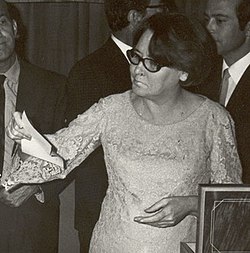
Encrucijada, Abel, and the Road to Santiago
Haydée Santamaría grew up in the central province of Las Villas with her brother Abel in conditions that were modest enough to produce a clear-eyed understanding of what the Cuban class structure looked like from the wrong side of it, and close enough in sibling terms to make Abel's eventual fate the defining event of her life. Abel Santamaría was three years older than Haydée, equally intelligent, and equally politically radicalised by the Batista coup of 1952. He became connected to Fidel Castro's circle in Havana and rose quickly in the emerging conspiracy — his apartment on Calle 25 in Vedado became one of the principal meeting places for the planning of the Moncada attack, and he was designated Castro's second-in-command for the operation.
Haydée joined the conspiracy through Abel, and her participation was not marginal or auxiliary. She and Melba Hernández were the two women who participated in the Moncada attack itself — assigned to hold a field hospital in a house near the barracks, treating wounded fighters and managing the medical side of an operation whose military outcome, as it turned out, would leave few survivors to treat. When the attack failed and the building was surrounded, both women were captured. They were the only members of the attacking force in their location to survive.
The interrogation of Haydée Santamaría in the aftermath of the failed attack has been documented in sufficient detail to make it one of the most described episodes of political violence in Cuban revolutionary history. Batista's interrogators used her love for Abel and for her fiancé Boris Luis Santa Coloma as the instrument of psychological torture: presenting her with evidence of their suffering and using the threat of continued suffering as leverage for information she could provide to end it. She provided nothing. Abel was tortured to death. Boris was tortured to death. She survived, carrying the specific knowledge that the people she most loved had died in conditions of extreme suffering while she was alive and could not help them.
Prison, Release, and the Underground Years
Haydée Santamaría and Melba Hernández were imprisoned following the Moncada attack and their subsequent trial, receiving sentences that were lighter than those imposed on the male survivors — a reflection of the specific gender politics of the Batista government, which was willing to kill and torture women but reluctant to impose the same prison terms on them that it imposed on men, partly from calculation about international opinion and partly from the more general social convention that female political prisoners were treated differently from male ones. They used their imprisonment to maintain contact with the other surviving Moncada prisoners, to manage the circulation of Castro's trial speech — History Will Absolve Me — in samizdat form, and to plan the continuation of the movement after their release.
They were released in early 1954 and returned immediately to underground work. The period between the Moncada attack and the Granma landing in December 1956 was the most dangerous phase of the underground's existence — the phase when the movement had demonstrated its capacity for armed action and thereby attracted the most intense security attention, but had not yet built the military and organisational infrastructure that would eventually make it viable. Haydée managed the constant practical demands of underground life: the safe houses, the communications, the fundraising, the maintenance of relationships with exile networks in Mexico and the United States, the coordination with Frank País's Santiago operation and Celia Sánchez's Manzanillo network.
She was, through all of this, carrying the specific weight of what had happened at Moncada. The accounts of people who worked with her in the underground years describe a person of extraordinary energy and commitment who was also visibly and permanently marked by grief — who could be fully present in the work of the revolution and simultaneously inhabited by a sorrow that never lifted. She talked about Abel constantly, to the point where her colleagues developed the understanding that Abel was always present in her life, that nothing she did was entirely separate from the fact of his death, and that the revolution she was building was in a literal sense being built in his name and for his sake.
Casa de las Américas: The Institution She Built
Casa de las Américas was founded in April 1959, three months after the revolution entered Havana, on the initiative of the revolutionary government as a cultural institution dedicated to Latin American and Caribbean art, literature, music, and intellectual life. Haydée Santamaría was appointed its director — an appointment that reflected both her standing as a revolutionary veteran and her genuine passion for culture and the arts that had been present throughout her adult life but had been submerged during the years of clandestine struggle. She ran Casa de las Américas for twenty-one years, until her death in 1980, and the institution she built during those years was one of the most significant cultural enterprises in the history of Latin America.
The Casa prize — the annual literary award that Casa de las Américas established in 1960 — became, within a decade, the most prestigious literary recognition in the Spanish-speaking world outside Spain itself. It recognised novels, poetry, theatre, essays, and eventually testimonial literature and children's literature, and its annual shortlists and prize announcements functioned as one of the principal mechanisms through which the Latin American literary boom of the 1960s and 1970s was identified, publicised, and sustained. Gabriel García Márquez, Julio Cortázar, Mario Vargas Llosa, Roberto Fernández Retamar, Reinaldo Arenas, and dozens of other writers whose work defined Latin American literature of the second half of the twentieth century had significant relationships with Casa de las Américas — published in its journal, recognised by its prize, brought to Havana for the seminars and encounters that Santamaría organised with the same logistical intensity she had applied to underground supply networks.
Her directorship of Casa was not merely administrative. She was engaged with the work — with the manuscripts, with the writers, with the specific question of what Latin American literature was doing and what it needed — in ways that went well beyond the institutional management that a directorial role formally requires. Writers who came to Casa during her years describe encounters with a woman of fierce intelligence and genuine passion for the work, who had read everything and had opinions about all of it and was not diplomatic about expressing those opinions, and who created around the institution an atmosphere of intellectual seriousness and personal warmth that made it attractive to people who had other options. She was also, within the specific political constraints of the Cuban revolutionary state, a consistent voice for cultural openness — for engaging with the full range of Latin American literary and intellectual production rather than restricting Casa's scope to work that was ideologically safe.
The Political Tensions and the Protection of Writers
The relationship between Casa de las Américas and the Cuban revolutionary government was not always easy. The early 1970s were a period of intense cultural repression in Cuba — the Padilla affair of 1971, in which the poet Heberto Padilla was arrested, forced to confess to counter-revolutionary activities in a public ceremony that many international observers compared to a Stalinist show trial, produced a break between the Cuban government and many of the Latin American and European intellectuals who had been the revolution's most prominent international supporters. The fallout from the Padilla affair affected Casa de las Américas directly, as many of the writers who had been central to the institution's work publicly criticised the Castro government and were in turn criticised or marginalised by the Cuban cultural establishment.
Santamaría navigated these tensions with a combination of genuine political conviction — she was not a dissident; she believed in the revolution and in its legitimacy — and a consistent effort to protect the cultural space that Casa represented from the worst of the ideological pressure. She was not always successful. The restrictions on what Cuban writers could publish, the political controls on cultural production that tightened in the early 1970s, and the treatment of gay artists and writers under the revolution's systematic homophobia all constrained what Casa could do and whom it could support. But within those constraints, she maintained a space for intellectual seriousness and artistic quality that was more open than most of the Cuban cultural establishment of the period.
Her relationship with the writers and intellectuals who passed through Casa was personal as well as institutional. She maintained friendships — real friendships, not merely institutional relationships — with people across the political spectrum of Latin American intellectual life, including some who had broken with the Cuban government. The maintenance of those friendships, in the specific political atmosphere of revolutionary Cuba, required a combination of personal loyalty and political navigation that was not uncostly. She made it work, mostly, through the force of her own personality and through the specific authority that her status as a Moncada survivor gave her in the political culture of the revolution — an authority that meant even the people who found her cultural instincts inconveniently broad were reluctant to confront her directly.
Twenty-Seven Years and the Weight That Did Not Lift
What those who knew Haydée Santamaría consistently describe, across the accounts that have accumulated since her death, is the coexistence in one person of two things that seem incompatible: the extraordinary vitality and creative engagement that made her the most important cultural figure the Cuban Revolution produced, and the grief over Abel and Boris that she carried continuously from July 1953 until her death. These were not separate aspects of her personality that alternated. They were simultaneous. She could be fully, generously present with a writer whose work she loved, fully engaged with the institutional challenges of running the most important cultural prize in Latin America, fully invested in the political and artistic conversations that Casa de las Américas sustained — and simultaneously carrying, at every moment, the specific knowledge of what had been done to her brother and her fiancé and the specific guilt of having survived it.
She spoke about this openly in interviews throughout her adult life. She did not pretend to have made peace with Moncada or to have processed the grief into something manageable. She said directly that she had never recovered, that Abel was present in her daily consciousness, that the work of the revolution was her way of making his death meaningful rather than merely pointless. The revolution was, for her, inseparable from the obligation to the dead — to the people who had died for it and whose deaths could only be honoured by making the thing they had died for real.
On 26 July 1980 — the twenty-seventh anniversary of the Moncada attack, the day that the revolution commemorated annually as the founding moment of the movement that had won — Haydée Santamaría took her own life. She was fifty-seven years old. The date was not accidental. It was a final statement about the relationship between her life and the event that had defined it: that the anniversary of Moncada was the day that contained everything she had lived with since 1953, and that the twenty-seventh year of carrying it was the last year she was able to.
The Cuban government announced her death without specifying the cause. The circumstances became known through the accounts of people who had been close to her. The response from the Latin American literary and intellectual world — from the writers and artists and intellectuals whose work she had published and supported and championed for twenty years — was an outpouring of grief and tribute that measured, more accurately than any official statement could, what she had meant to a generation of Latin American culture. Casa de las Américas continued after her death, and continues today. The institution she built outlasted her. The grief she carried did not outlast her. She gave twenty-seven years of extraordinary work to a revolution that could not give her back the two people whose absence she could not, finally, survive.