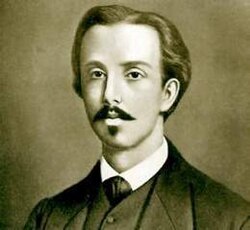
Camagüey, the Law, and the Making of a Constitutional Thinker
The city of Puerto Príncipe — renamed Camagüey in 1903 to honour the pre-colonial indigenous name for the region — was in 1841 the third-largest city in Cuba and the capital of a province that was culturally and economically distinct from both the western sugar-plantation economy centred on Havana and the more African, more radical east of Oriente. Camagüey was cattle country — the great flat pastures of the interior, the ranching families who had maintained a tradition of relative independence from the colonial administration for generations, the specific kind of provincial Creole pride that comes from being far enough from the capital to have developed your own institutions and close enough to have opinions about the ones it imposes. It was not a particularly radical city in the mid-nineteenth century, but it had a tradition of civic engagement and legal culture that produced, in the generation that launched the Ten Years' War, a disproportionate number of the lawyers and intellectuals who gave the independence movement its constitutional and political framework.
Ignacio Agramonte grew up in this environment as the son of a wealthy ranching family, educated first locally and then at the University of Havana, where he was recognised as an exceptional student, and subsequently in Spain, where he completed his legal training and where the exposure to European liberal nationalism — the ideas that were remaking the political map of the continent in the 1860s — added a theoretical dimension to the practical Camagüeyan political culture he had already absorbed. He returned to Cuba in the mid-1860s, established a law practice, married Amalia in 1868, and was a conspirator almost from the moment of his return — connected to the network of Camagüeyan independence activists who were coordinating their plans with the Oriente conspirators around Carlos Manuel de Céspedes.
The combination of legal training, political philosophy, and practical intelligence that Agramonte brought to the independence movement gave him a role that was distinct from and complementary to the military commanders who dominated the early phases of the war. He was not merely a soldier — he was the movement's most capable constitutional thinker, the person who could translate the political principles of independence into the institutional frameworks that a functioning republic-in-arms would require. This capacity made him essential to the Assembly of Guáimaro and to the drafting of the constitution that emerged from it, and it also made him, in the eyes of the white Creole landowners who dominated the political leadership of the movement, one of the most valuable people in the war — a status that sat awkwardly alongside his increasingly demonstrated identity as a military commander of the first order.
The Guáimaro Constitution: Cuba's First Charter of Government
The Assembly of Guáimaro convened in April 1869, six months into the Ten Years' War, to establish the constitutional framework for the rebel republic. The delegates who gathered represented the various regional and political currents within the independence movement — the Oriente conspirators around Céspedes, the Camagüeyan lawyers and ranchers, the commanders who had already been fighting for six months and had specific views about the relationship between civilian and military authority. The assembly's central task was to draft a constitution that would give the republic-in-arms the institutional legitimacy it needed to function as a government rather than merely as a collection of armed groups with a shared enemy.
Agramonte was the principal drafter of what emerged. The Guáimaro Constitution was a remarkable document for its time and context: a genuine constitutional instrument that created a unicameral Chamber of Representatives, vested executive authority in a president, specified the rights of citizens, and — most significantly — declared slavery abolished throughout the territory of the Cuban republic. This last provision was both a moral statement and a practical political act. It declared, constitutionally, that the Cuba being fought for would be a free Cuba in the fullest sense — that the liberation from Spain would include the liberation of the enslaved people whose labour had sustained the colonial economy. The declaration was radical by the standards of Cuban Creole politics in 1869, and it was one of the provisions that the more conservative landowners in the movement found most alarming.
Agramonte was also, in the constitutional debates, a consistent advocate for civilian control of the military — the principle that the elected Chamber of Representatives, rather than the military commanders, should have final authority over the conduct of the war. This position put him at odds with Céspedes, who as both president and commander-in-chief naturally resisted the constraints that legislative oversight imposed, and it reflected a genuine political philosophy rather than merely factional interest. Agramonte understood that the republic being built would inherit the constitutional structures being created under fire, and he wanted those structures to establish the precedent of civilian supremacy over the military that a genuinely republican government required. The tension between that principle and the military necessities of the war was never fully resolved during the Ten Years' War, and the eventual deposition of Céspedes by the Chamber in 1873 — the very outcome that civilian constitutional authority was supposed to make possible — was partly the product of the institutional framework that Agramonte had designed.
Building the Camagüey Cavalry
Agramonte's military reputation rests primarily on his development of the cavalry forces of the Camagüey theatre into the most effective mounted arm of the Liberation Army. The flat pastureland of Camagüey province was ideal cavalry country — the open terrain that favoured mounted speed over the denser forests and mountains of Oriente, the ranching culture that produced men who had grown up on horseback and understood horses and riding in ways that no amount of military training could substitute for. Agramonte understood this advantage and built systematically around it, training his cavalry in the specific techniques of fast movement, coordinated manoeuvre, and the exploitation of the speed differential between mounted and foot soldiers that made cavalry raiding so effective as a guerrilla tool.
His operational approach was characterised by the speed and audacity that became the defining qualities of the Camagüey cavalry style — rapid concentration of force at a chosen point, violent engagement, rapid dispersal before the Spanish army could bring its numerical superiority to bear, reappearance at a different point hours or days later. The Spanish commanders in Camagüey found it extraordinarily difficult to fix his forces or bring them to a decisive engagement on terms that favoured the larger Spanish force. He was not undefeatable — the Liberation Army's fundamental weakness of limited supplies and ammunition constrained what even the most effective guerrilla operations could achieve — but he imposed costs on the Spanish military effort in Camagüey that were disproportionate to the forces he commanded and that tied down Spanish resources that would otherwise have been available elsewhere.
He was also, in the field, the kind of commander who inspired the loyalty that makes armies fight beyond their rational calculations of survival. His personal courage was not the reckless exposure of a man who did not value his life — he was careful about security and disciplined about operational planning — but the specific kind of courage that comes from being willing to be where the fighting is hardest when the fighting is hardest. His soldiers knew that he shared their risks rather than managing them from a safe distance, and this knowledge produced the specific loyalty that is only available to commanders who have earned it in the field rather than acquiring it through rank or social position.
The Rescate de Sanguily: Cuba's Most Celebrated Cavalry Action
In October 1871, Julio Sanguily — one of Agramonte's senior officers and one of his closest friends — was captured by Spanish forces in Camagüey. The Spanish military, understanding the intelligence and morale value of such a capture, organised a strong escort to move Sanguily to a secure facility for interrogation and almost certain execution. The escort was a substantial force, well-armed and alert to the possibility of rescue attempts.
Agramonte organised the rescue anyway. He assembled a cavalry force and intercepted the Spanish column on the road. What followed — the attack on a superior force moving a prisoner, the penetration of the Spanish formation, the extraction of Sanguily in a running fight — has been described in Cuban military history with the enthusiasm that genuinely extraordinary acts of tactical audacity deserve. The rescue succeeded. Sanguily was extracted. The Spanish escort suffered casualties and failed to prevent the rescue despite its numerical advantage. Agramonte and his cavalry withdrew with their comrade.
The Rescate de Sanguily became, almost immediately, one of the defining stories of the Ten Years' War — not because of its strategic significance, which was modest, but because of what it represented as an act of military culture. It said that the Liberation Army did not abandon its soldiers to the enemy's executioners if it was possible to prevent it. It said that the bonds of loyalty between comrades in the field were real enough to justify taking serious risks to honour them. It said something about what kind of army — what kind of Cuban republic — was being built in the fight against Spanish rule. Agramonte understood this, and the fact that the rescue became celebrated as the exemplary act of the Camagüey cavalry reflected his understanding that military legend is as important as military capability in sustaining a guerrilla force over years of grinding attrition.
Jimaguayú and the Burned Body
On 11 May 1873, at the Battle of Jimaguayú in Camagüey province, Ignacio Agramonte was killed by a Spanish artillery shell. He was thirty-one years old, and the war had been going for four and a half years, and the Ten Years' War had five more years yet to run. He died in the field, doing what he had been doing since October 1868 — fighting the Spanish army in Camagüey with the cavalry forces he had built and led.
The Spanish military's response to his death was revealing. Recognising that the body of a beloved commander would become a site of popular mourning and political memory — that a grave for Agramonte would become a monument to the independence cause that could not be demolished — they burned the body and scattered the ashes. The act was an attempt to prevent the creation of a martyr's tomb and to deny the independence movement the symbolic resource of a located resting place for its most celebrated cavalry commander.
The attempt backfired in the most complete way imaginable. The burning of the body became, in the Cuban historical memory, itself a demonstration of Spanish colonial brutality — an act of desecration that confirmed, for anyone who needed confirming, the character of the regime that the independence movement was fighting against. And the absence of a grave made Agramonte into something larger than a man buried in a specific place: a presence without location, a figure of pure legend, impossible to contain in a tomb because there was no tomb. Cuba found him anyway, in the statue in every city square, in the airport that bears his name in Camagüey, in the letters to Amalia that are still read as the most intimate document of what the Ten Years' War cost the people who fought it, and in the cavalry tradition that his five years in the field created and that became part of the military culture of Cuban independence.
The Letters to Amalia and the Personal Dimension of War
Ignacio Agramonte's letters to his wife Amalia — composed between cavalry engagements, written in conditions of physical hardship and constant danger, carried out of the field by whatever courier route was available — have been in print continuously since the early twentieth century and are among the most widely read documents in Cuban literary history. They are not primarily political documents. They are love letters: precise, tender, sometimes funny, written by a man who was living through one of the most intense experiences of his life and wanted to share it with the person he most wanted to be with.
What makes them remarkable is not their literary quality, though the quality is real. It is the specific combination of the domestic and the extraordinary that they maintain throughout: the attention to the details of the life he and Amalia were not living together — the children's development, the domestic arrangements, the small pleasures and concerns of ordinary life — alongside the war that was happening in every hour around him. He wrote about missing her in terms that are not abstract or conventional. He wrote about the specific physical experience of being away from her, the specific texture of the absence, with the directness that comes from someone who has decided that the separation justifies total honesty about what it costs.
The letters also document his political and military thinking in ways that complement the formal historical record. He was clearly aware, even during the most intense phases of the Camagüey campaign, of the broader strategic situation of the war — the political tensions within the republic-in-arms, the question of what independence would actually mean and for whom, the relationship between the military campaign and the constitutional framework he had helped design. He was not naive about any of it. He was thirty-one years old and had spent five years helping to build a republic under fire, and the letters show a mind that was still working through what that republic was supposed to be, alongside the heart of a man who wanted to be home.
Amalia survived the war. She survived the republic that independence eventually produced and the twentieth century that followed. She outlived Ignacio by decades, maintaining the memory and the letters and the specific history of what the Camagüey cavalry and its commander had been. The Cuba that eventually emerged from the independence wars and the subsequent revolution has not always been what Ignacio Agramonte's letters to Amalia suggest he was fighting for. But the letters are still there, still being read, still carrying the record of what one thirty-one-year-old lawyer from Camagüey understood independence to mean and what he was willing to give to achieve it.