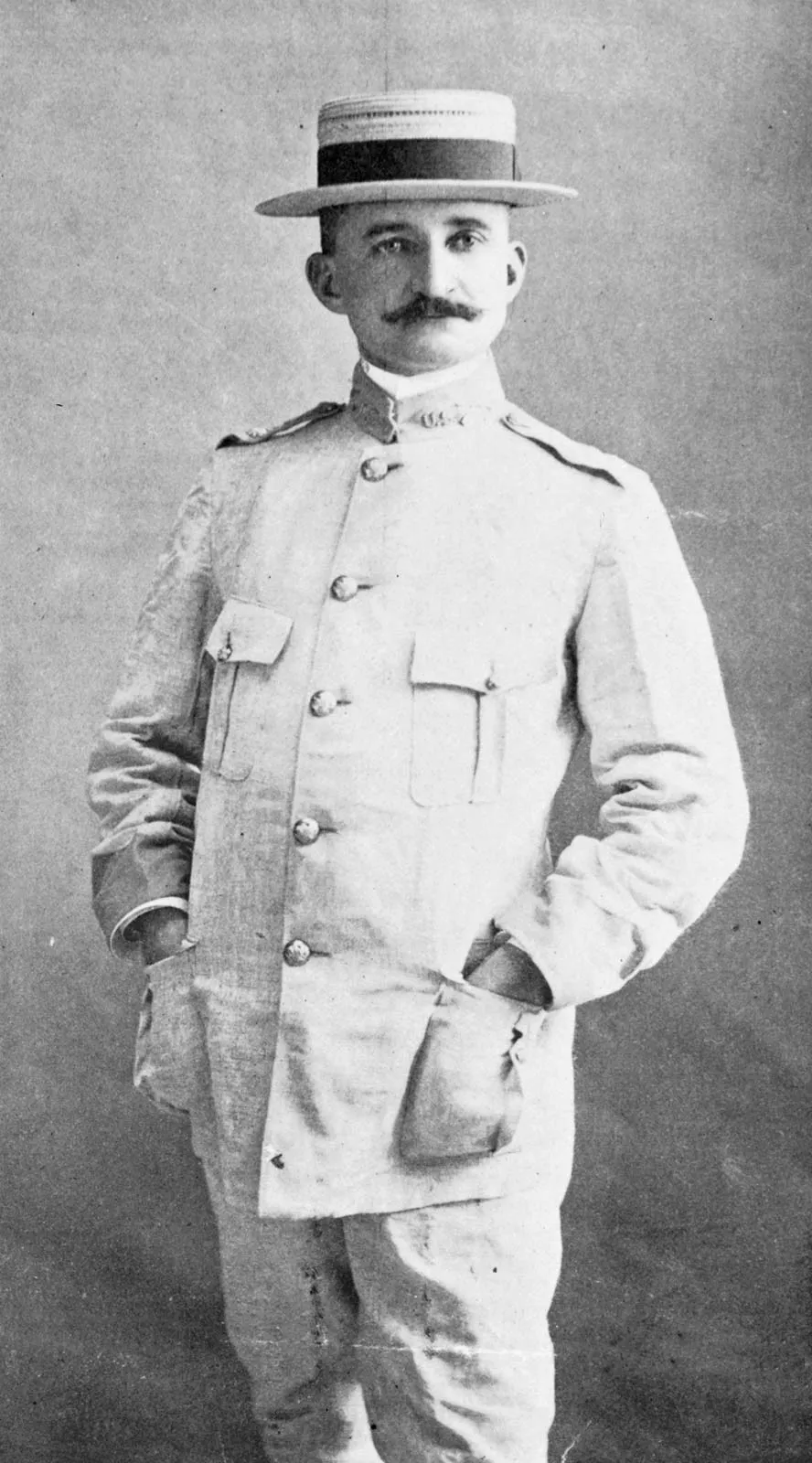
Early Life and the Ten Years' War
Calixto García came from exactly the kind of provincial Creole family — land-owning, educated enough to have political opinions, close enough to the operations of the colonial economy to understand who it benefited and at whose expense — that provided the leadership of the independence movement in Oriente province. He was twenty-nine when the Ten Years' War began in October 1868, and he joined the uprising under Carlos Manuel de Céspedes immediately, bringing with him the connections and local knowledge that made him useful as an organiser as well as a soldier from the first days of the campaign.
He proved to be a capable and reliable commander — not possessed of the improvisational tactical brilliance that distinguished Antonio Maceo, but solid, methodical, and effective at the kind of sustained operational command that guerrilla warfare required over years rather than days. He advanced through the ranks of the Liberation Army during the Ten Years' War and was holding a senior command position when, in 1874, his column was surrounded by a superior Spanish force and his capture appeared imminent.
What happened next became the most dramatic — and most visible — moment of his entire career. Facing capture and unwilling to be taken prisoner, García drew his pistol and fired it upward through his own chin. The bullet passed through his skull and exited through his forehead. He did not die. The wound was devastating — it left a permanent indentation in his forehead, a scar that was visible in every photograph taken of him for the rest of his life — but it was not immediately fatal, and after a period of unconsciousness he was captured by Spanish forces, found to be alive, and given medical treatment. The Spanish authorities, recognising his military rank and perhaps calculating that a dead Cuban general was less politically useful than a living prisoner, transported him to Spain, where he was imprisoned first at Ceuta and subsequently in Madrid.
Imprisonment in Spain and the Return to Cuba
García spent approximately four years as a prisoner in Spain — years that were not wasted in the sense of being merely endured. He had access to books and newspapers, maintained correspondence with the Cuban independence networks that continued to operate in exile, and used the enforced pause to think carefully about the strategic failures of the Ten Years' War and what a more effective campaign would require. He was released under the amnesty provisions of the Pact of Zanjón in 1878, at the same time as other Cuban independence prisoners held in Spain.
He did not accept the peace that the Pact represented any more than Maceo did. He returned to Cuba and almost immediately began organising what would become the Guerra Chiquita — the Little War — of 1879–80. The Little War was an attempt to restart the independence war before the political and military infrastructure for a sustained campaign had been rebuilt, and it was defeated relatively quickly by Spanish forces that had not yet demobilised from the previous conflict. García was captured again, returned to Spain as a prisoner, and eventually made his way back to the Cuban exile community in the United States, where he spent the years from the early 1880s through the mid-1890s preparing, along with Martí and other independence leaders, for the next attempt.
His relationship with Martí was cordial and mutually respectful. García was a military man with limited patience for the political nuances that Martí navigated with such care, but he understood that the civilian political organisation Martí was building — the fundraising networks, the newspaper, the Cuban Revolutionary Party — was the necessary foundation for the military campaign. He contributed his considerable military prestige to the project, spoke at Cuban exile gatherings in Florida and New York, and was designated early in the planning as one of the senior commanders for the coming war.
The War of Independence: Eastern Front Commander
When the War of Independence began in February 1895, García took command of the Liberation Army forces in Holguín and the surrounding region of Oriente province — the territory he knew best, where his family connections and decades of previous military activity gave him an existing base of support and intelligence. His command of the eastern theatre over the following three years was characterised by the same methodical reliability that had distinguished his service in the Ten Years' War: sustained pressure on Spanish garrisons, disruption of colonial economic activity, and the maintenance of a military presence that compelled the Spanish to keep large numbers of troops tied down in the east rather than available for operations elsewhere.
The eastern theatre included some of the war's most significant early engagements. García's forces fought consistently throughout 1895 and 1896, coordinating with the broader strategic direction of Máximo Gómez as commander-in-chief and operating in coordination with the western campaign that Maceo was conducting simultaneously. When Maceo was killed in December 1896, the loss fell hardest on the western theatre, where it was irreplaceable; in the east, García continued his operations with the consistency that had characterised his entire career.
By 1898, the war had been going for three years. Spain had sent General Weyler with a vastly reinforced army and had implemented the reconcentration policy — the forcible movement of rural civilian populations into fortified towns, designed to deprive the guerrillas of their base of support, and producing in practice the mass death of approximately 150,000 to 400,000 Cuban civilians from disease and starvation in the reconcentration camps. The Liberation Army had not been defeated, but it had not achieved the decisive military breakthrough that would end the war on its own terms. Cuba was exhausted. Spain was exhausted. And the United States, whose economic interests in Cuba were enormous and whose public opinion had been inflamed by the coverage of the reconcentration camps in the American press, was moving toward intervention.
American Intervention, the Message, and the Surrender Ceremony
The explosion of the USS Maine in Havana harbour in February 1898 — cause still disputed, attributed by the American press to a Spanish mine, used as the casus belli for American entry into the war — precipitated the rapid sequence of events that transformed the Cuban independence war into the Spanish-American War. President McKinley sent a young officer named Lieutenant Andrew Rowan to make contact with García in the mountains of Cuba, to establish his military intentions and secure his cooperation for the coming American campaign. Rowan made his way to Cuba, found García through the underground networks, and delivered the request. García cooperated fully — providing intelligence about Spanish positions, committing his forces to coordinate with the American landing, and carrying out operations in Oriente province that prevented Spanish reinforcement of the besieged garrison at Santiago.
The Santiago campaign of July 1898 — including the battles of El Caney and San Juan Hill, fought largely by the American forces but in coordination with García's Cuban soldiers on the flanks — resulted in the surrender of the Spanish garrison and the effective end of the war in Cuba. And then came the insult that García and every Cuban officer present remembered for the rest of their lives: the Spanish surrender ceremony at Santiago was conducted between the Spanish commander and the American General William Shafter, without a Cuban officer present. The Cuban Liberation Army — which had been fighting for three years before the Americans arrived, which had bled the Spanish forces to the point where American victory was possible, which had coordinated the flank operations that made the Santiago campaign succeed — was barred from entering the city by American commanders who did not want the complication of Cuban military presence at the moment of American triumph.
García protested formally and bitterly, in a letter to Shafter that remains one of the most precise and dignified expressions of the humiliation of a genuine ally treated as a subordinate. The letter stated, with controlled fury, that the Liberation Army had fought for Cuban independence and not as auxiliaries of the American army, and that the exclusion of Cuban forces from the surrender ceremony was an insult that violated the most basic principles of military respect between allied forces. The letter was largely ignored by the American command. It has been quoted by Cuban historians ever since.
Washington and the Death Three Months Too Late
García travelled to Washington DC in late 1898 as part of a Cuban delegation meeting with American officials to discuss the postwar political arrangements for Cuba. He was received with the honours appropriate to a Major General and a hero of the campaign — formal dinners, official meetings, the public recognition that had been denied him in Santiago. He was also, by this point, seriously ill. The accumulated physical cost of thirty years of military service, the wounds, the privations, the years of imprisonment, and the sheer attrition of a life spent largely in the field, had produced a body that was no longer able to sustain itself through the formal demands of the Washington winter.
He died of pneumonia in Washington DC on 11 December 1898, at the age of fifty-nine. The Treaty of Paris had been signed on 10 December, the day before his death — so that he died one day after the formal end of the war he had spent thirty years fighting, in a foreign capital rather than on Cuban soil, without having seen what Cuban independence would actually mean in practice. His body was returned to Cuba with full military honours and reinterred in Havana.
What Cuban independence meant in practice became clear within three years of his death. The Platt Amendment of 1901, written into the Cuban constitution under American pressure, gave the United States the legal right to intervene in Cuban affairs to preserve Cuban independence — a formulation that meant, in practice, the right to intervene whenever American economic or political interests required it. The naval base at Guantánamo Bay was established. American capital flooded into Cuban sugar, tobacco, and utilities. The Cuban republic that emerged in 1902 was formally independent and substantially a client state. García had understood, in his letter to Shafter, that something like this was possible. He died before he had to watch it happen.
The Motivational Essay and the Problem of Being Reduced to a Destination
Elbert Hubbard's A Message to García was published in March 1899, three months after García's death, in a small American magazine called The Philistine. It was reprinted almost immediately in quantities that became extraordinary — eventually more than forty million copies by various accounts — and was distributed by American corporations to their employees as a parable of initiative, reliability, and the willingness to execute orders without asking unnecessary questions. It was enormously popular in the United States and Japan, where it was distributed to soldiers and workers in the early twentieth century as a manual for efficient subordination to institutional purposes.
The essay mentions García by name but tells the reader almost nothing about him. He is the destination to which Rowan must find his way — the man in the mountains, the general who must be reached. The entire point of the essay, for Hubbard, is Rowan's willingness to undertake the mission without asking how he was supposed to find García, without demanding assistance, without raising objections. García himself — the man who had spent thirty years fighting for Cuban independence, who had shot himself through the head rather than surrender, who had written a furious letter of protest when his army was excluded from the Santiago surrender ceremony — is simply the location. The motivational literature that made his name familiar to millions of American managers turned him into a symbol of exactly the kind of unquestioning institutional mission that his actual life had consistently refused.
This is not Hubbard's fault exactly — he was writing about Rowan, not García, and did not claim otherwise. It is the particular irony of García's international reputation: that the most widely read document about him in the English-speaking world reduces the entirety of his extraordinary career to a geographical problem to be solved by someone else. The actual García — the soldier, the prisoner, the commander who fought three wars, the man whose body carried a permanent bullet scar from an act of suicidal defiance, the general whose protest letter from Santiago was the most principled thing produced by the entire American intervention in Cuba — deserves to be more than a destination. He was one of the most important figures in the history of Cuban independence, and the gap between that reality and his place in the English-language historical memory of the period is one of the larger injustices in the way the history of 1898 has been told.