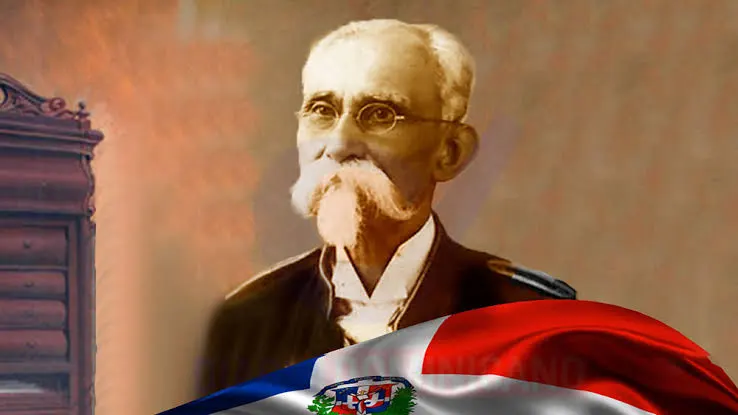
Baní, the Spanish Army, and the Education in Caribbean War
The Dominican Republic into which Máximo Gómez was born in 1836 was one of the most politically turbulent territories in the Caribbean — a country that had declared independence from Haiti in 1844, after twenty-two years of Haitian rule that followed independence from Spain, and that would in 1861 make the extraordinary decision to invite Spanish re-annexation, becoming again a Spanish colony for four years before a guerrilla war of restoration drove Spain out again in 1865. This sequence of colonial relationships, independence declarations, and military conflicts gave the Dominican Republic, in the mid-nineteenth century, an intimate practical knowledge of both colonial governance and armed resistance to it that shaped the political formation of everyone who grew up in it.
Gómez entered the Spanish army as a young man and served during the re-annexation period, which meant that he was on the Spanish side during the early phase of the Dominican resistance while simultaneously absorbing from that resistance precisely the guerrilla techniques that he would later deploy against the Spanish army in Cuba. The Dominican guerrillas who resisted re-annexation used the terrain — the mountainous interior of the island, the tropical vegetation, the heat and disease that debilitated conventionally trained European soldiers — with a tactical sophistication that came from fighting on home ground against a force that was better equipped but less mobile and less locally knowledgeable. Gómez watched, served, and learned. When Spain abandoned the re-annexation in 1865 and he found himself without a military employer, he crossed to Cuba, settled in the eastern province, married, farmed, and waited for the opportunity to apply what he had learned on the other side.
The opportunity came in October 1868. He was thirty-two years old when the Ten Years' War began, a former Spanish officer with the specific military training that the Liberation Army desperately needed and that none of the Creole landowners who were leading the early phase of the uprising possessed. He offered his services. They were accepted. Within two years he was the most important military mind in the rebel force, training commanders and devising the tactical innovations that gave the Liberation Army its most effective offensive capabilities.
The Machete Charge and the Scorched-Earth Strategy
The machete charge — massed cavalry advancing at full gallop with machetes rather than firearms — was Gómez's most visible tactical contribution to the liberation wars, and it worked for reasons that were simultaneously practical and psychological. Practically, the Liberation Army was chronically short of firearms and ammunition. The machete, by contrast, was everywhere in a country whose agricultural economy depended on cutting sugar cane and clearing vegetation. Every farmer in Cuba owned a machete. The innovation was recognising that a tool present in every household could, in the hands of trained cavalry at full gallop, be more terrifying and more effective at close quarters than a rifle — because the rifle required ammunition the army often did not have, and because the psychological impact of massed cavalry bearing down with blades was sufficient, in many engagements, to break infantry formations before they could bring their firepower advantage fully to bear.
He drilled his cavalry in the technique with the precision of a professional soldier: the timing of the charge, the maintenance of formation through the gallop, the specific cut that was most effective against a standing infantryman, the discipline to wheel and regroup for a second pass when the first had penetrated the Spanish line. Antonio Maceo and the other Afro-Cuban cavalry commanders whom Gómez trained absorbed these techniques and applied them throughout the wars with the effectiveness that made the Camagüey and Oriente cavalry the most feared military forces in Cuba.
The scorched-earth strategy was more controversial within the independence movement but strategically more important. Gómez's analysis was straightforward: the Cuban colonial economy was based on sugar, and the Spanish government's ability to finance its military operations in Cuba depended on the tax revenue that sugar production generated. If the sugar mills and the cane fields in rebel-controlled territory were destroyed, Spain lost its financial base on the island and the cost of maintaining the colonial war increased to the point where it became politically and economically unsustainable. He ordered the burning of sugar mills and cane fields throughout the territory the Liberation Army controlled or passed through, and he enforced the orders with a military discipline that did not exempt the properties of Creole independence supporters from destruction along with those of Spanish loyalists. The policy was militarily sound and economically devastating. It was also profoundly unpopular among the Creole landowning class whose cooperation the independence movement needed, and whose political support rested precisely on the expectation that independence would preserve their economic position rather than destroy it.
The Relationship With Maceo and the Question of Race
The working relationship between Máximo Gómez and Antonio Maceo — the Dominican former Spanish officer and the Afro-Cuban carpenter's son — was one of the most important military partnerships in the history of the Americas and one of the most carefully studied examples of cross-racial military collaboration in any context. Gómez recognised Maceo's exceptional military ability from the earliest phases of the Ten Years' War and gave him the responsibilities and the command autonomy that his abilities warranted, at a time when other senior white Creole commanders were more reluctant to allow an Afro-Cuban officer the kind of independent operational scope that Maceo required to demonstrate what he could do.
This recognition was not without its complications. The relationship between the two men was close and productive but also periodically tense, shaped by the genuine political disagreements between a commander-in-chief who thought in terms of overall military strategy and a subordinate commander who had his own strategic views and was not always willing to subordinate his operational instincts to a strategic framework he disagreed with. Maceo's relationship to questions of race and independence was more explicitly political than Gómez's — Maceo insisted, publicly and consistently, that independence without racial equality was meaningless, while Gómez's approach to the racial politics of the independence movement was more pragmatic, focused on maintaining the coalition of forces that the military campaign required. These differences were real but did not prevent the two men from achieving, in the Western Invasion of 1895–96, the most strategically decisive military operation of either independence war.
Correspondence With Martí and the Planning of the Final War
The seventeen years between the Pact of Zanjón and the beginning of the War of Independence were, for Gómez, years of exile in Honduras, Costa Rica, and other Central American countries — years maintained by correspondence with José Martí in New York, who was building the political and organisational infrastructure for the next campaign. The correspondence between Gómez and Martí across this period is one of the most important documentary records of the planning of the Cuban independence movement, and it reveals the specific character of their relationship: the political visionary who understood the organisational and ideological dimensions of the revolution, and the military commander who understood the operational requirements and was honest, sometimes uncomfortably so, about what the political plans would actually require in the field.
Their relationship was not always smooth. Gómez was a military man with limited patience for the diplomatic nuances that Martí navigated with such care, and he was capable of expressing his impatience with a directness that occasionally alarmed Martí's more politically sensitive collaborators. But the strategic essentials were agreed: the landing from outside, the guerrilla campaign in the mountains, the political framework that would give the military campaign its legitimacy, the relationship between the exile organisation and the internal networks. Gómez agreed to serve as commander-in-chief of the final campaign under the political authority of the Cuban Revolutionary Party that Martí had built. The agreement held through the preparation and through the landing, and through the deaths and the losses that the campaign required.
The 1895 Landing, Martí's Death, and the Western Invasion
Gómez and Martí landed together in Cuba on 11 April 1895, part of the small group that came ashore at Playitas in the dark. Six weeks later, on 19 May 1895, Martí was killed at Dos Ríos. Gómez, who was present in the area during the engagement, dealt with the loss as a military man must — by continuing the campaign — and took on the full weight of the commander-in-chief role without the political partnership that Martí had provided. He was fifty-eight years old, and the man who had been the political mind of the operation was dead, and the military campaign had to continue without the specific combination of authority and vision that Martí had brought to it.
The Western Invasion — the joint campaign that Gómez directed strategically while Maceo commanded the invading column — began in October 1895 and reached Pinar del Río at the western end of Cuba in January 1896. The campaign was Gómez's strategic conception and Maceo's operational achievement, and the two elements were inseparable: without Gómez's overall direction and the coordination of rebel forces across the island, Maceo's column would have been isolated and destroyed; without Maceo's operational brilliance in the field, the strategic concept would have remained unrealised. The Western Invasion broke the Spanish strategic concept — the Trocha line that was supposed to contain the rebellion in the east — and forced Spain to escalate to the reconcentration policy that ultimately destroyed its international standing and provided the immediate justification for American intervention.
Maceo was killed in December 1896. Gómez, now commanding without his most capable subordinate, continued the campaign through 1897 and into 1898, maintaining the military pressure that kept the Spanish army off-balance and prevented the kind of decisive Spanish victory that might have resolved the conflict on Spain's terms before American intervention changed the situation entirely. When the Spanish-American War produced the peace of 1898, Gómez's three years of continuous command since the 1895 landing had been the military spine of the campaign that made American intervention strategically possible and politically necessary.
The Refusal of the Presidency and the Ungrateful Republic
When Cuban independence was achieved in 1898 — on terms Gómez found deeply unsatisfying, through a process of American intervention that excluded the Liberation Army from the surrender ceremonies and produced the Platt Amendment rather than genuine sovereignty — the new Cuban political establishment offered him the presidency. He refused it, on grounds that combined genuine principle with characteristic directness: he was a soldier, not a politician; a Dominican had no business governing Cuba; the presidency should go to a Cuban. The refusal was consistent with the position he had maintained throughout the wars — that he was serving Cuba rather than seeking to rule it — and it cost him, in the subsequent years, the political standing that acceptance might have given him.
The Cuban republic that emerged after 1902 treated Gómez with less generosity than his thirty years of service to its liberation warranted. He lived in Havana in modest circumstances, subsisting on a pension that the republic eventually granted him after some political difficulty, maintaining the dignity of a man who had accomplished extraordinary things and was unwilling to ask for recognition he had not received. He died on 17 June 1905, aged sixty-eight, in Havana — the city that was not his birthplace, in the country that was not his homeland but that he had given his military career to freeing. The Cuban government gave him a state funeral. It was less than he had earned, and more than many other veterans of the independence wars received.
His legacy in Cuban history is paradoxical in a way that reflects the specific complications of his position. He is unambiguously among the two or three most important military figures of the Cuban independence era — without his command, his tactical innovations, and his training of the Afro-Cuban cavalry commanders who carried the fighting, the independence wars might have ended differently. He is also a foreigner — a Dominican who led Cuba's armies — which has always complicated the straightforward nationalist commemoration that Cuban heroes typically receive. The paradox was not lost on him. He had been aware of it throughout his career and had addressed it with the specific solution of refusing any political role that would have required him to govern the country he had fought to free. He was a soldier in Cuba's service. Cuba's liberation was what he had to give it. He gave it, and did not ask for anything more.