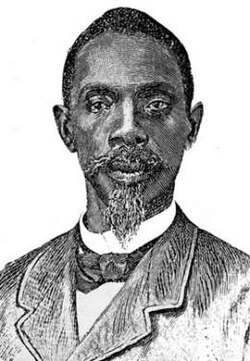
Santiago, Race, and the World That Made Guillermón
The Santiago de Cuba that Guillermo Moncada grew up in during the 1840s and 1850s was the most African city in Cuba — a place where the proportion of the population that was Black or of mixed African and European descent was higher than anywhere else on the island, where the culture was shaped by the African religious and musical traditions that had survived the Middle Passage and been transformed in the Caribbean crucible, and where the political reality of slavery and racial hierarchy was not an abstraction but the organising principle of daily life. The Spanish colonial system that governed Cuba maintained an elaborate legal structure of racial classification — free Black, free mulato, enslaved Black, enslaved mulato, and the various combinations that the realities of a slave society produced — and this structure determined everything from where you could live to what work you were permitted to do to whether you could be educated and how far.
Moncada occupied the position of free Afro-Cuban in this structure — not enslaved, but not equal. He worked as a carpenter, a skilled trade that was accessible to free Black men in ways that the professions and the ownership of large estates were not, and he built a life in the Tívoli neighbourhood of Santiago that was modest, stable, and entirely contained within the boundaries that the colonial racial order imposed. What happened inside those boundaries — the specific texture of his political formation, the conversations and the experiences and the encounters that turned a carpenter from Tívoli into one of the most effective military commanders of the independence era — is not fully documented, as is the case for most people whose lives were not considered important enough by the record-keepers of their time to deserve preservation. What is clear from the subsequent record is that by the time the Ten Years' War began in 1868, Moncada was prepared for it: politically committed, physically capable, and possessed of the leadership qualities that would move him rapidly through the military hierarchy of the Liberation Army.
The Ten Years' War gave Afro-Cuban men like Moncada the specific opportunity that the colonial social order denied them: advancement through demonstrated ability in a context where the need for effective military leadership outweighed the social conventions that otherwise constrained Black mobility. The Liberation Army was not free of racial hierarchy — white Creole officers occupied most of the senior positions at the beginning of the war, and the question of what independence would mean for racial equality was deeply contested within the movement — but it was sufficiently meritocratic, under the pressure of actual combat, to allow Moncada to advance from soldier to Brigadier General over ten years of fighting. That advancement was bought through performance under fire, through the loyalty of the soldiers under his command, and through the recognition of senior commanders like Máximo Gómez that Moncada's abilities were too valuable to be constrained by racial convention.
The Ten Years' War: A Decade of Combat in Oriente
Moncada's service in the Ten Years' War was concentrated in the Oriente theatre — the eastern province where the war had begun and where it was most intensely fought throughout its duration. He fought in the campaigns around Santiago, in the Guantánamo region, in the coastal areas and the foothills of the Sierra Maestra, developing an intimate knowledge of the terrain and of the specific military challenges that the geography of eastern Cuba posed for both guerrilla and conventional operations. He became known for the quality of his cavalry command — the fast-moving, hard-hitting raids on Spanish positions that were the characteristic offensive instrument of the Liberation Army — and for a personal style of leadership that combined physical presence in the most dangerous places with the ability to maintain the cohesion of his troops through extended periods of privation and pressure.
He operated alongside Antonio Maceo through significant portions of the Ten Years' War, and the relationship between the two men — both Afro-Cuban commanders of the first importance, both fighting in the same theatre against the same enemy, both wrestling with the same question of what independence would mean for the racial equality that their military service was supposed to be building — shaped both their military approaches and their political understanding. Maceo was the more theoretically sophisticated of the two, the man who articulated most clearly and publicly the insistence that independence without racial equality was meaningless. Moncada embodied the same principle somewhat more quietly, through the consistency of his military service and through his refusal to accept any arrangement — during the war or in the years between the wars — that treated his contribution as less significant because of his race.
The Pact of Zanjón in 1878, which ended the Ten Years' War, found Moncada in a different position from Maceo. Where Maceo staged the Protest of Baraguá — the formal, public refusal to accept the peace that became one of the foundational acts of Cuban national mythology — Moncada accepted the settlement. This has sometimes been presented as a contrast that reflects poorly on Moncada: the lesser commitment, the willingness to compromise that Maceo refused. The reality is more complex. Moncada's acceptance of the Pact was not the acceptance of its terms as just or final; it was a pragmatic calculation about what was militarily possible with diminishing forces against a Spanish army that had not been defeated. The scepticism about the Pact that Moncada expressed in private correspondence and in conversations with his fellow commanders was fully borne out by the Spanish government's subsequent failure to implement the promised reforms. He watched that failure over the following seventeen years from Santiago with the patience of a man who knew the next war was coming and was simply waiting for the conditions that would make it winnable.
Between the Wars: Santiago, the Little War, and the Preparation
The seventeen years between the end of the Ten Years' War and the beginning of the War of Independence were, for Moncada as for all the veterans of the first conflict who had not gone into permanent exile, years of constrained existence in an island whose political situation had not materially changed. The Spanish government in Cuba maintained the colonial administration with minor adjustments, failed to implement the autonomy reforms the Pact of Zanjón had promised, retained the structures of racial discrimination that the war had nominally been fought against, and maintained the surveillance of former rebel commanders that ensured the independence networks could never operate entirely freely.
Moncada participated in the Guerra Chiquita — the Little War of 1879 to 1880 — which was the abortive attempt by Maceo and other veterans to restart the independence war before the political and organisational conditions for a sustained campaign were in place. He was captured during this conflict, imprisoned for a period, and released — treatment that reflected the same Spanish calculation about the political cost of killing prominent prisoners that had kept Calixto García alive after his attempted suicide in 1874. He returned to Santiago, resumed his work, and continued maintaining the connections with the independence network that never entirely dissolved between the wars.
His position in Santiago during these years was one of recognised local importance — a former senior military commander of the liberation movement who was known throughout the community, respected by the Afro-Cuban population in particular, and connected to the networks that were quietly preparing for the next campaign. José Martí's organisational work in the early 1890s, building the Cuban Revolutionary Party and raising money from the exile communities in Florida and New York, depended on having reliable contacts inside Cuba who could maintain the connection between the exile organisation and the people who would have to do the actual fighting. Moncada was one of those contacts in Santiago — part of the web of relationships that Martí and Celia Sánchez's father and others maintained across Oriente against the day when the campaign could begin.
The War of Independence: The Last Campaign
When the War of Independence began on 24 February 1895, Guillermo Moncada was approximately fifty-four years old. He had already given ten years of his life to the first independence war and had spent seventeen more years in the constrained existence of a former rebel commander under colonial surveillance. His health was not what it had been in 1868. But when the signal came, he was among the first to take the field in Oriente, raising forces around Santiago in the opening weeks of the new campaign with the same energy and authority that had characterised his service in the Ten Years' War.
The opening months of the War of Independence in Oriente were a period of rapid military organisation — establishing the command structures that would link the various insurgent forces across the province, making contact with the commanders arriving from exile, fighting the initial engagements that tested the Spanish army's response and established the operational patterns of the guerrilla campaign. Moncada was at the centre of this organisational work in the Santiago area, applying the experience of the Ten Years' War to the specific conditions of 1895 and providing the kind of seasoned military leadership that a movement in its opening weeks needed most.
He did not survive the opening phase. The illness that killed him — the records are insufficiently precise to establish its exact nature, but tetanus is mentioned in several contemporary accounts, consistent with the conditions of field operations in Oriente — struck him in April 1895, approximately two months after the war began. He died in the field, among the soldiers of the eastern theatre, having been among the first to take up arms in the final independence war and not having lived to see what it would accomplish. Antonio Maceo — who had known him since the Ten Years' War, who had fought alongside him across a decade of the most intense guerrilla warfare in Cuban history — lost one of his oldest comrades at the moment when the campaign was only beginning.
The Barracks, the Name, and the Irony of Historical Memory
The Moncada Barracks in Santiago de Cuba was the second-largest military installation in Cuba — a former Spanish colonial barracks that the Cuban republican government had maintained after independence and that remained in 1953 a heavily fortified complex housing a large Batista army garrison. It was named after Guillermo Moncada at some point in the post-independence period, as part of the general programme of naming military installations and public buildings after the heroes of the independence wars that was standard practice in the republic. The naming honoured his military service during the Ten Years' War and made his name, in Santiago's physical landscape, permanently associated with military force and with the independence tradition.
On 26 July 1953, Fidel Castro led approximately 160 fighters in an attack on the Moncada Barracks that was intended to seize weapons and spark a popular uprising. The attack failed catastrophically. Most of the attackers were killed or captured. Castro was arrested, tried, and sentenced to fifteen years imprisonment. The movement that grew from the attack — organised in the prison, named after the date of the failed assault — became the July 26 Movement: the organisation that led the Cuban Revolution and overthrew the Batista government in January 1959.
The historical irony is complete and somewhat vertiginous. Guillermo Moncada, the Afro-Cuban carpenter from Santiago who rose to Major General through the Ten Years' War, who died in the field two months into the War of Independence without seeing the Cuba he had fought for, had a barracks named after him. That barracks became the site of the defining early act of the revolution that created the Cuba that exists today. His name — which might otherwise have remained the name of a respected but somewhat obscure nineteenth-century commander, known to historians of the independence wars and to the communities that maintained the memory of Afro-Cuban military service — became, through this chain of connections, permanently embedded in the name of the organisation that led the Cuban Revolution. Every Cuban knows the name Moncada. Most of them know it primarily as the name of the barracks and of the movement named after the attack on it. Fewer know the carpenter from Tívoli whose service in the Ten Years' War earned the name in the first place. He deserves to be the former rather than merely the latter.
Moncada and the Afro-Cuban Military Tradition
Guillermo Moncada belongs to a cohort of Afro-Cuban military figures — alongside Antonio Maceo, Quintín Bandera, Ignacio Agramonte's cavalry comrades, and many others — whose service in the independence wars constituted one of the most significant examples of Black military participation in the history of the Americas. Cuba's independence wars were fought in significant part by Afro-Cuban soldiers and commanded in significant part by Afro-Cuban officers, and this participation was predicated on an explicit understanding — stated most clearly by Maceo but shared throughout the movement — that independence would bring racial equality, that the Cuba being fought for would be a Cuba in which race did not determine the limits of a person's life.
That understanding was not fully realised in the post-independence republic that emerged after 1898 and was formally established in 1902. The Platt Amendment and the structures of American economic and political influence that came with it produced a Cuban republic that was governed primarily by white Cubans and that maintained substantial racial inequality in employment, education, and political participation. The massacre of 1912 — in which the Cuban army killed approximately three thousand Afro-Cubans who had organised a political party to demand the rights that independence was supposed to have brought — demonstrated how far the post-independence republic fell from the standard that Moncada and Maceo and Bandera had fought to establish. Moncada died before that massacre, and before the independence that preceded it. He died fighting for something that his country took decades to begin approaching and has not yet fully achieved. The carpenter from Santiago deserved better from the Cuba he helped create. Cuba, in return, deserves to know him better than it does.