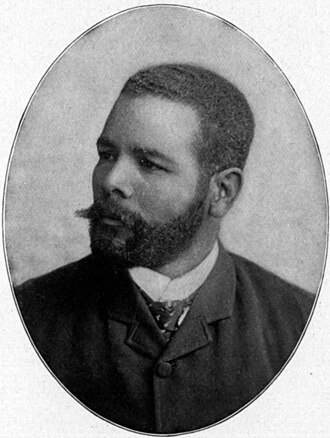
Origins: The Grajales Household and the Politics of Race in Colonial Cuba
To understand Antonio Maceo, it is necessary to understand the household that produced him. His mother, Mariana Grajales, was by all accounts a woman of extraordinary force of character who had made the cause of Cuban independence not merely a political position but a religious obligation — she framed the struggle in explicitly Christian terms, comparing the fight for freedom to Christ's passion, and when the Ten Years' War began in 1868, she reportedly gathered her sons, read a passage from scripture, and told them that it was time to consecrate themselves to the patria or die in the attempt. She eventually lost her husband Marcos and several of her sons to the war. She herself went into exile and died in Kingston, Jamaica, in 1893, two years before the final independence war she had devoted her life to preparing would begin.
Antonio was raised in this atmosphere of absolute commitment, but his political formation was also shaped by the specific realities of race in colonial Cuba. As the son of a free mulato father and an Afro-Cuban mother, he occupied a position in Cuban society that was legally free but socially constrained in ways that the elaborate racial hierarchy of Spanish colonialism enforced at every level. Cuba's economy was built on the labour of enslaved Africans — the island was one of the world's largest sugar producers, and sugar was grown and harvested by enslaved people, approximately 370,000 of them at the start of the Ten Years' War. The Spanish colonial government had used the threat of slave rebellion as a political tool to keep Creole property owners loyal to the Crown, arguing that independence would produce a race war on the Haitian model. This argument was effective enough to split the independence movement for decades.
Maceo's existence as a Black military leader of the first importance was, in itself, a political statement about what Cuban independence meant. He insisted throughout his career that independence without racial equality was not independence worth having — that a Cuba that freed itself from Spain but maintained the social structures of racial hierarchy had not freed itself in any meaningful sense. This position put him in tension with some of the white Creole independence leaders who wanted Black military support without committing to racial equality in the postwar order. Maceo was unwilling to provide the military support without the commitment. His position on this never wavered across nearly three decades of military and political engagement.
The Ten Years' War: From Private to Major General
The Ten Years' War began on 10 October 1868 when Carlos Manuel de Céspedes freed his slaves at his La Demajagua plantation and launched the uprising that had been planned for months by a network of Creole independence conspirators in Oriente province. Maceo joined the rebellion within days, at the age of twenty-three, as a soldier without rank or particular military training. What he had instead was physical courage of an unusual order, tactical intuition that developed rapidly under fire, and an ability to inspire the men under his command that was noted by every officer who served alongside him.
His advance through the Liberation Army's ranks over the following decade was driven entirely by battlefield performance. He fought at Palo Seco, at Jobito, in dozens of engagements across Oriente and Camagüey provinces, accumulating wounds and promotions in roughly equal measure. By the middle years of the war he was commanding his own column, then a brigade, then operating as one of the senior field commanders in the eastern part of the island. He was promoted to Major General in 1878, as the war was ending — a recognition of a decade's service that came too late to affect the outcome of a conflict that was already being negotiated to a conclusion he had no intention of accepting.
The military context of those ten years was one of brutal attrition. The Spanish army had enormously superior resources — regular troops, artillery, naval support, the ability to import reinforcements from the peninsula — while the Liberation Army operated on the principle of the guerra de guerrillas, relying on mobility, knowledge of terrain, and the support of the rural population. The Spanish strategy of building the Trocha, a fortified line of blockhouses and cleared land across the island's narrowest point, was designed to contain the rebellion in Oriente and prevent it from spreading westward to the sugar-rich provinces where the economic heart of the colony lay. The containment was partially successful during the Ten Years' War — the rebels never broke through to the west in force — and this strategic failure contributed to the eventual decision by most commanders to accept the Pact of Zanjón.
The Protest of Baraguá: The Most Important Refusal in Cuban History
The negotiations leading to the Pact of Zanjón took place in late 1877 and early 1878, as the Liberation Army's military position deteriorated under pressure from reinforced Spanish forces commanded by General Martínez Campos. Key commanders accepted the peace one by one — the inducements included freedom for enslaved people who had fought with the rebels, amnesty for the insurgents, and vague promises of political reform. The terms were better than nothing. They were also far short of independence and completely silent on the liberation of the large majority of enslaved people who had not served in the rebel ranks.
Maceo refused to negotiate on these terms, and when Martínez Campos requested a meeting to discuss the situation, Maceo rode to the Spanish camp on 15 March 1878 with a small escort and met the Spanish commander face to face. The meeting at Baraguá was a remarkable encounter between two soldiers who respected each other's military abilities and had been trying to kill each other for ten years. Maceo told Martínez Campos that he would not accept the Pact of Zanjón because it did not include Cuban independence and because it did not abolish slavery for all enslaved people on the island. He stated his position with a clarity and directness that Martínez Campos acknowledged in his own dispatches as extraordinary. When it became clear that the Spanish terms would not change, Maceo declared the resumption of hostilities and returned to his lines.
He fought on for another two months with a force that was shrinking daily as other commanders accepted the peace and their soldiers laid down arms. By late May 1878 he had fewer than one thousand effective fighters and no prospect of resupply. He accepted evacuation to Jamaica, from which he immediately began organising the next campaign. The Protest of Baraguá had lasted two months after the general peace. Its significance was not military — those two months changed nothing on the ground — but moral and political. It established that the independence cause had not been surrendered, that the Pact of Zanjón was a pause rather than a conclusion, and that there existed within the movement a standard of what independence meant — full sovereignty, genuine racial equality, no accommodation with the colonial power on terms short of those — that no subsequent leader of the cause could publicly fall below. José Martí invoked Baraguá constantly in the years he spent organising the next war. The standard Maceo had set shaped the political culture of the entire independence movement.
Exile, the Little War, and the Long Preparation
The years between 1878 and 1895 were spent primarily in exile — in Jamaica, Honduras, Costa Rica, Panama, and Haiti — interrupted by the brief and unsuccessful Guerra Chiquita (Little War) of 1879–80, in which Maceo returned to Cuba to attempt to restart the rebellion before the organisational infrastructure for a sustained campaign was in place. The Little War failed quickly, and Maceo was back in exile within months, once again building, organising, and waiting.
The waiting was not passive. He maintained contact with independence networks throughout the Caribbean and Latin America, worked as a farmer and businessman in Costa Rica to sustain himself and his family, and kept up a continuous correspondence with Martí and other independence leaders about the strategy and organisation of the next campaign. He was sceptical, sometimes sharply so, of civilian politicians who theorised about revolution from safe distances, and his correspondence with Martí — which began tense and became warm — shows both his directness and his eventual recognition that the political organisation Martí was building was the necessary foundation for the military campaign he wanted to lead.
He also used the exile years to develop his understanding of guerrilla warfare in ways that went beyond the tactical lessons of the Ten Years' War. He read military history extensively — he was a more educated man than his origins and the brevity of his formal schooling might suggest — and thought carefully about the strategic questions that had defeated the earlier campaign: the failure to break through to the western provinces, the chronic shortage of weapons and ammunition, the political divisions within the independence movement that had allowed the Spanish to exploit disagreements between commanders. When the 1895 war began, he was prepared for it in ways that the 1868 war had not allowed.
The Western Invasion: Cuba's Most Audacious Military Campaign
The War of Independence began on 24 February 1895 with coordinated uprisings across Cuba. Maceo landed in Oriente in April, shortly after Martí and Máximo Gómez. Martí was killed in May at Dos Ríos. Gómez and Maceo conferred on strategy and agreed that the war's decisive phase required breaking the Spanish strategic concept: the Trocha line that had contained the rebellion in the east during the Ten Years' War had to be crossed, and the fighting had to be carried into the western provinces where Spanish power and Cuban sugar wealth were concentrated.
The Western Invasion began in late October 1895. Maceo commanded the invading column — approximately 1,500 cavalry, carrying what weapons they could bring and counting on capturing more from the Spanish forces they engaged. The column crossed the Trocha under fire, fighting its way through Spanish positions that were supposed to make the crossing impossible, and drove west through Las Villas, through Matanzas, through Havana province, and into Pinar del Río — the westernmost province of Cuba — arriving there in January 1896 after covering approximately a thousand miles in ninety-two days. The Spanish army, despite numerical superiority, could not pin down or destroy the column. The fortifications that were supposed to contain the rebellion had been overrun. The myth of Spanish military control over the western half of Cuba had been destroyed.
The military and psychological impact of the Western Invasion was immense. It demonstrated that the Liberation Army could operate anywhere on the island, that no part of Cuba was secure for the Spanish administration, and that the colonial government's claims to have the rebellion under control were false. It also forced the Spanish government to escalate dramatically, sending General Valeriano Weyler — whose methods would include the reconcentration camps that killed hundreds of thousands of Cuban civilians and eventually created the American public pressure that helped produce American intervention in 1898 — to replace Martínez Campos as commander in Cuba. The escalation was itself evidence of the campaign's success: Spain would not have resorted to Weyler's extreme methods if Maceo's invasion had not demonstrated the inadequacy of conventional military responses.
Death at Punta Brava and the Question of Betrayal
By late 1896, Maceo had been operating in Pinar del Río and the western provinces for nearly a year, conducting a continuous guerrilla campaign against Spanish forces that significantly outnumbered his own. He needed to cross back through the Trocha to coordinate with Gómez in the east, and on 7 December 1896 he attempted to cross with a small escort near Punta Brava, on the outskirts of Havana. The column was ambushed. Maceo was shot twice — once in the chest, once through the mouth — and died on the field. He was fifty-one years old.
The circumstances of his death have been debated by historians ever since. The ambush at Punta Brava was very precisely targeted — Spanish forces were waiting at a specific location for a small column whose route and timing should not have been predictable — and the explanation that involves a simple chance encounter with a Spanish patrol has never been fully convincing. Several historians have argued that there was an informant, possibly within Maceo's own escort, who communicated his movements to the Spanish. The identity of any such informant has never been definitively established. What is not in dispute is that the death of Maceo at this moment, when the western campaign was going well and when his leadership was operationally critical, was a strategic blow of the first order. The Liberation Army did not have another commander of his quality to replace him in the western theatre.
Cuba's independence came on 1 January 1899, following the Spanish-American War and the Treaty of Paris — achieved partly through the military pressure that Maceo's campaigns had created, but also through American military intervention that Maceo had spent his career arguing against, understanding that a Cuba liberated by the United States would be a Cuba economically and politically subordinated to the United States. The Platt Amendment of 1901, which gave the United States the legal right to intervene in Cuban affairs and established the naval base at Guantánamo Bay that remains there today, confirmed his analysis. He had died before he could say he told them so. He had also died before the racial equality that he had fought for across three decades was achieved — which is to say, he died before it was not achieved, which is perhaps the more accurate formulation. Cuba abolished slavery in 1886. It did not abolish racial hierarchy. The post-independence republic that emerged in 1902 was governed primarily by white Cubans, and the Afro-Cuban political aspirations that Maceo had represented were marginalised with systematic effectiveness. The revolution that eventually addressed those aspirations most directly — if incompletely — would not arrive until 1959, sixty-three years after his death.
The Bronze Titan in Cuban Memory
The title El Titán de Bronce — the Bronze Titan — was given to Maceo by his contemporaries and has stayed with him in Cuban historical memory in ways that illuminate both the genuine reverence for his military achievements and the complexities of how Cuba has memorialised its Afro-Cuban heroes. He is ubiquitous in the iconography of Cuban nationalism: on currency, in statues in every major city, in the name of streets and schools and barracks, in the official rhetoric of both pre-revolutionary and revolutionary Cuban governments. This ubiquity is, in one sense, genuine recognition of an extraordinary military career. In another sense, it has functioned to absorb the radical racial politics that Maceo represented into a narrative of undifferentiated Cuban heroism that de-emphasises what he specifically stood for — the insistence that independence without racial equality was meaningless — in favour of what he can be made to represent in a more general nationalism.
The tension between these two uses of Maceo's memory has been noted by Afro-Cuban intellectuals and activists throughout the twentieth century, who have pointed out that the very thoroughness of his official commemoration has sometimes served to obscure the specific content of his political commitments. He was not simply a great soldier who happened to be Black. He was a political figure who argued, explicitly and consistently, that the racial dimension of Cuban liberation was inseparable from the nationalist dimension, and that any settlement of the independence question that did not address racial hierarchy was not a settlement worth making. That argument — stated most clearly at Baraguá, but present in his correspondence and his military decisions throughout his career — is as relevant to Cuban history as the victories at Las Guásimas and the Western Invasion. It is, arguably, more relevant, in that it speaks to questions that were not resolved by independence and have not been fully resolved since.