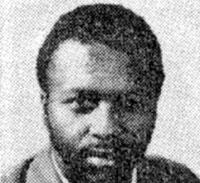
At a Glance
Eastern Cape Origins and the Mission School World
Tennyson Makiwane came from the Eastern Cape — the region that had, across the nineteenth and early twentieth centuries, developed the densest network of mission schools, the highest rates of African literacy, and the strongest tradition of educated African political engagement of any region in South Africa. This was not accidental: the Eastern Cape had been the frontier zone of British colonial expansion into the African interior, and the missionaries who accompanied British power had invested more heavily in the education of African communities there than anywhere else in the country. Fort Hare University, established in 1916 at Alice in the Eastern Cape, became the pre-eminent institution of African higher education not only in South Africa but across southern Africa, producing the leaders of liberation movements from South Africa to Zimbabwe to Zambia to Botswana. The Eastern Cape's political culture was shaped by this educational tradition — by the combination of literacy, professional competence, and political consciousness that the mission school world at its best produced.
Makiwane grew up in this world, absorbing its combination of Christian morality, Western educational culture, and African political aspiration. The tension between these elements — between the universalist liberalism that the mission tradition professed and the racial exclusion that South African society practised — was itself a powerful generator of political consciousness. Young men and women educated to believe in the principles of human dignity and democratic rights, and then confronted at every turn with a society that denied those principles to them on the basis of race, had two choices: accommodation or resistance. The generation that produced Makiwane chose resistance, and the ANC Youth League of the late 1940s was the organisational form that resistance took.
The Youth League Generation and the Transformation of the ANC
Makiwane's political formation occurred during one of the most important transitions in the history of the South African liberation movement: the transformation of the ANC from a predominantly elite organisation of educated African professionals who believed in constitutional petition and moderate reform into a mass movement committed to the direct political mobilisation of the African majority through strikes, boycotts, stay-aways, and civil disobedience. That transformation was the work of the ANC Youth League — the organisation founded in 1944 by Nelson Mandela, Oliver Tambo, Walter Sisulu, Anton Lembede, and their contemporaries, and brought to its first major expression in the Programme of Action adopted by the ANC at its 1949 conference.
The Youth League's politics were Africanist in emphasis — they insisted on the centrality of African political leadership and African national consciousness in a way that put them in tension with the multiracial liberalism of some ANC elders and the communist internationalism of the SACP — but they were also mass-democratic in their methods, committed to the kind of popular mobilisation that the Defiance Campaign of 1952 would demonstrate was possible. Makiwane was part of this generation, shaped by its political formation, committed to its programme of mass non-violent resistance, and positioned to carry its project forward into the exile years after the apartheid state's crackdown of 1960 made internal organisation effectively impossible.
Sharpeville, Exile, and the Building of International Solidarity
The Sharpeville massacre of 21 March 1960 — the day when police opened fire on a crowd of Africans who had gathered at the Sharpeville police station to protest the pass laws, killing sixty-nine people and wounding more than a hundred and eighty — transformed the political landscape of South Africa and the liberation movement's strategic position. The apartheid government responded to the international outrage that Sharpeville generated not by moderating its policies but by declaring a state of emergency and banning both the ANC and the Pan-Africanist Congress. The liberation movement was forced underground and into exile — and the ANC's external mission, which had existed in modest form since the late 1950s, suddenly became the primary vehicle through which the movement maintained its organisational existence and its political programme.
Oliver Tambo, who had left South Africa just before the banning to establish the external mission, became the ANC President-in-exile and the central figure of the movement's decades-long external operation. Around him gathered the exiles — men and women who had left South Africa and built new lives in Lusaka, London, Dar es Salaam, Stockholm, Moscow, Accra, and dozens of other cities, sustaining the movement through their organising, their diplomacy, their journalism, and their connections with the international solidarity network that was the ANC's primary source of material and political support during the long years of internal suppression.
Tennyson Makiwane was one of the most effective of these exile operators. His work as a journalist — writing for Sechaba, the ANC's journal, and for other liberation movement publications — gave him a vehicle for articulating the movement's positions to an international audience in terms that were persuasive and clear. His diplomatic work — representing the ANC at international forums, building relationships with sympathetic governments and organisations, making the case for sanctions and isolation against the apartheid regime — contributed to the gradual construction of the international pressure that would eventually force the apartheid government to the negotiating table. He was, in the full sense of the term, a professional liberation movement operative: someone who had made the struggle his career and who brought to it the skills, the networks, and the sustained commitment that a decades-long exile operation required.
The Hermanus Lowen Eight: Dissent, Expulsion, and the Price of Internal Division
By the mid-1970s, the ANC exile community was experiencing significant internal tensions. The movement had been in exile for more than a decade; its military wing, Umkhonto we Sizwe, had suffered significant reverses in its attempts to establish guerrilla operations inside South Africa; the relationship between the ANC and the South African Communist Party was a source of ongoing debate within the movement; and the lack of the normal accountability mechanisms of a political organisation operating in a democratic environment — elections, open debate, contestable leadership — created conditions in which internal criticism could easily be interpreted as subversion rather than legitimate dissent.
In this atmosphere, Makiwane and seven other senior ANC exiles wrote a memorandum that criticised the direction of the movement. The precise content and emphasis of the memorandum have been described differently by different participants and observers; what is clear is that its signatories were concerned about what they saw as undue SACP influence over the ANC's structures and direction, about the lack of internal democratic debate, and about the movement's strategic effectiveness. They addressed this memorandum to the ANC's leadership and, when their concerns were not addressed to their satisfaction, circulated it more widely.
The ANC's response was expulsion. The eight signatories — who became known as the Hermanus Lowen Eight, or in ANC usage as the Gang of Eight — were expelled from the organisation in 1975. The episode was significant not only for Makiwane's personal trajectory but for what it revealed about the conditions of exile politics: the extraordinary pressures that the external mission operated under, the genuine threat that factional division posed to a movement that depended on unity for its survival and effectiveness, and the corresponding temptation to treat internal criticism as subversion rather than as the normal democratic activity that political organisations require to maintain their vitality and accountability. The ANC's handling of the episode — like the movement's handling of other internal crises during the exile years — has remained contested in South African historiography, with some writers defending the leadership's response as a necessary protection of unity under threat and others criticising it as an authoritarian suppression of legitimate dissent.
The episode had its parallels elsewhere in the liberation movement's experience: the tensions between the ANC and the Pan-Africanist Congress, the internal debates about armed struggle versus other forms of resistance, the questions about the role of non-African members and the SACP that recurred throughout the exile years — all of these were expressions of the genuine political complexity of a diverse movement operating under extreme pressure without the normal mechanisms of democratic accountability. Understanding the Hermanus Lowen Eight incident requires understanding this broader context while also taking seriously the specific grievances of the expellees and the question of whether expulsion was a proportionate or appropriate response.
Return, Death, and Unresolved Questions
After his expulsion from the ANC in 1975, Tennyson Makiwane eventually returned to South Africa — the precise circumstances and timing of his return, and his activities in the country before his death, are not fully documented in the available public record. What is documented is that he was shot dead in 1980 in the Eastern Cape, at the age of fifty-two, in circumstances that have never been publicly and definitively explained.
The unanswered question at the centre of Makiwane's death is whether he was killed by the apartheid state's security forces — who were, in 1980, in the middle of a sustained campaign of assassination against liberation movement figures both inside and outside South Africa — or whether his killing involved the liberation movement itself, either as a direct action or through information provided to the security forces by people within the movement. The Truth and Reconciliation Commission, which examined many of the unresolved killings of the apartheid era, did not produce a definitive public account of Makiwane's death. It remains, in this sense, unresolved — one of the liberation struggle's open wounds.
The possibility that Makiwane was killed by people associated with the liberation movement he had served for decades — killed, in effect, as a consequence of the internal divisions that the Hermanus Lowen Eight expulsion had created — raises questions about the liberation movement's internal practices during the exile years that South African society has not fully confronted. The ANC, like every liberation movement operating under conditions of extreme pressure, developed security practices that were not always consistent with the democratic and humanist values the movement professed, and the history of abuses in ANC detention camps — which the movement itself has acknowledged — is part of the same story. Makiwane's death, and the failure to fully account for it, belongs to that history.
Legacy: Complexity, Tragedy, and Historical Reckoning
Tennyson Makiwane's significance in the history of the South African liberation struggle is inseparable from its tragedy. He was, by all accounts, an effective and committed liberation movement operative who served the ANC with distinction for more than a decade in exile — a journalist, a diplomat, a builder of international solidarity networks, a man who had dedicated his adult life to the freedom of his people. He was also a man whose commitment to what he believed were the democratic values the liberation movement professed led him to express internal dissent in ways that the movement's leadership found intolerable, and whose subsequent fate remains one of liberation history's unresolved questions.
His story is a reminder that the liberation movement was not a monolithic body of uniformly heroic individuals but a complex, contested, internally divided organisation in which genuine political disagreements were played out under conditions of extreme pressure, in which mistakes were made and sometimes atrocities committed in the name of discipline and unity, and in which the line between protecting the movement and abusing it was not always clearly maintained. Understanding the South African liberation struggle honestly requires understanding this complexity alongside the genuine heroism and the genuine achievements — alongside the Mandelas and the Tambos and the Sisulus, the Makiwanes and the questions their fates raise about who the liberation movement was and what it was capable of, in its worst moments as well as its best.
The transition to democracy in 1994 did not resolve these questions; it deferred them. South Africa's ongoing political debates — about accountability for apartheid-era crimes, about unresolved killings on both sides, about the ANC's internal culture and its post-1994 governance failures — are, in part, the delayed reckoning with precisely the issues that figures like Makiwane embodied. His life and death deserve a fuller accounting than they have yet received.