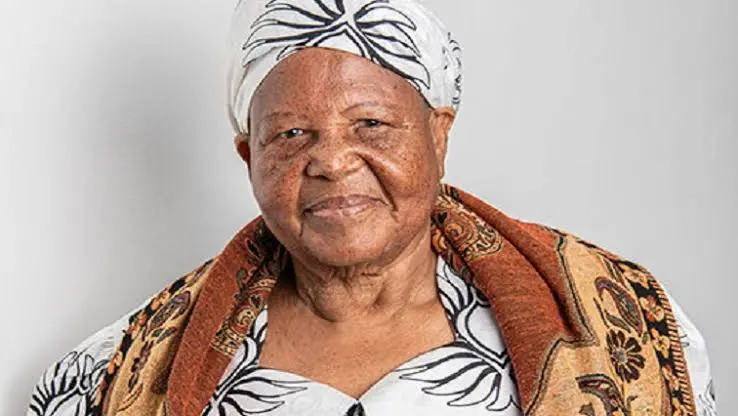
At a Glance
The Northern Transvaal and the World That Shaped Her
Lydia Kompe was born in 1946 in the Northern Transvaal — the region that is now Limpopo Province, the northernmost part of South Africa, bordering Zimbabwe and Mozambique and Botswana, a landscape of bush and rivers and ancient hills that the apartheid system had carved into bantustans — Lebowa, Venda, Gazankulu — designed to confine the African population to overcrowded communal areas while their labour was extracted for the farms and mines and industries of white South Africa.
The world of the Northern Transvaal bantustans was a world from which men were largely absent. The migrant labour system drew men south to the mines of the Witwatersrand, to the farms of the Transvaal lowveld, to the industries of the cities — leaving women behind to manage households, raise children, and farm the communal land that fed the family between the periodic remittances from the migrant workers. Women did the agricultural work. Women maintained the household. Women raised the children. But women held no land rights under the tribal authority system that the apartheid government had institutionalised in the bantustans — a system that assigned authority over land allocation to traditional chiefs and headmen, and that traditional law and custom generally organised on patriarchal principles that excluded women from formal land rights.
This was the world Lydia Kompe grew up in, and it was the world that defined the specific form of oppression she would spend her life challenging. The oppression she faced and that she organised against was not simply racial — though it was racial too. It was also gendered and economic, a combination of three forms of structural disadvantage that reinforced each other: the racial exclusion of apartheid that denied African people citizenship and political rights; the economic deprivation of rural poverty that left women with subsistence farming as their primary economic resource; and the patriarchal authority structures of traditional governance that denied women the legal rights over the land they farmed.
The Gap in the Women's Movement: Why Rural Women Were Left Behind
The South African women's anti-apartheid movement of the 1950s — the ANC Women's League, the Federation of South African Women, the campaigns that culminated in the 1956 Women's March — was primarily an urban movement. Its leadership was drawn from the African working class and petty bourgeoisie of the Witwatersrand townships: garment workers like Lilian Ngoyi, social workers like Helen Joseph, professional and politically connected women whose experience of apartheid was shaped by the urban environment. The campaigns they ran — against the pass laws, against racial discrimination in employment, against the conditions of urban township life — were campaigns about the conditions that affected urban women most directly.
Rural women's concerns were not entirely absent from the women's movement's agenda, but they were not central to it. The pass law campaign itself was primarily about the extension of urban pass requirements to African women — a campaign that was most immediately relevant to the women who lived and worked in the cities and who would be directly affected by the requirement to carry passes in the urban environment. The concerns of women in the communal areas — land rights, customary law, the authority of traditional chiefs over women's access to resources — were structurally different from urban pass law concerns and required different organisational approaches and different political strategies.
Lydia Kompe identified this gap and spent her career trying to fill it. Her argument was not that the urban women's movement was wrong about its priorities — it was that its priorities were incomplete, that the liberation the movement was fighting for needed to be wide enough to include the rural women who were furthest from the political centre and most dependent on the specific structural changes that only a genuinely comprehensive liberation could provide. It was an internal critique of the kind that strengthens movements by insisting on their own stated values, and it was a critique that the women's movement needed to hear.
The Rural Women's Movement: Organising Where No One Had Organised
The founding of the Rural Women's Movement was an organisational achievement of a particular kind — the achievement of building political organisation in communities that had no tradition of formal political organisation, that were physically dispersed across the vast distances of the Northern Transvaal landscape, that had limited access to the communication infrastructure of the cities, and that were subject to the authority of traditional governance structures that were often resistant to organised challenges to the gender hierarchies they maintained.
The work of building the RWM required patience, persistence, and the ability to connect with women in the idiom and the terms of their own lives rather than in the political language of the urban movement. The concerns that motivated rural women to organise were concrete: the fear of eviction from the land they farmed, the inability to register land in their own names, the vulnerability to loss of housing and livelihood on the death of a husband or the dissolution of a relationship, the absence of any formal mechanism for challenging the decisions of traditional authorities who controlled access to resources. These were not abstract political questions; they were urgent practical concerns affecting daily life, and Kompe addressed them in those terms.
The networks she built through the RWM connected rural women across the Northern Transvaal in a web of mutual support and shared political advocacy that gave them a collective voice they had not previously possessed. Women who had previously had no way to express their political demands or to connect with the broader liberation movement's campaigns found through the RWM both an organisational home and a connection to the national political conversation about what kind of South Africa was being built.
Land, Customary Law, and the Constitutional Argument
The central argument that Lydia Kompe made — in the RWM, in the ANC Women's League, in the constitutional consultations of the early 1990s, and in parliament — was about land rights and their relationship to gender equality. The argument had several dimensions. Historically, it rested on the observation that African women had been systematically dispossessed of land rights by a combination of colonial land alienation, apartheid resettlement policy, and the codification of customary law in forms that privileged male authority over land allocation. The bantustans had been established on land that was already overcrowded as a result of decades of forced removals, and the land that remained in the communal areas was allocated through tribal authority systems that generally did not recognise women's independent rights.
Constitutionally, the argument engaged with one of the most difficult tensions in the post-apartheid dispensation: the relationship between constitutional gender equality and the protection of customary law and traditional practices. The ANC's commitment to constitutional gender equality — to the principle that women had the same legal rights and the same legal protections as men — was in tension with the recognition of customary law and traditional authority that was politically necessary for a democratic settlement that needed the support of traditional leaders and their communities. Kompe argued consistently that the tension had to be resolved in favour of constitutional equality — that customary law practices that denied women land rights, property rights, or equal treatment could not be protected as cultural traditions when they contradicted the constitutional commitment to gender equality that the liberation movement had always professed.
Her advocacy contributed to the constitutional provisions and the subsequent legislative framework — the Communal Land Rights Act, the Reform of Customary Law of Succession and Regulation of Related Matters Act — that attempted to address the land rights dimensions of gender inequality in the communal areas. The implementation of these frameworks was imperfect and contested, as implementations of complex legal reforms always are, but the frameworks existed in part because of the sustained advocacy of activists like Lydia Kompe who insisted that the constitutional moment be used to address structural inequalities that might otherwise be carried over from the apartheid era into the new dispensation.
Parliament and the Continuing Advocacy
Lydia Kompe's election to the National Assembly in 1994 brought her rural women's advocacy into the formal democratic institutions of the post-apartheid state. Parliament gave her a platform and a set of mechanisms — committee work, legislative advocacy, budget scrutiny — that the community organising of the RWM had not provided, and she used them to continue pressing for the specific legal reforms that rural women's land rights required.
The experience of parliament also gave her a direct view of the gap between the liberation movement's commitments and the practical realities of governance — the institutional constraints, the competing political priorities, the fiscal limitations, and the inertia of bureaucratic systems that made translating constitutional principles into changed conditions on the ground a slow and often frustrating process. Her advocacy from within parliament was continuous with her advocacy from outside it, but the arena was different and the tools were different, and she adapted her approach to the institutional environment she was working in.
Legacy: The Liberation of the Forgotten
Lydia Kompe's legacy is the legacy of the advocate who insists on the inclusion of those the movement has forgotten. The South African liberation struggle was, in its dominant self-understanding, a struggle for the liberation of all South Africans from the racial oppression of apartheid. But liberation movements, like all large political organisations, have their internal hierarchies of concern — the issues and the constituencies that are most visible to the most powerful members of the movement, and the issues and constituencies that are present in the rhetoric but marginal in the practice.
Rural African women were, in the liberation movement's internal hierarchy of concern, more marginal than they should have been. The urban, the employed, the educated — these were the constituencies around whom the movement's organisations were built and for whom its campaigns were most immediately relevant. The women in the communal areas of the Northern Transvaal, farming land they did not own, subject to the authority of traditional structures that denied them formal rights, invisible to the international anti-apartheid movement and often peripheral to the national one — these women needed someone to speak for them, and Lydia Kompe was that person.
The Rural Women's Movement she founded gave those women a political voice. The advocacy she conducted in the ANC Women's League and in parliament ensured that their concerns were part of the debates that shaped the constitutional and legal framework of the post-apartheid state. The land rights provisions and the customary law reforms that the post-apartheid legislation addressed were in part the product of her work. These are real changes in the conditions of real people's lives, and they happened because Lydia Kompe refused to allow the liberation movement to leave rural women behind.