At a Glance
Santa and the Early Life Before the Revolt
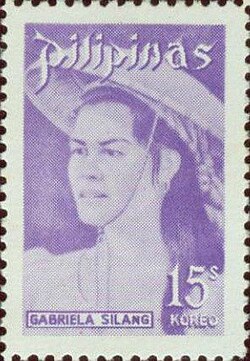
Gabriela Cariño was born around 1731 in Santa, a coastal town in Ilocos Sur — the same province in which the revolt she would eventually command would reach its climax at Vigan. The accounts of her early life are fragmentary, as is typical for women of non-elite background in colonial Philippine history: the Spanish colonial records that preserve the outlines of her story were written by people whose interest in her was prosecutorial and administrative rather than biographical, and the details of her childhood and young adulthood must be reconstructed from indirect sources. She was orphaned early. She worked as a domestic servant — the employment of women without family resources or connections in colonial Philippine society. She was of mixed Ilocano and possibly Tinguian descent, the Tinguian being one of the highland peoples of the Cordillera mountains of northern Luzon, a connection that would prove operationally significant when she later built a military coalition that included Cordillera fighters alongside the Ilocano lowlanders of Diego Silang's original force.
She met and married Diego Silang — the courier and organiser who would lead the Ilocos revolt — and the marriage placed her at the centre of the political activity that he was developing through the early 1760s. The question of what Gabriela's role was in the revolt before Diego's assassination is one that the historical record addresses only indirectly: the Spanish sources, which dominate the documentary record, were written to justify her prosecution and focus on her leadership after Diego's death rather than on the specific contributions she made during his lifetime. What is clear from the character of her response to his assassination — the immediate assumption of command, the maintenance of the coalition, the continuation of military operations — is that she had been deeply involved in the revolt's organisation throughout and was not stepping into an unfamiliar role when she took command. You do not command two thousand fighters for two months, in a guerrilla campaign in difficult terrain, if you are encountering military organisation for the first time.
The Assassination and the Decision
Diego Silang was shot on 28 May 1763 in Vigan. The shooter, Miguel Vicos, had been bribed by Spanish agents. The killing was designed not just to remove Diego Silang but to decapitate the revolt — to create the leaderless confusion that would allow the Spanish to recover Vigan and the Ilocos region without the major military operation that defeating the revolt in the field might have required.
It did not work because Gabriela Silang made a decision. The Spanish offered amnesty to rebels who surrendered — a standard practice designed to split resistance movements by providing an exit for those whose commitment was primarily to the leader rather than to the cause. Gabriela refused the amnesty. She gathered the fighters who remained loyal, moved out of Vigan before the Spanish could consolidate their position in the city, and took the revolt into the Ilocos mountains. The decision to refuse amnesty and continue was not impulsive — it was the considered choice of a woman who understood what acceptance would mean and what continuation would cost, and who chose continuation.
Two Months of Command: July to September 1763
The two months between Diego Silang's assassination and Gabriela's capture were a period of genuine military command rather than a symbolic continuation of a lost cause. She built her force in the mountain terrain of the Ilocos interior, incorporating Tinguian fighters from the Cordillera highlands whose knowledge of the mountain terrain and whose own hostility to Spanish authority made them natural allies. The coalition she built was ethnically broader than the revolt's original Ilocano base — a practical achievement that required both the personal relationships and the political intelligence to negotiate alliance across cultural lines in a short time under military pressure.
She conducted operations across the Ilocos region, attacking Spanish positions and those of their local Filipino allies, maintaining pressure on the colonial administration's attempt to restore control. The Spanish response was to deploy a significant force — combining Spanish soldiers with local auxiliaries — to hunt down and destroy her command. The pursuit was systematic and ultimately successful: in September 1763, her forces were defeated in battle at Bangued in Abra province, in the foothills of the Cordillera mountains where she had established her operational base. She was captured after the battle.
Trial and Execution in Vigan
Gabriela Silang was brought back to Vigan — the city where the revolt had begun, where her husband had been killed, where the Spanish colonial administration had re-established its authority — and tried by the colonial authorities. The trial was not intended to examine the justice of the revolt or to give her a platform for the kind of political argument that later revolutionary defendants sometimes managed to extract from their prosecutions. It was a colonial administration's proceeding against a rebel, designed to produce a sentence that would be executed in the most publicly visible way possible.
She was sentenced to death by hanging. On 20 September 1763, she was publicly hanged in Vigan, alongside her uncle Basi Bustos who had also been captured in the revolt's final phase. She was approximately thirty-two years old — the same age, within a year, as Diego had been when he was killed four months earlier. The public nature of the execution was deliberate: the Spanish intended it as a demonstration to the Ilocano population that armed resistance ended in death, that the revolt had failed completely, and that the woman who had dared to command an army against colonial authority had been punished in the most public and humiliating way the colonial system could provide. The demonstration had the opposite effect on historical memory: the public execution made her a martyr rather than erasing her, and the image of Gabriela Silang at the gallows in Vigan became one of the most charged images in Philippine historical consciousness.
GABRIELA and the Living Legacy
The significance of Gabriela Silang's legacy in contemporary Philippine life is most clearly expressed in the name of GABRIELA — the General Assembly Binding Women for Reforms, Integrity, Equality, Leadership, and Action — the major Filipino women's rights organisation founded in 1984, which chose her name as the acronym and her story as the inspiration for a women's movement that has been one of the most active and consequential in Southeast Asian history. The choice was deliberate and precise: not just a Filipino woman, not just a woman in the independence movement, but the woman who took command after the man was killed, who refused amnesty, who fought for two months with two thousand fighters, and who was executed for it. GABRIELA's choice of her as its model is a statement about what Filipino women's liberation looks like: not passive, not subordinate, not defined by relationship to a man, but commanding, resistant, and willing to pay the full price.
She was declared a national hero of the Philippines and is commemorated alongside Diego Silang as the heroic couple of the Ilocos revolt. But the paired commemoration, while appropriate, risks obscuring the specific quality of her individual contribution: she is not simply the wife who supported her husband's revolt. She is the commander who continued it after his death, who built a broader coalition than he had managed, who fought for two months under conditions that most of the revolt's male participants had already abandoned, and who was executed for the choices she made after she was no longer anyone's wife but only her own commander. That is the story the Philippines has been slowly learning to tell fully, and that GABRIELA and the broader tradition of Filipino feminist politics has been insisting upon for forty years.