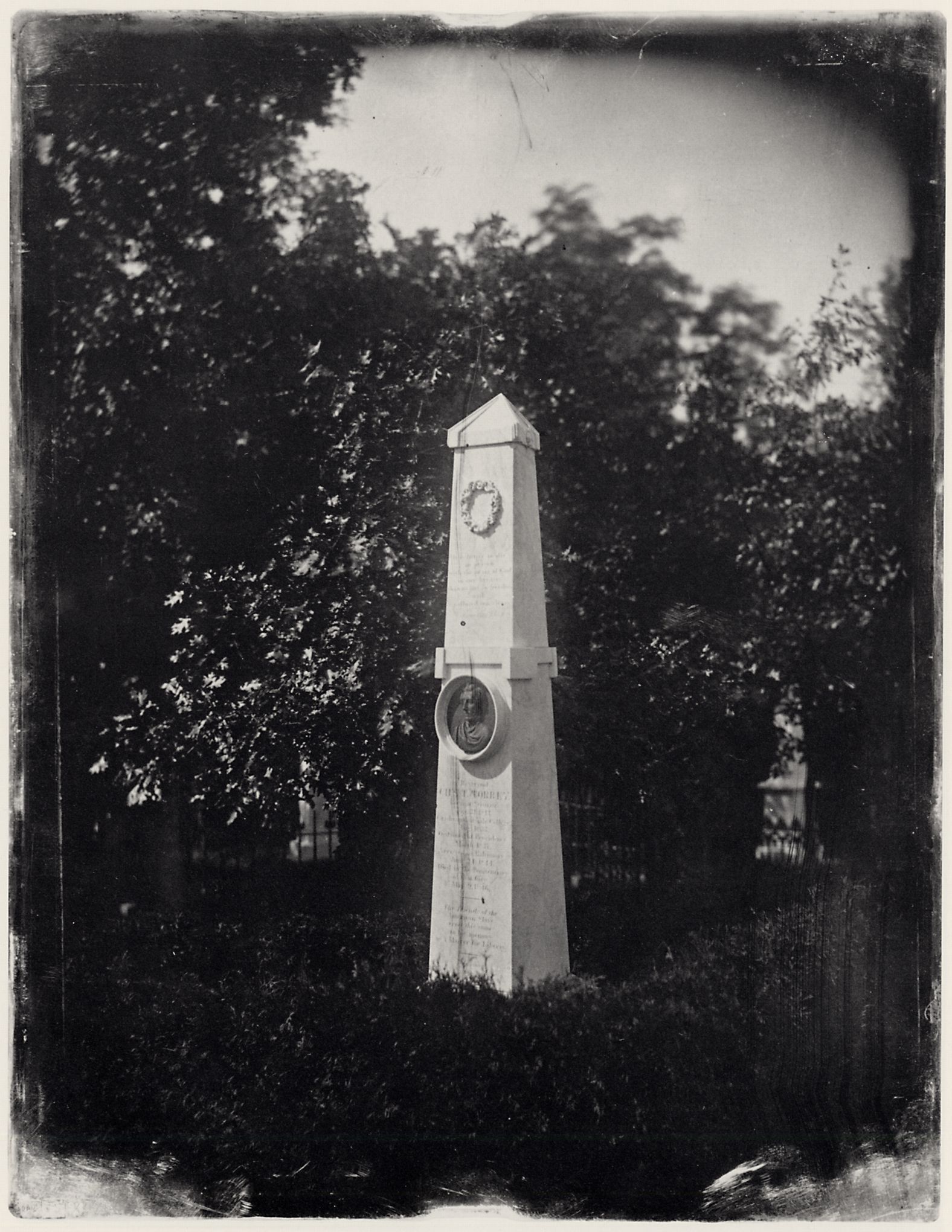
At a Glance
Yale, Theology, and the Making of a Radical Conscience
Charles Turner Torrey arrived at his radical commitment to direct action against slavery through a path that ran through the institutions of New England Protestant education and culture — Phillips Andover Academy, Yale College, and the world of evangelical Congregationalism that provided the moral framework for so much of the antebellum reform movement. He was, in his background and formation, a representative figure of the social stratum that the antislavery movement drew most heavily upon in the 1830s — educated, Protestant, from a respectable family, possessing the cultural capital and social connections that made a career in the ministry or in public life a natural expectation.
What distinguished Torrey from the many others who shared his background and who also opposed slavery was the intensity of his conviction that moral opposition to slavery required more than words — that the situation of the enslaved was so urgent and so morally intolerable that those who had the capacity to take direct action to alleviate it were obligated to do so, regardless of the personal cost. This conviction, which he developed in the late 1830s as his engagement with the organised antislavery movement deepened, placed him in a different relationship to the movement's tactical debates than the majority of his fellow abolitionists. Where the movement's central debates were about the relative merits of different approaches to public persuasion, Torrey was asking a more immediate question: how do you actually get enslaved people out of bondage, now, before the slow work of political and social transformation takes effect?
His time as a reporter covering the 1842 session of the Maryland legislature for an abolitionist newspaper brought him into direct contact with the geography and social landscape of a slave state and with the specific realities of how slavery operated in the border region — the proximity of free territory, the existence of free Black communities with connections to the enslaved population, the possibilities for organised escape that the geography of the Chesapeake region offered to those willing to exploit them. He returned from Maryland not with a report for his editors but with a plan for an Underground Railroad network that would systematically exploit those possibilities.
Washington, Thomas Smallwood, and the Mechanics of Mass Escape
The Underground Railroad operations that Torrey conducted in Washington, D.C. and the surrounding region in the period 1842 to 1844 were remarkable not simply for their scale but for their sophistication. The network he built with Thomas Smallwood and others was not a series of ad hoc responses to individual requests for assistance but a systematic operation — with established routes, reliable safe houses, trusted collaborators at multiple points along the escape corridor, and communication systems that allowed the various elements of the operation to coordinate without exposing the whole network to arrest if any individual element was compromised.
Thomas Smallwood's contribution to this network was indispensable. A free Black shoemaker who had been born into slavery and had purchased his own freedom, Smallwood had the intimate knowledge of Washington's Black community — its geography, its social networks, its relationships of trust and risk — that was essential for identifying enslaved people who wanted to escape and who could be trusted not to betray the operation to their enslavers. He also had the credibility within the community that a white man from New England, however committed, could never have had — the ability to approach enslaved people with information about escape possibilities without immediately generating suspicion about his motives or his reliability.
The two men worked together with an efficiency that is documented in Smallwood's subsequent memoir, which provides one of the most detailed accounts available of how a major Underground Railroad operation actually functioned at the operational level — the logistics of moving people out of the city, of coordinating with stations further north along the route, of managing the inevitable complications and close calls that arose when the operation attracted the attention of slave catchers and law enforcement. Smallwood's account makes clear that the operations were dangerous from the beginning and became progressively more dangerous as their scale attracted more attention, and that the question was not whether they would eventually be detected but when.
Four Hundred Souls: The Scale of the Operation
The claim that Torrey assisted in the escape of more than four hundred enslaved people during the period of his most intensive Underground Railroad activity is extraordinary enough to require some examination, though the figure was accepted by contemporaries who were in a position to evaluate it and has been generally endorsed by subsequent historians. Four hundred people, moved from slavery to freedom over a period of approximately two years, represents an average of roughly one escape operation every two to three days — a pace of activity that would have required not just planning and courage but extraordinary logistical capacity and a network of collaborators substantial enough to handle the volume.
The figure needs to be understood in the context of the specific geography and social structure of the Washington, D.C. region. The city was a slave-trading centre as well as a seat of government, and its population included thousands of enslaved people whose proximity to the free states and to the free Black community of Washington itself created both the desire and the realistic possibility of escape. The Underground Railroad network in the region was well-developed by the early 1840s, building on years of prior operations, and Torrey was inserting himself into an existing infrastructure rather than building from scratch. His contribution was to bring organisational capacity, resources, and personal willingness to take extreme risks to a network that already had the basic elements in place.
Even with these contextual qualifications, four hundred people is a remarkable figure. It places Torrey, if the estimates are accurate, among the most prolific operatives in the history of the Underground Railroad — in the same category as Harriet Tubman, whose remarkable career of rescue operations made her the movement's most celebrated conductor. The comparison is instructive: where Tubman made repeated personal trips into slave territory to lead specific groups of enslaved people to freedom, Torrey operated more as a network organiser, coordinating escapes rather than personally leading every one of them. Both approaches were necessary; both carried extreme personal risk; and the scale of what Torrey achieved in his two years of intensive operation was extraordinary by any standard.
Arrest, Trial, and the Prison Death That Made a Movement
The arrest came in June 1844, when Torrey was caught in Washington, D.C. while engaged in escape assistance. He was taken to Maryland for trial — because the legal jurisdiction for slave-stealing offences fell under Maryland law for enslaved people held in the Washington, D.C. region — and the trial that followed was a significant public event. The abolitionist press covered the proceedings in detail, framing the case as a confrontation between the slave power and the conscience of the free states, and generating the kind of public attention that transformed individual prosecutions into national political events.
He was convicted and sentenced to six years of hard labour in the Maryland State Penitentiary in Baltimore. He entered prison already ill with tuberculosis — a disease that was widespread in nineteenth-century America and that the conditions of prison life, with its inadequate nutrition, poor ventilation, and absence of medical care, were perfectly designed to accelerate. The abolitionist movement mounted a campaign for his pardon or commutation, and there were negotiations with Maryland authorities about the possibility of his release, but nothing came of them in time. He deteriorated steadily over the following months and died in the penitentiary on 9 May 1846, thirty-two years old, leaving behind a wife and children and the unfinished business of a movement that still had decades of work ahead of it.
His death was a gift to the movement in the terrible sense in which martyrdoms are gifts — it provided the cause with a specific, embodied story of sacrifice that was more emotionally powerful than any abstract argument about the injustice of slavery. The funeral in Boston drew thousands of mourners and became an occasion for the kind of public commitment-making that grief and outrage together produce. The speeches by Garrison, Wendell Phillips, and others framed Torrey's death in explicitly martyrological terms — as a death for the cause, a death that placed obligations on the living, a death that the movement had to answer with renewed energy and commitment.
The Radicalising Effect of Martyrdom on the Movement
The political effect of Torrey's death was to push a significant portion of the abolitionist movement in a more radical direction. His story made viscerally clear what the slave power was willing to do to those who challenged it — that the theoretical risk of imprisonment and death that Underground Railroad conductors accepted was actual, that the state of Maryland would allow a man to die in prison for the crime of helping other human beings escape from bondage, and that the movement's response to this reality needed to be proportionate to its gravity.
For abolitionists who had been comfortable with a strategy centred on moral suasion and public persuasion, Torrey's death raised uncomfortable questions about whether rhetorical opposition to slavery, however eloquent, was an adequate response to a system that was murdering its opponents. His martyrdom contributed to the increasingly heated tactical debates within the movement about the legitimacy and necessity of more direct forms of action — debates that would eventually include John Brown's willingness to use violence in the cause of liberation and that reflected the movement's deepening understanding that slavery would not be persuaded out of existence by speeches and pamphlets alone.
Torrey himself had arrived at a form of direct action — the physical assistance of escape — that stopped short of violence but that went far beyond anything the mainstream of the abolitionist movement was prepared to endorse in the early 1840s. His death pushed the definition of what constituted appropriate abolitionist action toward his end of the spectrum and helped create the conditions for the more radical positions that would characterise the movement in the 1850s, culminating in the crisis of Kansas, the Fugitive Slave Act, and the eventual confrontation of John Brown's raid on Harper's Ferry.
Legacy: A Martyr for Direct Action
Charles Turner Torrey died too young, too obscurely, and too far from the centres of the movement's institutional life to receive the recognition that the scale of his contribution warranted. His name is less well-known today than those of the movement's great orators and writers, and the four hundred people whose escapes he helped to organise left no individual records that would allow their stories to be told. The invisibility of Underground Railroad operations — the systematic destruction of evidence that was a condition of their success — means that the historical record of what Torrey achieved is necessarily incomplete and in some respects uncertain.
What is not uncertain is the effect of his death on the movement and on the subsequent history of American abolitionism. His martyrdom helped shift the movement's centre of gravity toward the conviction that direct action against slavery was not merely permissible but required — that those who had the capacity to help enslaved people escape had an obligation to do so, and that the personal costs of that obligation were costs that the cause demanded. This conviction, carried forward by the conductors and organisers who followed Torrey, by Harriet Tubman and the thousands of unnamed collaborators who kept the Underground Railroad operating through the 1850s, and by the soldiers of the Union army who ultimately fought for emancipation at the cost of hundreds of thousands of lives, was one of the most important legacies that Torrey's short life left behind.