At a Glance
The Column That Became a Legend
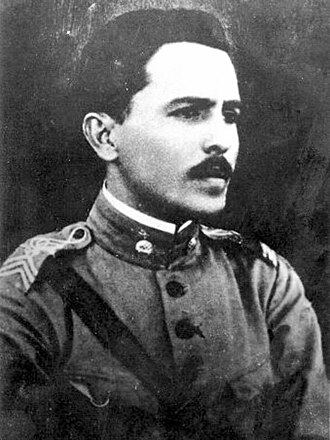
The Prestes Column has been described as the Brazilian equivalent of the Long March — a comparison that is inexact in its military and political details but captures something true about the mythological function the Column has served in Brazilian political memory. Like the Long March, the Column did not achieve its immediate military objectives: it did not overthrow the government, did not spark the popular uprising its commanders hoped for, and ended not in victory but in exile. And like the Long March, it was transformed by the passage of time and the power of narrative into something larger than a military operation — into a demonstration of what human determination and organisational discipline could achieve against a state with overwhelming conventional military superiority.
The Column's twenty-seven months through the Brazilian interior brought its fighters into contact with a Brazil that the Old Republic's ruling class had never needed to encounter: the rural poor of the backlands, the sertão, the Brazilian interior that was simultaneously the country's physical majority and its political invisibility. The poverty was staggering — communities living in conditions that the twentieth century had barely touched, subject to the local power of coronéis who controlled land, labour, and access to justice with an authority that the federal government notionally limited and practically reinforced. The Column could not change these conditions — it moved too fast, stayed too briefly, and had no political programme specific enough to translate into local action. But Prestes and his fighters saw these conditions, and what they saw shaped the political analysis that would eventually lead him to communism. The Column was, among other things, an education in Brazilian reality.
Olga: What the State Did
The story of Olga Benário Prestes is one that demands to be told alongside her partner's, not because she was merely an appendage of his political career — she was not; she was a communist organiser and intelligence operative of considerable skill and experience in her own right — but because what happened to her was the direct consequence of Prestes's political choices and the Vargas government's willingness to weaponise international fascism against its domestic opponents.
Olga was born in Munich in 1908 into a bourgeois Jewish family and became a communist as a teenager, involved in the youth communist movement and later in clandestine Comintern work. She participated in the liberation of a communist prisoner from a German court in 1928, fled to the Soviet Union, received intelligence training, and was eventually sent to Latin America on a Comintern mission that involved accompanying Prestes back to Brazil in 1935. They entered Brazil on false papers, established themselves in Rio de Janeiro, and were preparing for the PCB's uprising when the whole operation was broken by the political police. When Vargas deported Olga to Germany in 1936, the Brazilian ambassador in Berlin explicitly informed the Nazi government that she was Jewish and communist — information that sealed her fate. The deportation was not a bureaucratic accident. It was a choice, made at the highest level of the Vargas government, to hand a pregnant woman to a regime that had made its intentions toward Jewish people and communists unmistakably clear.
Prestes learned of Olga's death while he was still in prison. He was unable to grieve publicly, unable to act, unable to do anything except continue to survive his own imprisonment. The daughter Olga had named Anita Leocádia — after the anarchist Leocádia Prestes and after their struggle — was raised by Olga's mother in Germany, kept alive by the intervention of the German communist network and later by the Brazilian solidarity campaign. She was reunited with Prestes after the war. The full story of Olga's death was published in Brazil only in 1984, in Fernando Morais's biography, which became one of the bestselling books in Brazilian publishing history. The film that followed reached millions more. Olga Benário Prestes became, through that telling, one of the most widely known martyrs of the anti-fascist struggle — recognized at last, forty years after her death, by the country whose government had killed her.
The Knight of Hope: A Title and Its Weight
The title "Knight of Hope" — Cavaleiro da Esperança — was given to Prestes by the Brazilian popular imagination in the years following the Column, and it captured something real about the function he served in Brazilian political culture for more than six decades. Brazil has been a country of stubborn, grinding inequality — a nation whose extraordinary natural wealth has consistently failed to produce a society in which that wealth is distributed in ways that reflect anything approaching justice — and Prestes represented, for the Brazilian left across a very long arc, the insistence that this condition was neither inevitable nor permanent.
That the title was also, at times, an embarrassment — attaching romantic heroism to a political career that included serious misjudgments, excessive loyalty to Stalinist positions that history discredited, and a failure to resist the 1964 coup that the PCB's strategy helped to make easier — does not invalidate the reality it pointed to. Prestes made mistakes, some of them consequential. The PCB's decision not to arm or organise for armed resistance to the 1964 coup, on the grounds that the constitutional government should be defended through constitutional means, was a catastrophic failure of political judgment that the subsequent twenty years of military dictatorship made brutally clear. Prestes bore significant responsibility for that strategy. He acknowledged some of this in later years, though never with the full accounting that his critics demanded.
Ninety-Two Years: The Long Endurance
Prestes lived to ninety-two, which is itself a kind of political statement — not because longevity is a political virtue but because surviving the whole arc of a century of Brazilian political life, from the Old Republic through the Vargas dictatorship and the Estado Novo, through the democratic opening and the military coup, through the dictatorship and the abertura and the return to democracy, while remaining committed to the same fundamental project of Brazilian social transformation, required a specific quality of tenacity that is not easily separated from his political significance.
He returned to Brazil in 1979, during the political opening that Geisel and Figueiredo allowed, and threw himself back into public life with an energy that his ninety years had not entirely depleted. He left the PCB in 1980, after decades of loyalty, when internal divisions over the party's relationship to the military government's abertura process led to a split; he eventually joined the Workers' Party, the PT, which under Lula da Silva was building the broad left coalition that would eventually win the presidency in 2002. He did not live to see that victory — he died in March 1990 — but he had lived to see the end of the dictatorship and the constitutional democracy of 1985. For a man who had spent nine years in Vargas's prison and another decade in exile from the military dictatorship, that was not nothing. It was not everything he had worked for, but it was evidence that the Knight of Hope's conviction that Brazil could be different had not been entirely wrong.