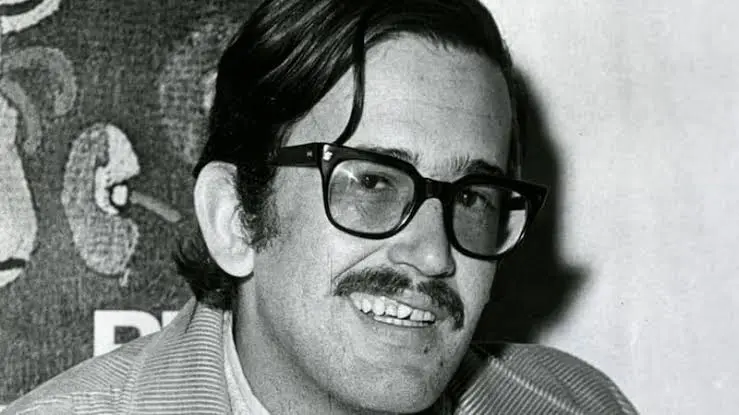
Andrés Pascal Allende, leader of the MIR and nephew of Salvador Allende, who kept the Chilean revolutionary left alive through Pinochet's campaign of assassination and disappearance after the 1973 coup.
Chile · Latin America

Andrés Pascal Allende

Andrés Pascal Allende was born in 1947 into the family that would define Chilean left politics for a generation — the nephew of Salvador Allende, Chile's socialist president who was killed in the 1973 coup. But Andrés was not merely a nephew riding a famous surname. By the time the coup came, he was already a leader in his own right — a co-founder and central figure of the MIR, the Movimiento de Izquierda Revolucionaria, which had positioned itself to the left of Allende's Popular Unity coalition and had spent the Allende years building the clandestine infrastructure that it believed would be needed when the right struck back. That infrastructure, and Pascal Allende's capacity to operate within it, was what kept the MIR alive and fighting long after Pinochet's DINA had killed most of the organisation's other leaders. His story is the story of what political commitment looks like in its most extreme test: when the state has unlimited violence at its disposal and is using it specifically against you.

Chile MIR Co-Founder Post-Coup Resistance Leader Nephew of Salvador Allende Revolutionary Left Exile and Clandestinity

Born: 1947, Chile  |  MIR leader from 1974; clandestine resistance inside Chile 1973–76; exile in Cuba and Europe; returned to Chile after democracy restored 1990

At a Glance

Family and FormationAndrés Pascal Allende grew up in the heart of Chilean left politics. His uncle Salvador Allende had been a socialist politician since the 1930s and had run for president three times before winning in 1970. The family milieu was one of serious, committed democratic socialism, but Andrés's generation — radicalised by the Cuban Revolution, by the failure of the Latin American reformist left, and by the escalating violence of the Latin American right — concluded that the peaceful road to socialism would not survive the right's determination to block it. The MIR, which he helped found in 1965 as a university student, was the organisational expression of that conclusion.
The MIR and the Allende YearsThe relationship between the MIR and Salvador Allende's Popular Unity government was complicated. The MIR believed — correctly, as it turned out — that the Chilean right and its American backers would not allow a democratic socialist government to succeed, and that the revolution needed to prepare for armed defence. Allende disagreed, committed to the constitutional road and unwilling to provoke the military. The MIR spent the Allende years organising among the poblaciones — the urban poor settlements — and in rural areas, building the political base and clandestine structures that it argued would be necessary. When the coup came on 11 September 1973, the MIR's preparation proved insufficient to stop it but sufficient to sustain an organised resistance longer than most other left organisations managed.
The Coup and Its Immediate AftermathPinochet's coup killed Salvador Allende in La Moneda and immediately set about destroying the Chilean left with extraordinary systematic efficiency. The DINA — Pinochet's secret police — had lists of names, many supplied by US intelligence, and worked through them methodically. MIR's secretary-general Miguel Enríquez was killed in a DINA shootout in October 1974. Bautista van Schouwen was disappeared and killed. Luciano Cruz had died before the coup. Pascal Allende, operating in extreme clandestinity inside Chile, became the de facto leader of what remained of the MIR's internal structure. He survived where others did not partly through operational discipline and partly through the networks the MIR had built before September 1973.
Clandestine Leadership, 1973–1976The period between the coup and his eventual departure from Chile was the most intense of Pascal Allende's political life. Operating under cover identities, moving between safe houses, maintaining contact with external MIR structures in Cuba and Europe while managing the internal resistance network, he kept the organisation functional under conditions of relentless DINA pressure. The DINA's Operation Colombo — a psychological warfare operation in 1975 that falsely claimed 119 missing MIR members had been killed by their own comrades abroad — demonstrated the resources and sophistication that Pinochet's apparatus was directing against the movement. Pascal Allende survived Operation Colombo. Most of the 119 named in it did not.
Exile and the MIR's External OperationsAfter leaving Chile — under circumstances that have never been fully detailed publicly — Pascal Allende led the MIR from exile, primarily from Cuba and later from Europe. The external MIR attempted to maintain contact with internal resistance networks and eventually launched the Operación Retorno — an effort to reinsert armed militants back into Chile to restart an internal guerrilla campaign. The operation was largely unsuccessful: DINA and its successor the CNI had penetrated the movement thoroughly enough to neutralise most of those who attempted to return. The external MIR became increasingly isolated from the conditions inside Chile as the 1970s became the 1980s, and its armed strategy grew increasingly disconnected from a society that was developing its own, non-armed forms of resistance to the dictatorship.
Return and LegacyPascal Allende returned to Chile after the restoration of democracy following Pinochet's 1988 plebiscite defeat and the 1990 transition to civilian government. The MIR, as a significant political force, had effectively ceased to exist — the dictatorship had destroyed it as a functioning organisation, and the political conditions of the democratic transition did not easily accommodate the armed revolutionary left. Pascal Allende continued to be a voice of the radical Chilean left in the democratic period, but the era of clandestine resistance for which his career was shaped had passed. His significance lies less in what he ultimately achieved in political terms than in what he sustained: the continuity of organised revolutionary commitment through the most brutal repression the Chilean left has ever faced.

The MIR Before the Coup: Preparing for the Inevitable

The Movimiento de Izquierda Revolucionaria was founded in 1965 by a group of university students and young activists who had concluded that the Latin American left's commitment to gradual, constitutional change was a strategic mistake. The Cuban Revolution was seven years old and seemed to prove that armed struggle could succeed. The experience of the Guatemalan revolution of Jacobo Árbenz — overthrown by a CIA-backed coup in 1954 — seemed to prove that constitutional socialism would be destroyed by the right before it could achieve structural change. The MIR's founding analysis was, in retrospect, accurate: it correctly predicted that Chile's right and its American backers would not accept a socialist government's victory, and it correctly concluded that preparation for armed resistance was necessary. What it could not predict — or prevent — was the scale and efficiency of the repression that followed the coup when it came.

During the Allende years (1970–1973), the MIR occupied an uncomfortable position to the left of the government it nominally supported. It pushed for faster land reform, for the arming of workers and peasants, for the preparation of popular militias. Allende resisted all of this, believing — with good reason given his constitutional commitments — that arming the civilian left would give the military the pretext it was looking for. The MIR's activities during this period included the organisation of the poblaciones of Santiago's southern periphery into political communities that would form the base of post-coup resistance, and the development of the clandestine networks and document systems that would be essential after September 1973. When the coup came, the MIR was the best-prepared organisation on the left — and the preparation still proved almost entirely insufficient against what Pinochet unleashed.

September 1973: The Coup and the Killing Machine

The scale of the repression that followed Pinochet's coup on 11 September 1973 is still not fully documented, forty years on. The official count of the killed and disappeared — compiled by the Rettig Commission and the Valech Commission — runs to over 3,000 confirmed deaths and disappearances, with tens of thousands more tortured. The actual number of those killed in the first weeks and months, before any systematic record-keeping was possible, is likely considerably higher. The DINA — Dirección de Inteligencia Nacional — was established in June 1974 under Manuel Contreras specifically to destroy the left with a thoroughness that exceeded what the military's own repressive apparatus had managed in the immediate post-coup period.

The MIR was the DINA's primary target for most of 1974 and 1975. Miguel Enríquez — the MIR's secretary-general and the most important figure in the organisation's military and political direction — was tracked to a safe house in the Santiago neighbourhood of Santa Rosa de Lo Espejo and killed in a firefight on 5 October 1974. He was 30 years old. Bautista van Schouwen, Pascal Allende's close comrade and one of the MIR's central committee members, had been captured and killed even earlier, in December 1973. The pattern was systematic and deliberate: the DINA worked through the organisation's known leadership, used information obtained through torture to find the next level of the structure, and worked downward through the network until it had destroyed it. That Pascal Allende survived this process is partly attributable to the quality of his operational security and partly to the external networks that provided him with resources and cover that the purely internal members of the organisation did not have access to.

Carrying the Flame: Leadership in Extremis

The question of what it means to lead an organisation when the organisation is being systematically destroyed is one that revolutionary history has rarely had to answer so starkly. Pascal Allende's leadership of the MIR in the period between Enríquez's death in October 1974 and his own departure from Chile — probably in 1976, though the exact timeline remains partly undisclosed — was leadership under conditions that made every conventional assumption about organisational management irrelevant. There were no offices, no budgets, no public communications, no legal protections. There were safe houses that could be raided at any moment, cover identities that could be blown, contacts who were themselves under surveillance, and a state apparatus that had demonstrated both the will and the capacity to kill everyone it found.

The external dimension of the MIR — the structures maintained in Cuba, in Europe, and through solidarity networks across Latin America — provided Pascal Allende with resources and communications channels that would otherwise have been impossible to maintain. Cuba under Fidel Castro was genuinely supportive of Latin American revolutionary movements in this period, and the MIR benefited from that support in terms of training, documentation, and logistics. But external support could not substitute for internal political legitimacy, and as the dictatorship extended through the late 1970s and 1980s, the MIR's armed strategy became increasingly difficult to maintain and increasingly disconnected from the lived experience of Chileans who were developing their own forms of resistance — strikes, demonstrations, the work of the human rights movement, the patient legal and political work of the parties that were rebuilding their structures underground.

The Name and the Legacy

Andrés Pascal Allende carries a famous name, and that fact has complicated the assessment of his own contribution. Salvador Allende is a figure of global historical significance — the democratic socialist president who died defending his office against a US-backed military coup and whose image has become one of the defining icons of the Latin American left. To be his nephew, and to have led the movement most associated with the armed response to what killed him, is to operate always in the shadow of that larger story. The risk is that Pascal Allende's own contribution — the specific, dangerous, practically difficult work of keeping a clandestine revolutionary organisation alive through years of state terror — is subsumed into the Allende family narrative rather than assessed on its own terms.

Assessed on its own terms, that contribution is real and significant, even if its ultimate political results were limited. The MIR under Pascal Allende's leadership maintained organised resistance to the Pinochet dictatorship at a time when organised resistance required a level of personal courage that is difficult to fully appreciate from the safety of historical distance. The people around him were being killed, disappeared, tortured. The DINA knew who he was and was looking for him. He continued to operate, to make decisions, to sustain an organisation. That the organisation was ultimately unable to achieve its political goals — the overthrow of the dictatorship by armed means — does not diminish the fact of what it cost to try. The measure of a revolutionary is not only what they achieve but what they are willing to risk. By that measure, Andrés Pascal Allende stands among the most serious political figures the Chilean left produced in its most difficult era.

Also Profiled — Brazil, Argentina, Chile & Uruguay

Southern Cone Bautista van Schouwen MIR central committee member; tortured and disappeared December 1973 Southern Cone Carlos Marighella Afro-Brazilian communist; MR-8 founder; Minimanual of the Urban Guerrilla; killed 1969 Southern Cone Eva Perón Evita — Argentine first lady who built a welfare state for the poor; died at 33 Southern Cone Haydée Tamara Bunke Tania la Guerrillera — killed at Vado del Yeso alongside Guevara's column, 1967 Southern Cone Luciano Cruz MIR co-founder and beloved early leader; died in accident 1971 aged 28 Southern Cone Luís Carlos Prestes Knight of Hope — led the Prestes Column; Brazilian Communist Party leader; 9 years imprisoned Southern Cone María Esther Gatti Uruguayan human rights activist; searched for disappeared grandchildren for decades Southern Cone Miguel Enríquez MIR secretary-general; killed by DINA October 1974 aged 30 Southern Cone Raúl Sendic Tupamaro founder; 13 years in prison; symbol of Uruguayan revolutionary left Southern Cone Salvador Allende Chile's socialist president; died defending La Moneda in the 1973 coup Southern Cone Víctor Jara Folk singer; hands broken, shot in Chile Stadium after the coup; aged 40
Share X Facebook WhatsApp LinkedIn