At a Glance
From Los Toldos to the Casa Rosada
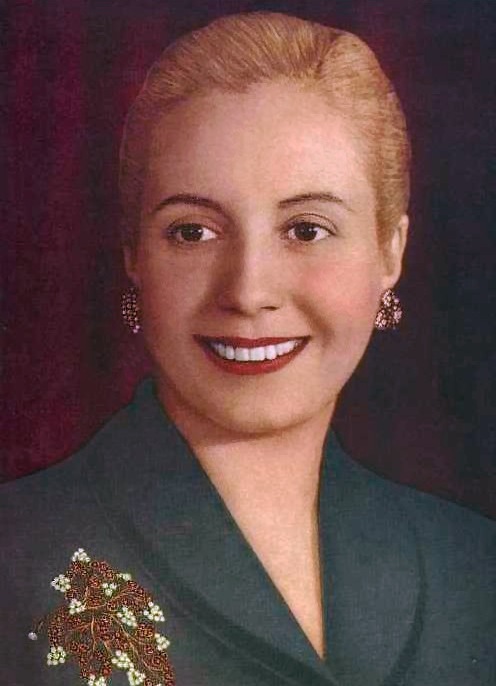
The social distance between Los Toldos and the Casa Rosada — between the illegitimate daughter of a provincial landowner and the First Lady of the Argentine Republic — was not merely geographical. It was the distance between the Argentina that the establishment acknowledged and the Argentina that it preferred to ignore: the vast interior, the rural poor, the workers who came to Buenos Aires from the provinces to work in the factories that were transforming the country in the 1930s and 1940s. Eva Perón's journey across that distance was personal, powered by determination, talent, and an absolute refusal to accept the social limits that Argentine society placed on women of her origin. But it was also political, because when she arrived at the centre of Argentine power she did not leave her origins behind — she made them the explicit content of her politics.
The radio was the medium through which she first built her public presence, and it was an appropriate one. Radio in Argentina of the 1940s reached into homes that newspapers did not reach, spoke to people who might not read, and carried voices into kitchens and living rooms in a way that made a personal connection that print could not replicate. Eva's radio dramas — historical narratives in which she played queens and heroines of the Argentine past — were not merely entertainment. They were the medium through which she developed the speaking voice, the emotional register, and the instinct for what moved popular audiences that would make her political speeches, years later, among the most effective of the twentieth century. When she stood on the balcony of the Casa Rosada before hundreds of thousands of descamisados and called them "my dear little madwomen" — her term of affection for the Peronist Women's Party members — she was using a rhetorical intimacy that she had spent a decade developing, and it worked because it was genuine.
The Foundation: Social Justice as Personal Mission
The Eva Perón Foundation was the most concrete expression of what she understood by social justice, and also the most controversial. Its critics — then and since — have characterised it as a personalised charity operation that undermined the development of a rights-based welfare state by making assistance a personal gift from Evita rather than an entitlement of citizenship. There is some truth in this critique: the Foundation was run by Evita's personal staff, answered primarily to her rather than to any legislative or administrative framework, and its assistance was distributed in ways that reinforced personal loyalty to Peronism rather than building universal institutional entitlements. A sewing machine or a bicycle received from the Foundation came with the implicit understanding that it was a gift from Evita, and that political loyalty was the appropriate response to a gift.
But the critique, while accurate about the Foundation's structure, misses something important about what it actually delivered. Before the Foundation, the poor of Argentina had essentially no access to the kind of material assistance it provided. The hospitals it built were real hospitals, treating real patients who had previously had no access to medical care. The schools were real schools. The children's holiday centres sent real children from Buenos Aires's slums to the coast or the mountains for the first time in their lives. The women who received sewing machines used them. The material transformation the Foundation produced in the lives of the Argentine poor between 1948 and 1952 was not imaginary, and the people who experienced it did not primarily evaluate it through the lens of political theory. They evaluated it through the lens of whether their children had doctors, and the answer, under Evita, was more often yes than it had ever previously been.
The Class War She Never Named
Eva Perón's politics were Peronist rather than socialist — she did not theorise a class struggle in Marxist terms, did not call for the nationalisation of the means of production as a class demand, and worked within the framework of Perón's statist nationalism rather than any tradition of organised labour radicalism. But the class content of what she was doing was unmistakable, and the Argentine establishment understood it perfectly even when she did not use the language. What she was doing, in essence, was taking resources from the upper classes — through the Foundation's coerced donations, through the union levies, through the state's taxation powers — and redistributing them to the poor. She was giving the poor access to political power through the Peronist Women's Party in ways that had never previously been attempted. She was treating the descamisados as full political subjects rather than as a problem to be managed or a constituency to be patronised.
The oligarchy's hatred of her was visceral and personal in a way that went beyond ordinary political opposition. They called her a whore — a reference to her illegitimacy, her origins, and the various unverifiable stories about her private life before Perón — and they meant it as the ultimate social weapon: the accusation that she was not a real person with real political standing but a woman whose presence in the halls of power was itself a violation of the natural order. The fact that she had power anyway, and used it in ways they could not stop, made the hatred more intense rather than less. When she died, they thought they were safe. When the military government stole her body three years later, they demonstrated that they were not.
Death at Thirty-Three
Eva Perón's death at thirty-three was both a personal tragedy and a political event of the first order. For the Peronist movement, she died at the moment of her greatest public power and before any of the contradictions of the Peronist project had time to attach themselves to her specifically. She never had to manage the economic crisis that eventually undermined Perón's government. She never had to moderate her commitments in the face of fiscal reality. She died as Evita — the pure embodiment of the movement's promise — and that purity has been preserved by her early death in the way that the early deaths of political figures generally preserve their reputations from the compromises that power eventually demands.
The deathbed scenes, as reported by those who were present, are among the most politically theatrical in the history of any government. She dictated instructions for the Foundation's work from her sickbed. She continued to receive petitioners — the poor who came to her personally with requests for assistance — until she was physically unable to see them. She refused, as long as she could, to accept that she was dying. When Juan Perón tried to arrange for her to rest and stop working, she told him that the day she could no longer work was the day she would die. She was largely right: she stopped working in July 1952 and died within weeks. The Argentina she left behind her was not the Argentina of 1946: it had hospitals she had built, schools she had funded, women voters she had enfranchised, and a political organisation she had created. The military that overthrew Perón in 1955 dismantled much of it. It could not dismantle her.
The Corpse That Would Not Stay Buried
The story of Eva Perón's body after her death is one of the strangest episodes in the political history of any country. Dr Ara's embalming process had produced a corpse of extraordinary preservation — waxy, perfect, unchanged — that continued to be an object of veneration after her death. When the military government of General Aramburu overthrew Perón in September 1955, it immediately confronted the problem of what to do with this body, which had been lying in state in the Ministry of Labour building and which thousands of Argentines were visiting as a devotional act.
The decision to steal it — to have military officers secretly remove the body, transport it through a series of hiding places in Argentina, and eventually ship it to Italy — was made at the highest levels of the military government. The General who authorised it was later kidnapped and killed by Montonero guerrillas in 1970 specifically in response to his role in the theft of Eva's body; his captors demanded that the body be returned to Argentina as the price of his release. He refused to negotiate. He was killed. The body was eventually located by a Peronist intelligence operative in 1971, in a Milan cemetery, perfectly preserved after sixteen years. It was returned to Juan Perón, who by then was living in exile in Madrid with his third wife Isabel. It sat in Perón's dining room for a period while the question of its repatriation to Argentina was negotiated. Eva Perón's body finally returned to Argentina in 1974 and was interred in the Duarte family crypt in the Recoleta Cemetery in Buenos Aires — in the oligarchy's own cemetery, in the end, the girl from Los Toldos who was never supposed to matter at all.