At a Glance
Bahia, Blackness, and the Communist Vocation
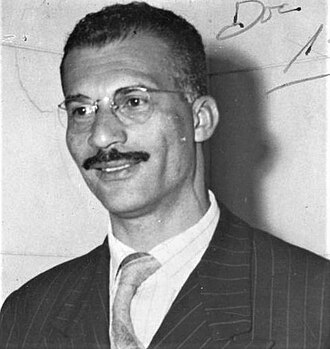
Salvador, Bahia in 1911 was a city whose African heritage was everywhere and whose racial hierarchy was absolute. The descendants of enslaved Africans — emancipated less than twenty-five years before Marighella's birth — occupied the bottom of every social structure: the worst-paid work, the worst housing, the least access to education and medicine and law. Marighella's father was Italian, his mother Afro-Brazilian, and in Brazil's complex racial calculus that made him mestiço — mixed — which placed him in an intermediate position that satisfied neither the privileges of whiteness nor the solidarity of a clear Black identity. What it gave him was a perspective from which the Brazilian racial order was visible from both sides, and a personal stake in dismantling it that shaped his politics from the beginning.
The Communist Party of Brazil, founded in 1922, offered something that few Brazilian political organisations of the time provided: an explicit anti-racist commitment, a framework that connected racial oppression to class exploitation, and a community of politically serious people who were willing to act on their convictions in conditions of real danger. Marighella joined at 16 and never left — at least, not in spirit. The PCB gave him his political formation, his analytical framework, his network of comrades, and decades of the most demanding political education that clandestine organising under authoritarian conditions can provide. What it could not give him, in the end, was the willingness to fight when fighting was what the situation demanded.
The 1964 Coup and the Party's Failure
The military coup of 1 April 1964 — which removed President João Goulart and established the dictatorship that would govern Brazil until 1985 — was the defining political event of Marighella's mature years. He was 53 years old. He had spent most of those years in and out of prison for his communist activities. He had watched the PCB navigate the contradictions of legal and clandestine politics through Vargas's Estado Novo, through the brief democratic opening of 1945 to 1947, and through the years of renewed illegality that followed. And he had watched the party develop a political culture of patience and caution that he had come to see as a strategic vice: an organisation so accustomed to survival under adverse conditions that it had confused survival with struggle, and persistence with resistance.
The photograph of his arrest in April 1964 — arms raised, hands visible, a middle-aged man in a suit submitting to soldiers who are aiming rifles at him — was used by the military government as an image of order being restored. Marighella understood it differently: as a demonstration that the left had no answer to the coup's violence, and that until it developed one, the military could do whatever it wished. He spent his final five years developing that answer, and the Minimanual was its distilled form.
The Minimanual: A Text That Travelled the World
The Minimanual of the Urban Guerrilla is not a long document. It runs to about thirty pages. But within those thirty pages it does something that no previous text of the revolutionary left had managed to do with comparable clarity: it explains, in practical operational terms, how a small armed organisation can sustain a political challenge to a state that has overwhelming military superiority. Marighella's insight — drawn from the Cuban experience, from Guevara's guerrilla writings, and from his own four decades of clandestine organising — was that the urban guerrilla's primary weapon was not military but political. The purpose of armed action was not to defeat the military in battle, which was impossible, but to force the state to reveal its authoritarian character through its overreaction, thereby delegitimising it in the eyes of the population whose support was essential to the revolutionary project.
This is what the kidnapping of the American ambassador achieved: not the military defeat of the dictatorship, which it didn't even attempt, but the demonstration that the ALN could operate effectively within Brazil's largest city despite all the resources of the security state, and the extraction — through the exchange of the ambassador for fifteen prisoners — of a concrete victory for the people the movement claimed to represent. The Minimanual's influence spread far beyond Brazil because its central insight applied wherever a small revolutionary organisation faced a state with overwhelming conventional military power: in Northern Ireland, in Palestine, in the Basque country, in West Germany, across the Middle East. Governments classified it. Military academies studied it. It was, and remains, the most carefully reasoned guide to revolutionary urban warfare ever written.
The Ambush and Its Meaning
Marighella's death in the Alameda Casa Branca ambush in November 1969 was, in retrospect, the product of a fundamental tension in the urban guerrilla strategy he had championed. The strategy required a network of contacts and intermediaries — people who could carry messages, arrange meetings, provide logistical support — and that network was necessarily a vulnerability. The Dominican friars who served as the intermediaries between the ALN and the church were not trained clandestine operatives; they were priests who had made a moral choice to support a movement they believed was fighting for justice, and who were not equipped to resist the interrogation methods that the DOPS used when it captured them. Their testimony led the DOPS to the meeting point, and Sérgio Fleury's ambush team was waiting when Marighella arrived.
The government's response to his death was revealing. The military presented it as a security triumph, a demonstration that the armed left could be defeated. What it actually demonstrated was that the state's willingness to torture priests — men who were theoretically protected by their clerical status and by the still-significant power of the Catholic Church in Brazilian society — was unlimited, and that no network of human contacts was safe from that determination. The armed movements of the Brazilian left continued for some years after Marighella's death, but the combination of state repression and strategic isolation — they never succeeded in linking the urban actions to a broader rural guerrilla movement of the kind the Minimanual envisaged — eventually destroyed them all. Marighella did not live to witness this, or to revise his analysis in light of it. He died as he had lived: in action, in motion, committed to a struggle that he had calculated was necessary even if he could not guarantee it was sufficient.