At a Glance
Georgetown, Education, and the Making of a Pan-African Historian
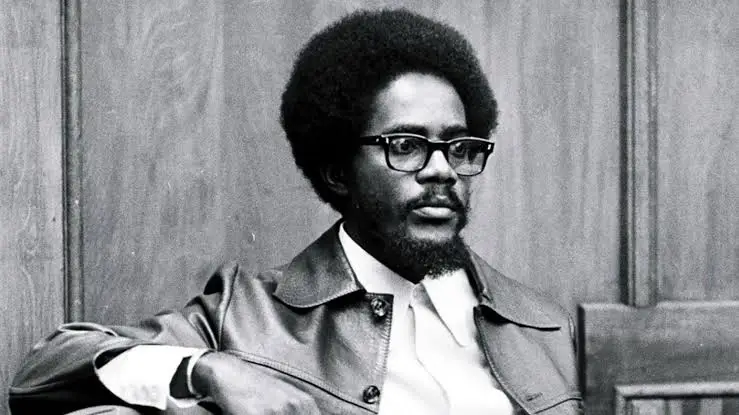
Walter Rodney grew up in Georgetown in the political atmosphere of the Guyanese independence movement's most dramatic decade — the early 1960s, when the PPP under Cheddi Jagan was being destroyed by CIA-orchestrated destabilisation and the racial polarisation that the intervention produced was remaking the Guyanese political landscape in ways that would shape the country for the following three decades. His education at Queen's College, the most prestigious secondary school in Guyana, and then at the University of the West Indies in Jamaica gave him the intellectual formation that his historical work would draw on, and his subsequent doctoral work at SOAS in London — a thesis on the history of the Upper Guinea Coast that was completed in record time and demonstrated from the beginning the range and the discipline of his historical intelligence — established his credentials as a scholar of the first order.
The specific character of his historical intelligence — its combination of empirical rigour, theoretical sophistication, and political commitment — was distinctive from the beginning. He did not use history as a vehicle for propaganda; he used evidence and argument as the tools of historical analysis, and he was willing to follow the evidence where it led, which was consistently toward conclusions that the ideological frameworks of the European historical tradition had worked to obscure. His engagement with African history, with the specific economic processes of the Atlantic slave trade, and with the long-term consequences of European colonisation for African economic development was the product of a genuine scholarly commitment to understanding the historical record in its full complexity.
The Groundings: University Knowledge Meets Working-Class Jamaica
The work that Rodney did in Jamaica before his expulsion — the Groundings that brought him into direct conversation with the Rastafarian and working-class communities of Kingston — was one of the most important examples of what radical Caribbean scholarship looked like in practice. He did not merely write about the Caribbean working class from the comfortable distance of the university; he engaged directly with working-class people, in their own spaces, in their own language, with the combination of intellectual depth and personal warmth that made the Groundings something qualitatively different from the conventional forms of academic public engagement.
The Groundings were informal sessions — held in yards, on street corners, in community spaces — in which Rodney discussed African history, Black identity, and Caribbean political economy with Rastafarian brethren and other working-class Jamaicans who had been systematically excluded from the educational institutions that were supposed to provide these discussions. He treated his interlocutors as equals in the conversation, as people whose knowledge of their own conditions was as important to the discussion as his knowledge of African history, and the combination produced a form of political education that was genuine rather than merely performative.
The Jamaican government's decision to ban him was, from the government's perspective, entirely rational: his organising was genuinely transformative and genuinely threatening to the social arrangements that the Jamaican political establishment was committed to maintaining. The student riots that followed the ban — among the largest popular disturbances in Jamaican post-independence history — were the most direct possible demonstration of the depth of the connection he had built with Jamaican working-class communities and of the scale of the political miscalculation the government had made in thinking that banning him would suppress rather than amplify his influence.
How Europe Underdeveloped Africa: The Book That Changed What Could Be Said
How Europe Underdeveloped Africa is, in the history of anticolonial thought, one of those texts that changes the terms of the intellectual argument by demonstrating something that had always been true but that the dominant intellectual tradition had systematically prevented from being said clearly: that African poverty and European wealth were not independent facts but were causally connected through the specific historical processes of colonial extraction. This argument had been made before — by Du Bois, by Fanon, by a tradition of Black radical thought — but Rodney made it with a historical specificity and an empirical depth that was unprecedented.
The book moved through African economic history from the pre-colonial period through the Atlantic slave trade to the full development of European colonialism, demonstrating at each stage how the specific mechanisms of European extraction — the slave trade's removal of labour, the colonial economy's reorientation of African production toward metropolitan markets, the deliberate suppression of African industrial development to maintain African dependence on European manufactures — had produced the specific condition of underdevelopment that the post-colonial African states had inherited. The argument was not that Africa had been poor before Europe arrived; it was that the specific forms of Africa's contemporary poverty were the products of specific historical processes that European colonialism had imposed.
The book's political implications were immediate and enormous. If African underdevelopment was a product of European colonialism rather than a natural condition, then the responsibility for addressing it was not merely a matter of African self-improvement but of historical accountability — of the former colonial powers acknowledging what they had done and taking some responsibility for its consequences. This argument remained as contested in the twenty-first century as it was when the book was published in 1972, and the book itself remained in print and in use as a foundational text of African history and postcolonial studies five decades after its first publication.
Return to Guyana: The WPA and the Challenge to Burnham
Rodney's decision to return to Guyana in the late 1970s — to leave the academic career that his reputation would have sustained at Dar es Salaam or at any number of other African or Western universities, and to commit himself to the specifically Guyanese political work that he understood as his primary obligation — was the same kind of total commitment to place and people that distinguished the lives of the other great figures of the Caribbean progressive tradition. He did not have to go back to Guyana. The country he was returning to was governed by an increasingly authoritarian regime that had good reasons to regard him as a threat and the will to act on those reasons. He went anyway.
The Working People's Alliance that he helped to found and to lead was the most serious attempt to build a genuinely multiracial democratic socialist alternative to the racial patronage systems of both major parties that Guyanese politics had yet seen. Its combination of intellectual authority — the historical analysis that Rodney provided — and genuine multiracial organisation — its ability to draw support from both Afro-Guyanese and Indo-Guyanese communities — threatened the racial political mathematics on which both the PNC and the PPP depended. The WPA was small in membership but enormous in intellectual significance and political potential.
Burnham understood the threat. The assassination on 13 June 1980 was the response of a regime that had concluded that the conventional methods of political management — harassment, marginalisation, electoral manipulation — were insufficient against an opponent of Rodney's specific combination of intellectual authority and popular appeal. The bomb in the walkie-talkie was the regime's statement that it was prepared to use lethal violence against political opponents who posed a genuine threat, and the specific operational method — using an infiltrator to provide the device, killing the target in a public place — was designed to send a message about the regime's reach and its willingness.
Thirty-Eight Years and What They Contained
Walter Rodney was thirty-eight years old when he was killed. He had produced, in those thirty-eight years, A History of the Upper Guinea Coast, How Europe Underdeveloped Africa, Groundings with My Brothers, a substantial body of academic articles, and the unfinished manuscript on Guyanese labour history that was eventually published posthumously. He had been expelled from Jamaica, had taught at Dar es Salaam, had helped to build the WPA, had organised in Guyana's communities with the same directness and the same respect for working-class knowledge that had characterised the Kingston Groundings. He had been a husband and a father of three children who would grow up without him.
The question of what he might have produced in the decades he did not have — the books unwritten, the WPA campaign never concluded, the Guyanese labour history never finished — is one of those painful counterfactual questions that the history of Caribbean political violence repeatedly generates. What can be said is that what he did produce, in thirty-eight years, was as important as almost anything that any Caribbean intellectual of the twentieth century produced — and that its importance was recognised, within his lifetime, across the full range of the institutions and communities in which Caribbean intellectual life was conducted: the universities, the trade unions, the liberation movements, the working-class communities that the Groundings had reached, and the African scholars and activists for whom How Europe Underdeveloped Africa provided the most powerful available intellectual framework for understanding their own historical condition.
Legacy: The Intellectual Martyr the Caribbean Cannot Afford to Forget
Walter Rodney is remembered across the Caribbean, Africa, and the global south as the most consequential intellectual martyr of the post-colonial era — the historian and political organiser whose assassination by a government he was challenging demonstrated, with terrible clarity, both the seriousness of the threat he represented and the lengths to which authoritarian power was prepared to go to suppress it. His legacy is the body of work he left behind — the historical texts that remain in use and in print, the intellectual tradition he helped to define, and the specific moral example of a man who refused the comfortable academic career available to him and chose instead to commit himself to the specific conditions of his own country's working-class political struggle.
The Walter Rodney Foundation that Patricia Rodney and others have maintained in his name continues to promote the tradition of scholarship and political commitment that he embodied. His books continue to be taught and read. His assassination continues to be the subject of investigation and advocacy — the Commission of Inquiry established by the Guyanese government in 2014 to investigate the circumstances of his death being one of the most significant official acknowledgments that his killing was a matter of public importance that the Guyanese state had an obligation to address. He remains the most important intellectual figure that Guyana has produced and one of the most important that the Caribbean has produced in any generation.