At a Glance
Georgetown, the PPP, and a Poet Who Chose Politics
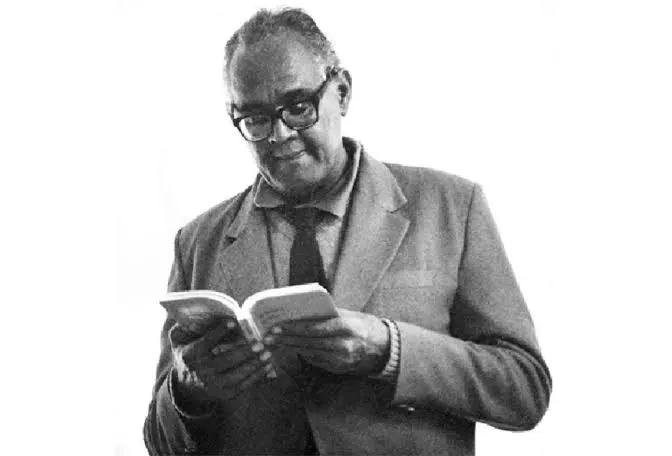
Martin Carter grew up in Georgetown in the specific atmosphere of the British Guiana that the PPP was transforming in the early 1950s — a colonial capital where the independence movement's energy was most concentrated and where the contradictions between colonial authority and democratic aspiration were most directly visible. His engagement with the PPP was the engagement of someone who understood, from the inside of the colonial educational system, both what that system had given him — the English literary tradition, the formal education that gave him the tools of his craft — and what it had denied him and the community he came from: the political rights, the economic opportunity, and the cultural respect that the colonial order systematically withheld.
The connection between political activism and poetry was not, for Carter, a relationship between two separate vocations but a single expression of the same fundamental commitment to human dignity and to the specific demands of the Guyanese situation. His early poetry — written before his detention, in the context of the PPP's campaign for independence — was already engaged with the political conditions of British Guiana in ways that combined lyrical intensity with political argument, and his detention was the event that deepened and focused this engagement into the specific achievement of Poems of Resistance.
Detention and the Making of Poems of Resistance
The experience of political imprisonment in 1953 was, for Carter, both a violation and a revelation — a violation of the political rights that the independence movement was demanding and a revelation of what those rights meant in their absence. The specific conditions of detention — the removal from the community and the landscape that sustained his sense of himself, the confrontation with the colonial state's physical power, the experience of being simultaneously reduced to a body in a cell and aware of oneself as a political actor whose imprisonment was itself a political statement — produced in him the heightened attention to the relationship between the physical and the political that characterises Poems of Resistance.
The poems he wrote during and after his detention are unlike most political poetry in their combination of formal care and emotional immediacy. They do not sacrifice lyrical quality for political urgency or political argument for aesthetic satisfaction; they hold both together in a way that is very difficult to achieve and that Carter achieved consistently across the collection. The most celebrated — "This Is the Dark Time, My Love," "I Am No Prisoner," "Listening to the Land" — are poems that address the specific historical moment of British Guiana's 1953 emergency with a precision that makes the moment specific, and that address the universal conditions of resistance to oppression with a reach that makes the moment representative.
The collection's publication in 1954 was an immediate event in the Guyanese independence movement's cultural life — a demonstration that the movement had produced not merely effective political organisation but genuine literary achievement, that the experience of political commitment at its most intense could produce art of lasting quality. Its subsequent recognition as the greatest collection of Caribbean resistance poetry has confirmed what the movement's participants understood immediately: that Carter had done something in those poems that went beyond the demands of the political moment into the territory of permanent literary achievement.
Minister, Resignation, and the Integrity of Independence
Carter's decision to serve as Minister of Information and Culture in the Forbes Burnham government in the late 1960s — and his subsequent resignation — were both consistent expressions of the values that had informed his entire career. The decision to serve reflected his understanding that the formal independence the movement had been working toward had been achieved, and that participation in the independent government was the appropriate expression of political commitment in the post-colonial context. He was not a pure oppositionist who refused all engagement with the institutions of power; he was a political actor who understood that changing the conditions of Guyanese life required working through the institutions that shaped those conditions.
The resignation — prompted by the corruption, the electoral manipulation, and the increasing authoritarianism of the Burnham regime — was equally consistent. Carter had spent the preceding two decades writing about the dignity and democratic aspirations of the Guyanese people; he was not prepared to continue serving a government that systematically violated both. The resignation was not a retreat from politics but a refusal to subordinate his values to the institutional pressures of serving in a corrupt administration — the same refusal of accommodation that had made his prison poems what they were.
The years after his resignation from the ministry were years in which he maintained the critical independence that his work required, writing poetry that engaged with the disappointments of post-colonial Guyanese politics with the same honesty and the same lyrical force that the earlier poems had brought to the hopes of the independence movement. The body of work he produced across the full arc of his career — from the pre-independence enthusiasm of the early 1950s through the detention and Poems of Resistance, through the brief ministerial period and its principled end, through the long years of witnessing and writing under Burnham's rule and beyond — is the most complete literary account of the Guyanese political experience available in any medium.
The Poet Who Stayed
One of the most significant facts about Martin Carter's career is that he stayed — that he remained in Guyana through the decades of Burnham's misrule, through the poverty and the frustration and the political disappointments that drove many of the most talented Guyanese of his generation into exile or emigration. He had the reputation and the contacts that would have made an academic career abroad possible; he chose instead to remain in the country whose history he was writing about, to witness at first hand the conditions that his poetry addressed, and to maintain the specific fidelity to the Guyanese landscape and the Guyanese people that gave his work its particular authenticity.
This choice — the refusal of the comfortable exile that his talents made available — was itself a political and aesthetic statement: that genuine witness required presence, that the poetry of political commitment could not be written at a safe distance from the conditions it addressed, that the loyalty to the Guyanese people that his work expressed demanded the loyalty of continued presence even when that presence was difficult and unrewarded.
Legacy: The Greatest Caribbean Poet in English
Martin Carter died on 13 December 1997, in Georgetown, Guyana, at the age of seventy. He had lived through the full arc of modern Guyanese history — from the birth of the independence movement to the formal achievement of independence to the corruption and authoritarianism of the Burnham years to the restoration of genuine elections and the return of the PPP to power under Cheddi Jagan — and he had written about all of it with a combination of political commitment and lyrical intensity that no other Caribbean poet had matched. He is widely regarded as the greatest poet in the English-speaking Caribbean, and the specific quality of his work — its refusal to choose between the political and the lyrical, its fidelity to the specific conditions of Guyanese life, its formal intelligence in the service of genuine human content — remains the standard against which the subsequent generations of Caribbean poets in English measure themselves.