At a Glance
Grenada, Gairy, and the Conditions That Made Revolution Possible
Eric Gairy's Grenada was, by the early 1970s, a political environment that combined the features of charismatic populism, personal corruption, and organised violence in ways that made the case for revolutionary change both self-evident and urgent. Gairy had built his political career on the Grenadian labour movement and had achieved genuine popular support among the island's working class and small farmers, but his governing style had evolved into a form of personal autocracy that used state institutions for private enrichment and maintained itself through the Mongoose Gang — a private militia whose beatings, harassment, and killings of political opponents and trade union activists gave Grenadian politics its specific atmosphere of intimidation.
Bishop's New Jewel Movement built its opposition to Gairy on the specific record of his government's failures and abuses — on the specific experiences of specific Grenadians who had been beaten, harassed, or impoverished by the Gairy system — and on the alternative programme of social transformation that the NJM was developing. The movement's strength was its combination of Bishop's charismatic public advocacy with the grassroots organisational work of its members, who were building a presence in Grenadian communities across the island in ways that the conventional party structures of Caribbean electoral politics had not achieved.
The coup of March 1979 was made possible by the specific opportunity of Gairy's absence and the specific weakness of the state structures he had built — structures designed more for the maintenance of his personal power than for the defence of the territory against a determined armed challenge. The NJM's seizure of power was, as coups go, remarkably clean: limited violence, broad popular support, and an immediate programme that gave the incoming government both a mandate and a direction.
Four and a Half Years: What Bishop Built and What It Meant
The People's Revolutionary Government's four and a half years were the period in which a Caribbean island of 100,000 people attempted to demonstrate, in practice, what the Caribbean progressive tradition had been arguing in theory for decades: that small Caribbean islands could transform their social conditions through competent, committed, and genuinely popular governance that prioritised the welfare of the poorest rather than the interests of the most powerful. The specific achievements of the period — the literacy campaign, the school construction, the free health care, the Women's National Organisation, the tourism infrastructure — were not merely policy outcomes but demonstrations of a political possibility that the broader Caribbean and the wider world were watching.
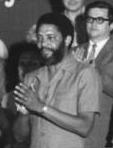
Bishop was the face and the voice of this project, and his specific gifts — the oratorical ability, the international connections, the capacity to articulate the revolution's programme in terms that resonated both within Grenada and beyond it — were essential to the project's international dimension. His speeches at the United Nations, his relationships with Castro and with the leaders of the Non-Aligned Movement, his presence at Third World solidarity conferences — these gave the Grenadian revolution an international visibility that was enormously disproportionate to the island's size and was itself a form of influence that the Reagan administration found deeply threatening.
The Reagan administration's characterisation of the PRG as a Soviet proxy was both dishonest and revealing. It was dishonest because the PRG's programme was a Caribbean democratic socialist project that drew on Cuban technical assistance and Soviet diplomatic support without being controlled by either; it was revealing because the American strategic calculus had determined that any leftist government in the Caribbean that demonstrated successful social governance was a threat to the ideological case that the Reagan administration was making about the impossibility of socialist development.
The Internal Conflict: What Destroyed the Revolution from Inside
The conflict between Bishop and Coard that eventually destroyed the revolution was one of the most consequential and most analysed political disputes in Caribbean history — a conflict whose specific origins in party discipline, power sharing, and personal mistrust produced consequences that neither party to the conflict had sought and that no one who valued what the revolution had built could have welcomed. The specific proposal that triggered the crisis — that the NJM's leadership should be reorganised on a "joint leadership" basis, with Bishop and Coard sharing formal authority — was presented by Coard's faction as a necessity for the party's political development and resisted by Bishop as a proposal that he understood as a disguised attempt to remove him from effective leadership.
The subsequent sequence of events — Bishop's house arrest, his liberation by supporters, the retaking of Fort Rupert by Coard's troops, the execution — was not the planned outcome of any party in the conflict; it was the catastrophic result of escalating decisions each of which made the next more likely. The decision to place Bishop under house arrest was already extreme; the decision of the crowd of supporters to liberate him was a response to that extremity; the decision to retake Fort Rupert by force and to kill the people inside it was the catastrophic end of an escalation that neither side had set out to produce.
The external context — the Reagan administration's sustained pressure, the economic difficulties created by American hostility, the siege mentality that these pressures had produced within the NJM — was not sufficient explanation for what happened but was part of the conditions within which the internal conflict developed. A revolutionary government under less external pressure might have found ways to manage the leadership tensions that the Coard-Bishop conflict represented; the specific pressures of the PRG's situation made the management of those tensions more difficult and the consequences of their mismanagement more catastrophic.
19 October 1983 and the American Invasion
The execution of Bishop, Creft, Whiteman, and four other cabinet ministers on 19 October 1983 was the act that made the revolution's destruction complete and that provided the Reagan administration with the opportunity it had been seeking for four years. The administration's presentation of the invasion that began on 25 October — Operation Urgent Fury — as a rescue mission for American students at St. George's University School of Medicine was not taken seriously by most international observers, who correctly identified it as the exploitation of the revolutionary government's self-destruction to remove a government that the United States had been trying to destabilise since 1979. The administration's subsequent presentation of the airport construction documents and Cuban weapons caches it claimed to have found were largely discredited by independent analysis.
The invasion itself was, militarily, a relatively straightforward operation against an island of 100,000 people whose revolutionary government had just killed its own prime minister. The political consequences were more complex: the invasion restored to Grenada a form of democratic governance that the revolution had suspended, but it did so by removing from power a government that had, whatever its political faults, achieved more in four and a half years of social improvement than Grenada had seen in the preceding decades. The international community's near-unanimous condemnation of the invasion — the United Nations vote against it was 108 to 9 — reflected a judgment about the principles of international law that the United States was unmoved by.
Legacy: The Caribbean's Most Painful Political Memory
Maurice Bishop died on 19 October 1983, at the age of thirty-nine, having led one of the most remarkable experiments in Caribbean progressive governance and having been killed by people who were, in theory, committed to the same project he had dedicated his life to building. The specific tragedy of his death — not at the hands of the American military or the CIA or the forces of reaction, but at the hands of members of the New Jewel Movement he had co-founded — gives his story a quality of political tragedy that is distinct from the stories of the other Caribbean martyrs of his era.
His legacy is the legacy of the revolution he built and of its destruction: the literacy campaign and the schools and the health clinics that exist as its most concrete monuments, the international airport at Point Salines that became the Maurice Bishop International Airport and that now connects Grenada to the world as he had intended, and the political memory of what was possible and what was lost. The specific combination of the revolution's achievements and its catastrophic end has given the Grenadian revolution a particular place in Caribbean political imagination — as a demonstration both of what the progressive Caribbean project could achieve and of the political failures that could destroy it from within before any external enemy had to act.