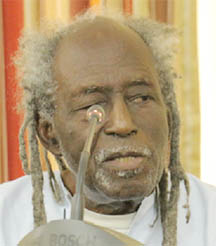
At a Glance
Sydney King, the Afro-Guyanese Community, and the Path to the PPP
Sydney King grew up in the Afro-Guyanese community of British Guiana's coastal belt — in the world of the churches, schools, community organisations, and mutual aid societies through which Afro-Guyanese people had maintained their social and cultural life in the century since emancipation. This community had specific characteristics that shaped his political formation: it was literate, it had developed significant institutional infrastructure through the churches and schools, it had a tradition of political engagement stretching back to the post-emancipation period, and it was simultaneously one of the most developed communities in British Guiana's colonial social order and one of the most economically marginalised.
The specific grievances of Afro-Guyanese people in the colonial society of the 1930s and 1940s — their exclusion from the higher positions of the colonial civil service despite their educational qualifications, the discrimination they faced in the labour market, the poverty that persisted despite generations of education and community development — gave his political consciousness a specific character that combined the tradition of Afro-Guyanese community self-improvement with the socialist and anticolonial analysis that was developing across the Caribbean.
His participation in the PPP's founding in 1950 was the product of this formation — of the convergence between the Afro-Guyanese community's specific political tradition and the multiracial socialist movement that Jagan and Burnham were building. He was one of the Afro-Guyanese figures who gave the PPP its genuinely interracial character in its early years, whose participation demonstrated that the multiracial vision was not merely a tactical arrangement but a genuine political commitment.
1953, Removal, and the Long Education in Colonial Power
The experience of the PPP's removal from power in October 1953 — the British government's suspension of the constitution, the arrest of the PPP's leaders, the imposition of a nominated administration — was one of the formative political experiences of Kwayana's life. He had participated in building the movement that had won the 1953 elections, had helped to organise the popular mobilisation that had produced that victory, and had watched the colonial government simply override the democratic decision that he and thousands of other Guyanese had made. The directness of the colonial intervention — the tanks in the streets of Georgetown, the suspension of the democratic processes that the movement had worked through — was an education in the limits of constitutional politics under colonial rule that shaped his subsequent political thinking.
The years after 1953 were years in which the PPP's multiracial coalition began to fracture under the pressure of the colonial administration's deliberate racial strategy and the CIA's subsequent operations. The split between Jagan's wing and Burnham's wing — which eventually produced the PPP and the PNC as separate parties organised primarily around Indo-Guyanese and Afro-Guyanese constituencies respectively — was one of the most consequential developments in Caribbean political history, and Kwayana experienced it from inside the movement that was being divided.
From Sydney King to Eusi Kwayana: The Name Change as Political Philosophy
The adoption of the name Eusi Kwayana was one of the most significant and most deliberate acts of Kwayana's public life — a statement, performed in the most personal way available, about the politics of naming, identity, and cultural reclamation that the Black Power movement was foregrounding in the 1960s and 1970s. Sydney King was the name that the colonial system had given him — a British first name, a British surname, neither of them connected to the African cultural heritage from which the Afro-Guyanese community descended. Eusi Kwayana was a name he chose — a name that asserted African cultural identity as something to be claimed rather than something to be ashamed of.
The political significance of this act extended beyond the personal. In a society where the racial hierarchy of the colonial order had systematically denigrated African cultural heritage — where the educational system had taught Afro-Guyanese children to see African history and culture as primitive and inferior, where the social order rewarded those who most successfully assimilated to European cultural norms — the public assertion of African cultural identity through naming was a challenge to the entire ideological structure of colonial racism. It said that Blackness was not something to be overcome or transcended on the way to full humanity but was itself a form of full humanity that deserved to be expressed and celebrated.
His engagement with Black Power politics more broadly reflected the influence of the pan-African and Black Power currents that were transforming progressive politics across the Black Atlantic world in the 1960s — the influence of Malcolm X, of Stokely Carmichael, of the broader assertion that Black people needed to build their own political and cultural institutions rather than seeking inclusion in institutions designed by and for white people. This influence was in tension with his commitment to multiracial democratic politics, and navigating that tension — asserting Afro-Guyanese cultural dignity while maintaining the multiracial vision — was one of the defining challenges of his political career.
The Working People's Alliance and the Rodney Years
Kwayana's co-founding of the Working People's Alliance in the late 1970s represented his most sustained attempt to build the multiracial democratic alternative that the racial patronage systems of both major parties had foreclosed. The WPA brought together Afro-Guyanese and Indo-Guyanese progressives who had become disillusioned with the racial politics of both the PNC and the PPP — people who believed that Guyana's liberation required a politics that could speak to all of the country's communities rather than organising them against each other.
Walter Rodney's return to Guyana and his decision to accept the WPA's political leadership gave the organisation its most formidable intellectual asset and its most public face. The combination of Rodney's intellectual authority — his How Europe Underdeveloped Africa had made him one of the most important Caribbean thinkers of his generation — and the WPA's genuine multiracial character created the most serious challenge to Burnham's authoritarian PNC government in the post-independence period. Rodney's assassination in June 1980 — killed by a bomb in circumstances that the WPA attributed to the Burnham government — was both a devastating personal loss and a demonstration of the lengths to which the PNC was prepared to go to suppress democratic opposition.
Kwayana's response to Rodney's assassination — his continuation in the WPA and in broader Guyanese democratic politics — was a form of political witness that reflected the depth of his commitment to the values that he and Rodney had shared. He maintained the WPA's presence through the subsequent years of PNC rule, adapting to the changing political landscape while insisting on the democratic multiracial values that had motivated the organisation's founding.
Legacy: The Long Life of a Democratic Conscience
Eusi Kwayana's longevity — still active, still writing, still sought for interviews about Guyanese politics in his nineties — has given him a specific kind of historical authority that few Caribbean political figures possess: the authority of someone who has witnessed the entire arc of modern Guyanese political history from the inside, who was present at the founding of the modern independence movement in 1950 and who has watched the subsequent decades with the eyes of someone who remembers both what was promised and what was delivered.
His life embodies the central contradiction of Caribbean post-colonial politics — the gap between the multiracial democratic promise of the independence movements and the racial patronage reality of many post-independence states — and his insistence on maintaining the democratic multiracial vision across that gap, through the disappointments and the betrayals and the decades of racial politics and authoritarian manipulation, represents one of the most serious and most consistent commitments to democratic values in Caribbean political history. He remains one of the Caribbean's most important voices for the proposition that genuine liberation requires genuine democracy and genuine equality across racial and other divisions — a proposition whose truth the history of Caribbean independence has demonstrated as clearly as anything could.