At a Glance
Kitty, Georgetown, and the Formation of a Brilliant, Complicated Man
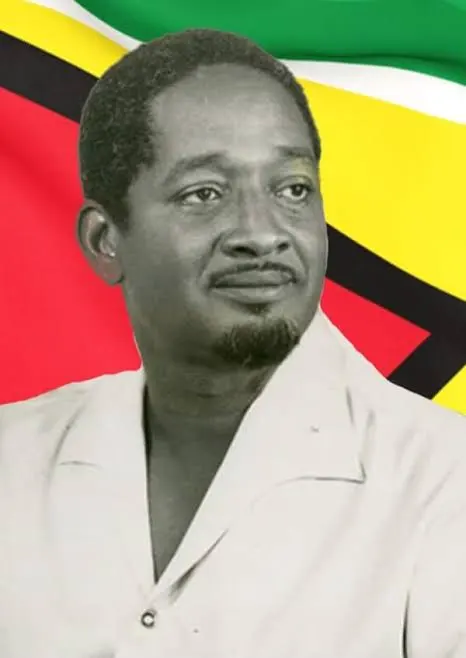
Forbes Burnham grew up in the Afro-Guyanese urban professional class of Georgetown — a class whose members had achieved substantial educational and professional distinctions within the colonial system but who faced systematic discrimination in their access to the positions of real authority that their qualifications should have entitled them to. His brilliance was evident early and universally acknowledged: he was a scholar of exceptional gifts, a debater of remarkable ability, and a public speaker whose combination of wit, eloquence, and intellectual command was recognised from his student years as the most gifted in British Guiana. He went to London to study law at the Middle Temple, encountered the radical political currents of the colonial students' circles in post-war London, and returned to British Guiana with both the professional credential of a barrister and the political convictions of a man who had seen both what the colonial system denied its subjects and what organised political resistance could achieve.
His partnership with Cheddi Jagan in founding the PPP in 1950 was a political marriage between the complementary strengths of the two men — Jagan's organisational base among the Indo-Guyanese rural communities of the sugar belt and Burnham's standing and oratorical gifts in the Afro-Guyanese urban professional community. The multiracial coalition that this partnership created was genuine and its achievements were real: the PPP's 1953 electoral victory was one of the most significant democratic moments in Caribbean colonial history, and the party's brief governing experience demonstrated what the multiracial independence movement could accomplish when given the opportunity to govern.
The complexity that makes Burnham's assessment so difficult is that the gifts that were genuine — the intelligence, the oratorical brilliance, the organisational capacity — were eventually deployed in the service of goals that betrayed the independence movement's founding promise. The question of when Burnham's political career shifted from the service of Guyanese liberation to the service of personal and factional power is one that historians of Guyana have debated, and the answer is not simple.
The Split, the PNC, and the Road to 1964
The fracturing of the PPP's multiracial coalition in the years after 1953 was shaped by forces that neither Jagan nor Burnham fully controlled — the colonial administration's deliberate strategy of racial divide and rule, the CIA's subsequent operations, and the genuine racial tensions within Guyanese society that those external forces were exploiting and deepening. But Burnham's own choices played a significant role in accelerating the split. His founding of the separate People's National Congress in 1957 institutionalised the racial division of Guyanese politics in ways that served his personal ambition to lead a party rather than serve as a partner in one, and his willingness to accept the American and British support that made his installation in power possible reflected a pragmatic calculation about the sources of political power that was incompatible with the genuinely anticolonial position that the PPP had originally represented.
The specific mechanism by which Burnham was installed in power — the British government's introduction of proportional representation, designed specifically to produce a parliamentary outcome that would exclude the PPP from government — was a form of colonial manipulation that he benefited from whether or not he actively sought it. His acceptance of governance under these manipulated conditions was the first and most consequential of the choices that would define the character of his regime: he chose power over democratic legitimacy, and the subsequent decades of his rule were shaped by that original choice.
Independence, the Cooperative Republic, and the Promise That Wasn't Kept
The formal independence of Guyana in 1966 and the declaration of the Cooperative Republic in 1970 were moments of genuine historical significance — the culmination of the independence movement that the PPP had initiated and that Burnham had been positioned to lead by the specific operations of the American and British governments. The Cooperative Republic declaration was an expression of the socialist self-reliance that his regime claimed as its governing philosophy, and the nationalisation of the bauxite and sugar industries that followed was presented as the practical expression of that philosophy — the transfer of the commanding heights of the Guyanese economy from foreign corporate ownership to the Guyanese state.
The problem was that the state that controlled these nationalised industries was a state organised around the PNC's racial patronage system rather than around competent developmental governance. The nationalised industries were used as vehicles for political employment — for rewarding the regime's supporters with positions regardless of their qualifications — and the resulting mismanagement produced economic outcomes that were substantially worse than the foreign corporate ownership they had replaced. The Guyanese sugar industry under state management became less efficient, less productive, and less competitive than it had been under Booker's corporate management, and the bauxite industry followed a similar trajectory.
The economic consequences of this mismanagement were severe. Guyana became one of the poorest countries in the hemisphere despite possessing significant natural resource wealth — bauxite, gold, timber, agricultural land — that should have provided the foundation for developmental success. The poverty was not inevitable; it was the product of specific governance choices, and those choices reflected the PNC's prioritisation of racial patronage and regime maintenance over developmental competence.
The Rigged Elections and the Authoritarian Consolidation
The elections held under Burnham's government became progressively more fraudulent over the decades of his rule. The 1968 elections were rigged through the manipulation of overseas voting — the PNC claimed enormous support from Guyanese living abroad, support that independent observers regarded as implausible and that internal party documents subsequently confirmed was fabricated. The 1973 elections saw the systematic stuffing of ballot boxes and the fraudulent counting of results that produced PNC victories in constituencies where the PPP had clear majority support. By the time of the 1980 elections — held in the shadow of Walter Rodney's assassination — the electoral manipulation had become so brazen that international observers from multiple organisations refused to validate the results.
The constitutional changes that accompanied and enabled this manipulation were equally significant. Burnham's rewriting of the Guyanese constitution — adopted in the 1980 elections whose fraudulent character made their use as a constitutional ratification mechanism deeply problematic — concentrated power in an executive presidency in ways that removed the institutional constraints on his authority. The position of executive president that he created for himself combined legislative, executive, and judicial authority in ways that gave him powers of governance that no constitutional democratic framework should have tolerated.
Walter Rodney and the Price of Opposition
The assassination of Walter Rodney on 13 June 1980 was the most significant and most revealing act of Burnham's authoritarian rule. Rodney had returned to Guyana from Tanzania in the late 1970s to help lead the Working People's Alliance — the multiracial democratic socialist organisation that was mounting the most serious challenge to Burnham's regime that it had yet faced. The WPA's combination of intellectual authority — Rodney's How Europe Underdeveloped Africa had made him one of the most important Caribbean thinkers of his generation — and genuine multiracial political organisation threatened the PNC's hold on power in ways that the established opposition parties had not.
Rodney was killed by a bomb on 13 June 1980, in circumstances that the WPA attributed immediately to the Burnham government. The evidence assembled in subsequent years — through the WPA's own investigations, through journalistic inquiry, and eventually through declassified documents — supported this attribution. A government agent had provided Rodney with a walkie-talkie that contained the explosive device; the operation had been coordinated through the PNC's security apparatus. Burnham denied any involvement, but the denial was widely disbelieved.
The assassination effectively decapitated the WPA at the moment of its greatest public impact and demonstrated that the Burnham regime was prepared to use lethal violence against political opponents who posed a genuine threat to its hold on power. For the independence movement's survivors — for figures like Brindley Benn and Eusi Kwayana who continued in the WPA's work after Rodney's death — the assassination was both a devastating personal loss and a demonstration of the regime's character that confirmed every criticism they had made of it.
The Complicated Legacy of a Complicated Man
Forbes Burnham died on 6 August 1985, in Georgetown, at the age of sixty-two. His death came during a surgical procedure, and questions about its circumstances were raised but never definitively resolved. He left behind a country impoverished by decades of mismanagement, divided by the racial politics that his governing style had deepened, and governed by institutions whose democratic character had been systematically corrupted by the electoral manipulation and constitutional rewriting of his two decades in power.
The assessment of his legacy is genuinely complicated by the fact that the gifts were real — that the brilliant orator who had helped to found the PPP in 1950, who had genuinely participated in the independence movement's early years, and who had declared the Cooperative Republic in a moment of real idealism was the same man who had rigged elections, suppressed opposition, and presided over the assassination of Walter Rodney. The coexistence of these dimensions — the genuine nationalist and the authoritarian, the independence leader and the regime maintainer — is what makes the honest account of his career so difficult and so necessary. He is not simply a villain; he is a figure whose genuine gifts were eventually deployed in the service of goals that betrayed the promise he had once helped to represent. That is perhaps the hardest kind of story to tell, and perhaps the most important.