At a Glance
Fort-de-France, Martinique, and a Childhood in the Shadow of Césaire
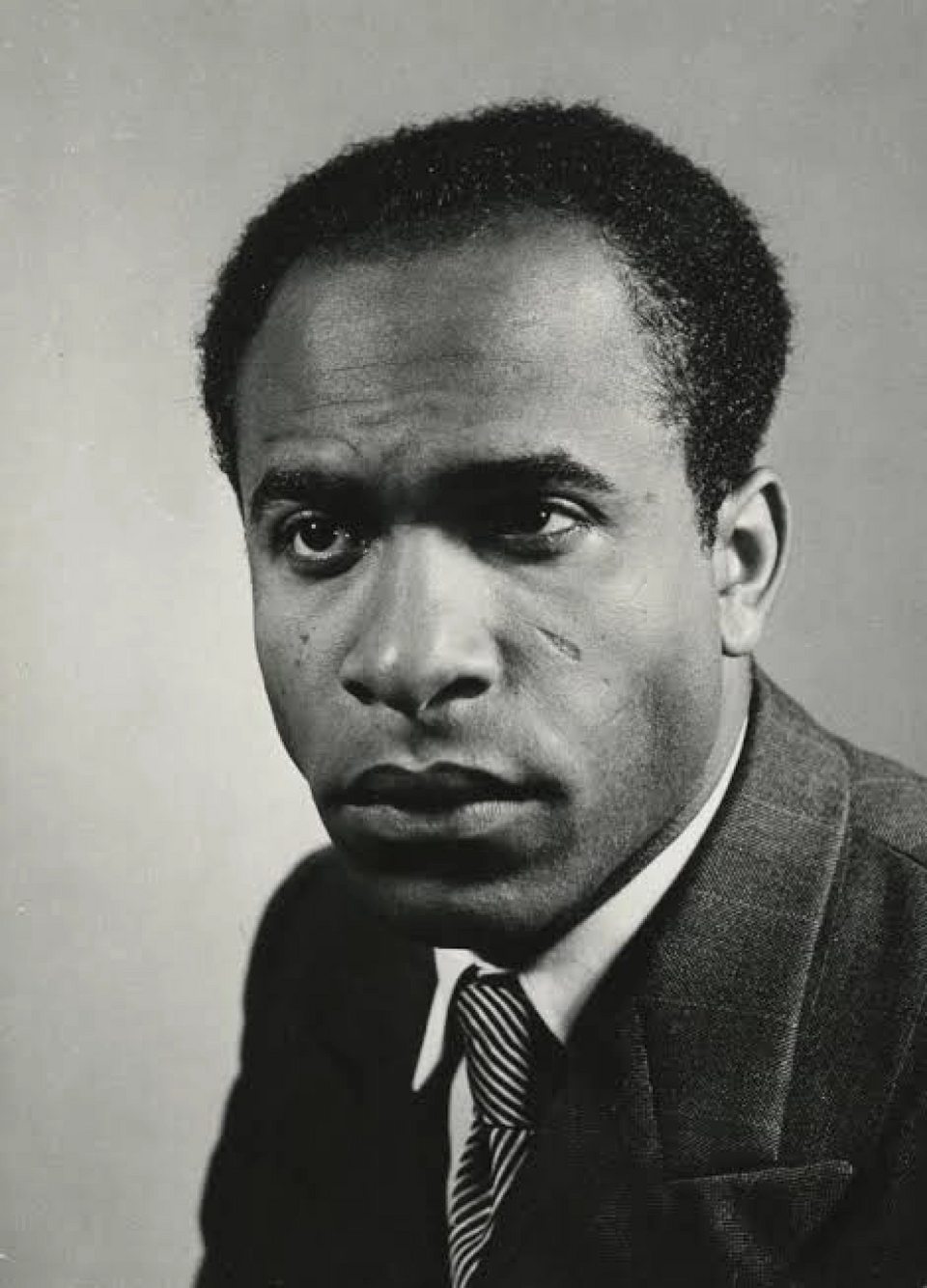
Frantz Fanon grew up in Fort-de-France, Martinique — the same city as Aimé Césaire, whose Négritude movement had established the political and cultural framework within which the young Fanon's own intellectual formation took place. Fort-de-France in the 1930s and 1940s was the centre of the most intellectually vital anticolonial cultural movement in the French Caribbean, and growing up there — attending the lycée where Césaire himself had been a student, absorbing the Négritude movement's arguments about Black cultural identity and colonial alienation — gave Fanon a specific intellectual inheritance that he would spend his career both drawing on and moving beyond.
His service in the Free French Army during the Second World War was a formative experience whose contradictions shaped his subsequent thinking about race, colonialism, and the psychology of the colonised person. He had volunteered to fight for France — for the metropolitan country that colonised his island — and he had encountered in continental France both the gratitude of French civilians and the persistent racism of French soldiers and institutions that reminded him, constantly and specifically, that his Frenchness was conditional on his Blackness remaining invisible. The experience of being simultaneously claimed by France as a defender of its values and rejected by France as someone whose race made him fundamentally other was the lived version of the psychological analysis that Black Skin, White Masks would develop theoretically.
He studied medicine and psychiatry in Lyon, developing the psychiatric training that would give him the professional framework for his subsequent theoretical work, and encountering in the French university world the full range of intellectual currents — existentialism, psychoanalysis, phenomenology, Négritude — that his thinking would engage with, transform, and ultimately transcend. His encounter with Sartre's philosophy, with Lacan's psychoanalytic theory, with Merleau-Ponty's phenomenology of embodiment gave him the conceptual tools that Black Skin, White Masks would deploy in the service of an analysis that none of these frameworks had prepared for — the analysis of what colonial racism does to the specific body of the Black person in a world organised by white supremacy.
Black Skin, White Masks: The Psychology of Colonial Alienation
Black Skin, White Masks is, in its ambition and its execution, one of the most extraordinary intellectual productions of the twentieth century — a book that uses the full resources of European psychoanalytic theory, existential philosophy, and phenomenology to do something that none of these frameworks had attempted: to describe, from the inside, what it feels like to be a Black person in a world that has organised itself around the premise of Black inferiority.
The book's central insight is that colonial racism does not merely impose external oppression on Black people but penetrates their interior life — produces in them a fundamentally alienated relationship to their own bodies, their own desires, their own sense of possibility. The colonial educational system that teaches Black children that European history is the history of humanity, that African cultures are primitive and without value, that the model of full humanity is European — this system does not merely deprive Black children of knowledge about their own history; it actively colonises their imagination, their aspiration, and their self-understanding in ways that reproduce colonial domination at the deepest psychological level.
Fanon illustrated these processes through a combination of clinical case material, literary analysis, and sustained philosophical argument. His readings of colonial literature — his analysis of how the language of French colonial culture represented Black people, how the imagery of Blackness in European literature encoded the racial hierarchy that colonial society required — were among the most penetrating examples of what would later be called postcolonial literary criticism, produced before the field had a name. His clinical analyses of the specific psychological effects of colonial racism on his patients were among the first serious attempts to apply psychoanalytic theory to the specific conditions of the colonial subject.
Algeria, the FLN, and the Crossing Over
Fanon's appointment as head of the psychiatry department at the Blida-Joinville Hospital in Algeria in 1953 brought him to the country whose independence struggle would become the focus of his remaining years and whose revolution would provide the practical context for the theoretical analysis he was developing. He arrived in Algeria as a French-trained psychiatrist appointed by the colonial administration to provide psychiatric services in a colonial territory, and he encountered there both the specific psychological damage that colonial oppression inflicted on Algerian patients and the revolutionary movement that was preparing to challenge that oppression with force.
The decision to cross over to the FLN — to resign his position, to write to the French authorities explaining why he could no longer in conscience serve a system whose fundamental purpose was to inflict the damage he was treating, and to commit himself entirely to the Algerian revolution — was the most consequential personal decision of his life. His letter of resignation was one of the most powerful documents of the Algerian war — a statement of the moral impossibility of serving colonial psychiatry that was also a statement of the general moral impossibility of serving colonial administration in good conscience when one understood what that administration was doing to the people it governed.
He served the FLN as writer, diplomat, and representative across the newly independent nations of sub-Saharan Africa that were emerging in the late 1950s and early 1960s — building the continental network of solidarity and support that the Algerian revolution needed to sustain itself against the French military's overwhelming material superiority. His writing for El Moudjahid, the FLN's newspaper, was some of the most effective anticolonial journalism of the period, and his diplomatic missions to Ghana, Guinea, Mali, and other newly independent African states were essential to the Algerian revolution's international position.
The Wretched of the Earth: Written While Dying
The Wretched of the Earth was written in the knowledge that Fanon was dying — diagnosed with leukaemia in 1960, given perhaps a year to live, and working against that deadline to complete the most systematic statement of his analysis that the time remaining allowed. He dictated it to his wife Josie, working through the night when his energy permitted, completing the manuscript in less than two months in a race against the disease that was consuming him. The urgency of the composition is present in the book's prose — it has the quality of something said by a man who knows he will not have another chance to say it.
The book addresses the full range of questions that the anticolonial revolution raised: the psychology of the colonised, the social structure of colonial society, the role of different social classes in the revolutionary movement, the pitfalls that awaited the national bourgeoisie as the managers of post-colonial states, the need for a genuine transformation of social and economic relations rather than a mere transfer of political power to a local elite, and the psychological healing that genuine liberation required. Its analysis of the "pitfalls of national consciousness" — the ways in which the national bourgeoisie could replicate colonial structures under post-colonial governance, maintaining inequality and dependency while replacing white faces with Black ones — was a prescient warning that the subsequent history of post-colonial Africa and the Caribbean has repeatedly demonstrated to be accurate.
Jean-Paul Sartre's preface — which emphasised the cathartic dimension of anticolonial violence and presented Fanon's analysis in terms of a simple reversal of colonial violence — was both a gift and a burden to the book's subsequent reception. The preface brought the book immediately to the attention of the French and international left, but it also contributed to readings that reduced Fanon's complex analysis to a simpler argument about the liberatory power of violence that the book itself did not fully support. Fanon's actual argument about violence was more psychological and more structural than Sartre's preface suggested — more concerned with understanding the specific dynamics of colonial society than with endorsing violence as a political strategy.
Thirty-Six Years and What They Contained
Frantz Fanon died on 6 December 1961, in Bethesda, Maryland, where he had gone for treatment in the final months of his illness. He was buried in Algeria, on the Algerian soil whose liberation he had served — a final statement about where his life had been given and where his body belonged. He had been thirty-six years old. He had written two books that changed how the world understood colonialism. He had served as the voice and diplomat of a revolutionary movement. He had innovated in psychiatric practice and in the understanding of the relationship between political oppression and psychological damage. He had left, in the thirty-six years available to him, a body of work whose influence across the subsequent decades — on the liberation movements of Africa, on the Black Power movement in the United States, on the Palestinian resistance, on feminist theory, on postcolonial studies — has been as great as that of almost any other thinker of the twentieth century.
The scale of that influence is a function of both the quality of the analysis and the specific historical moment at which it was produced. Fanon wrote at the inflection point of the twentieth century's great wave of decolonisation — at the moment when the formal mechanisms of colonial empire were being dismantled across Africa and Asia while the psychological and economic structures of colonialism persisted — and his work addressed precisely the gap between formal liberation and genuine liberation that that moment created. The question he posed — what does it take to be fully free after colonialism, not merely free in law but free in the deepest psychological and social sense — remains as urgent in the twenty-first century as it was in the 1950s, and The Wretched of the Earth remains the indispensable starting point for anyone seeking to answer it.