At a Glance
Antigua, the Bird Dynasty, and the Conditions That Made a Radical
Tim Hector grew up in Antigua under the political dominance of the Bird family's Antigua Labour Party — the organisation that Vere Cornwall Bird had built from the Antiguan labour movement of the 1940s and that had become, through the independence era, the vehicle of Antiguan political life in ways that combined genuine working-class origins with increasingly personal and familial concentrations of power. The ALP's trajectory — from genuine labour movement organisation to independence vehicle to ruling dynasty — was characteristic of several Caribbean independence parties, and its specific Antiguan form gave Hector both the material for his journalism and the political target for his organising throughout his career.
His education at McGill University in Montreal in the 1960s brought him into contact with the Caribbean student radical milieu that was developing across the North American university system in that decade — the specific world of Caribbean students encountering Black Power politics, Caribbean socialism, and the anticolonial movements that were reshaping global politics simultaneously in Africa, Asia, and the Caribbean. His encounters at McGill, which included contact with Walter Rodney, were formative in giving his political formation the theoretical framework that the Antiguan political environment alone could not have provided.
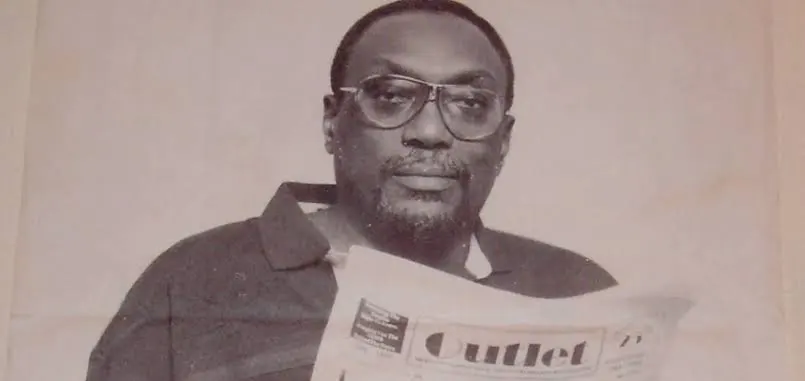
His return to Antigua — rather than the comfortable academic or professional career that his McGill education could have supported in Canada or elsewhere — was the first of many choices throughout his career that demonstrated his commitment to the specific conditions and the specific people of the island that had formed him. He could have left. He stayed. He founded the ACLM, he founded the Outlet, he began writing Fan the Flame, and he spent thirty years making himself the most consequential voice of Caribbean progressive politics that Antigua had produced.
Fan the Flame: Nearly Three Decades of Weekly Argument
The Fan the Flame column was extraordinary not merely as a body of political journalism but as a sustained intellectual project — a nearly thirty-year weekly engagement with the full range of questions that Caribbean political life raised, conducted with the combination of theoretical depth, political passion, and local specificity that the best political journalism requires. Hector wrote about everything: the specific details of Antiguan electoral politics, the broader questions of Caribbean regional integration, the economic development challenges of small island states, the legacy of slavery and colonialism in Caribbean social structures, the Grenada revolution and its destruction, cricket as a vehicle for Caribbean identity and political consciousness.
The cricket writing deserves particular attention, because it was in his engagement with cricket — explicitly following C.L.R. James's example — that Hector's thinking achieved some of its most original and most distinctive expressions. Cricket in the Caribbean is not merely a sport but a cultural institution whose specific history — the relationship between Black West Indian players and the white-dominated cricket establishment, the development of West Indian cricket as an expression of Caribbean identity and Caribbean pride, the political significance of West Indian cricket victories over England in the post-colonial context — made it a vehicle for the analysis of Caribbean society that the purely political forms of journalism could not always match. Hector's cricket writing drew on James's foundational analysis and extended it into the specific conditions of late twentieth-century Caribbean cricket, connecting the developments on the field to the political and social changes happening off it.
The column's sustained engagement with C.L.R. James's ideas was one of its most important intellectual dimensions. James — the Trinidadian historian, cricket writer, and political thinker who had produced The Black Jacobins, Beyond a Boundary, World Revolution, and the other foundational texts of Caribbean radical thought — was for Hector both an intellectual ancestor and a living presence whose ideas required continuous engagement rather than mere citation. The specific quality of Hector's engagement with James — the willingness to build on James's analysis, to extend it, to argue with it, and to apply it to conditions that James himself had not addressed — was one of the marks of his intellectual seriousness.
The Prosecution and What It Revealed
Hector's prosecution under Antigua's Public Order Act for his journalism critical of the Bird government was both a legal ordeal and a demonstration of the connection between political power and press freedom that his columns had consistently addressed. The Bird government's use of legal instruments to silence political criticism was not an isolated incident in Caribbean political history — similar mechanisms had been used in other territories — but its application to one of the most prominent journalists in the Eastern Caribbean was particularly revealing of the relationship between democratic independence and the actual freedom of the press that independence was supposed to guarantee.
The prosecution attracted international attention and solidarity — from press freedom organisations, from Caribbean progressive movements, and from the international academic and intellectual community that had come to regard Hector as one of the most important voices in Caribbean political thought. His willingness to continue writing through the prosecution, to maintain the Fan the Flame column's engagement with the same issues that had produced the charges against him, was characteristic of his approach to the relationship between journalistic integrity and political pressure. He did not moderate, did not retreat, and did not accept that the threat of prosecution was a reason to change what he was writing about or how he was writing about it.
The Grenada Revolution, Walter Rodney, and Caribbean Solidarity
Hector's solidarity with the Grenada revolution under Maurice Bishop was one of the most important expressions of the ACLM's regional Caribbean socialist commitment — an expression that reflected his conviction that the specific national independence movements of individual islands needed to be understood within the broader framework of Caribbean regional development and Caribbean progressive solidarity. The PRG's experiment in Grenada was, for the Eastern Caribbean left, the most important demonstration of what progressive Caribbean governance could achieve, and Hector's consistent advocacy for the revolution — his defence of its achievements against the Reagan administration's characterisation and his insistence on its significance for the broader Caribbean progressive project — made him one of the revolution's most important external voices.
His connection to Walter Rodney — which began at McGill in the 1960s and was maintained through the Caribbean progressive networks that sustained the tradition — gave his political work a specific personal dimension that deepened the commitment to the ideas they shared. Rodney's assassination in 1980 was a profound personal loss as well as a political one, and Hector's subsequent engagement with Rodney's legacy — in his columns, in his organising, and in his continued advocacy for the Caribbean democratic socialist tradition that Rodney had helped to define — was one of the ways in which he honoured the specific relationship and the specific intellectual inheritance.
Legacy: The Column That Made the Absent Feel Absent
Tim Hector died on 3 November 2002, in Antigua, at the age of sixty. The immediate, concrete expression of his absence was the missing Fan the Flame column — the weekly presence that had been part of the Eastern Caribbean's intellectual and political landscape for nearly three decades, whose absence in the week following his death was itself the clearest possible demonstration of how much he had meant to those who had read him. The columns themselves — archived and studied as primary sources for late twentieth-century Caribbean political thought — are the most durable monument to what he accomplished: nearly three decades of weekly engagement with the full range of Caribbean political and social questions, conducted with a combination of intellectual depth, political courage, and human warmth that the best political journalism requires and that very few journalists achieve.
He is remembered across the Caribbean as one of the most important voices of the region's progressive tradition in the late twentieth century — a man who chose to remain in the specific conditions of his small island home rather than seeking the wider audiences that his gifts might have commanded elsewhere, and who used that choice to produce a body of journalism that spoke directly to the specific conditions of the Caribbean poor whose interests he had dedicated his career to advancing.