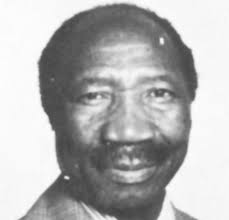
At a Glance
Manicaland, the Mines, and a Political Education Built from Labour
Maurice Nyagumbo grew up in Manicaland in the 1920s and 1930s — the eastern highlands region that borders Mozambique and that was, in the colonial period, a significant agricultural zone where both white-owned commercial farms and African smallholder communities occupied the landscape in the familiar configuration of colonial land alienation: the best land in European hands, the African population in the reserves and on the farms as labour. His childhood formation in this landscape provided the same basic political education that it provided to other members of his generation paying attention: the visible evidence of dispossession, the daily operation of the racial hierarchy, the systematic denial of the ordinary human possibilities that the colonial system reserved for those it defined as white.
He went to South Africa as a young man to work in the gold mines of the Rand — the migrant labour system that was one of the defining institutions of southern African economic life in the twentieth century, drawing hundreds of thousands of young men from Southern Rhodesia, Nyasaland, Mozambique, and elsewhere into the labour force of the mining economy and depositing them in the compounds of Johannesburg and the surrounding towns. The compounds of the South African mining industry were politically charged spaces — not comfortable ones, not safe ones, but ones in which African workers from across the region were concentrated in sufficient numbers and under sufficient shared pressure to make collective political thought and organisation natural responses.
The ANC was active in this environment. The trade unions were organising. The broader landscape of African political thought — shaped by the Congress tradition, by the Communist Party, by the emerging Pan-Africanism that connected South African struggles to liberation movements across the continent — was accessible in ways that Southern Rhodesia, with its more successfully suppressed political culture, could not match. Nyagumbo absorbed this education with the seriousness that his subsequent career demonstrated, and he returned to Southern Rhodesia with a political formation that went considerably beyond what the colony's mission schools could have provided.
ZANU, Detention, and the Writing of a Liberation Document
Nyagumbo entered the nationalist movement through the NDP and ZAPU before committing himself to ZANU following the 1963 split. His alignment with ZANU placed him in the political tradition that eventually produced Zimbabwe's post-independence government, though in the 1960s that outcome was far from obvious, and his commitment to ZANU reflected a genuine assessment of the movement's direction rather than a strategic calculation about which side would win.
He was detained by the Rhodesian government — as were most of ZANU's significant figures during the 1960s and 1970s — and spent extended periods in the restriction camps and detention facilities that the Smith regime maintained for political prisoners. Gonakudzingwa was among them: the remote, deliberately inhospitable facility in the south-east that was home at various points to most of the nationalist movement's leadership, and whose conditions of isolation and confinement were designed to break the political commitments of those confined there.
They did not break Nyagumbo's. Instead, he used the detention years to write — producing the memoir that became With the People: An Autobiography from the Zimbabwe Struggle, one of the most important first-person accounts of the Zimbabwean liberation movement. The memoir is a remarkable document: candid about the conditions of colonial life that shaped his political formation, honest about the internal dynamics and the personal costs of the nationalist movement, and written with the directness of a man who is recording his experience for posterity rather than managing his reputation for the present. It is evidence, among other things, of the quality of mind and the depth of commitment that the Rhodesian detention system failed to extinguish in one of its most significant prisoners.
Independence, Senior Ministry, and the Post-Liberation Disillusion
Nyagumbo came to independence in 1980 as a figure whose liberation credentials were among the most firmly established in ZANU's leadership — a man who had given decades to the cause, who had endured years of detention without compromising, and who had produced in With the People one of the liberation struggle's permanent literary monuments. He was appointed to the post-independence government and served in senior ministerial roles that reflected both the recognition of his contribution and the genuine administrative competence that his organisational background had developed.
The post-independence years were, for a man of Nyagumbo's commitments and his generation's idealism, years of gradual and painful disillusionment. The government of which he was a part was, from its earliest years, developing the culture of self-enrichment, factional competition, and arbitrary exercise of power that the liberation movement's stated principles had been supposed to prevent. The corruption was not sudden or dramatic in its early stages — it was the slow accretion of individual accommodations, of self-interest finding its expression in the spaces that political power creates, of the gap between stated principles and actual conduct widening year by year until it became impossible to ignore.
Nyagumbo served in this government, participated in its structures, and — as the Willowgate scandal revealed — was not immune to the culture of self-enrichment that had taken root within it. Whether his participation in the vehicles scheme was a lapse from principles he otherwise maintained, or an indication that the principles had been more comprehensively compromised than his public persona suggested, is a question that his death prevents from being answered with certainty. What is certain is that the exposure of his involvement in the scandal placed him in a position of contradiction that he evidently found intolerable.
Willowgate and the Last Accounting
The Willowgate scandal was exposed by Geoffrey Nyarota, the editor of the Chronicle newspaper in Bulawayo, whose investigative reporting revealed that senior ZANU-PF ministers had been systematically abusing their positions to purchase vehicles from the Willowvale Motor Industries — a state-owned company — at the controlled prices available to government officials, and immediately reselling them at market prices that generated substantial personal profits. The amounts involved were not, by the standards of the grander corruption that would characterise later Zimbabwean governance, enormous. But they were real, they were documented, and they involved ministers whose public positions required them to represent the public interest rather than exploit it.
Nyagumbo was among those named. The naming placed him, publicly and inescapably, in the position of a man who had spent decades arguing for the liberation of Zimbabwe as a moral cause — as the project of restoring to African people the dignity and the self-determination that colonialism had stolen — and who had then used the political power that liberation had provided to enrich himself at the expense of the state that liberation had been supposed to build for the benefit of everyone.
The contradiction was not one that he could resolve by resignation alone, though he resigned. It was not one that an apology could dissolve, though an apology might have been possible. It was a contradiction between what he had said his life was for and what the evidence of Willowgate suggested it had actually been for — at least in part, in at least this one significant instance — and it was apparently a contradiction of a kind that his particular combination of principled commitment and personal seriousness made unbearable. In April 1989, he took his own life.
Legacy: The Memoir That Outlasts the Man and the Scandal
Maurice Nyagumbo's legacy is genuinely split — not in the way that most complicated legacies are split, between contributions to be celebrated and failures to be acknowledged, but in a way that is structurally more painful: between the man who wrote With the People and endured years of detention without compromise, and the man who was named in the Willowgate scandal and who, apparently unable to live with that naming, chose not to. The same qualities — the moral seriousness, the high standards of personal conduct — that made his liberation contribution genuine were apparently what made the Willowgate exposure unendurable.
With the People remains, regardless of everything that followed its writing, one of the essential documents of the Zimbabwean liberation struggle — a first-person account of the experience of detention, of the building of political commitment under repression, of the internal life of the nationalist movement that no subsequent history has fully replaced. It is the most enduring thing Nyagumbo left behind, and it is a remarkable thing: a record of a man at his best, written in the worst circumstances, that has outlasted the complications and the failures that followed.
His death by suicide is part of his story, and it would be dishonest to write around it. But it is not the whole of his story, and the part that preceded it — the decades of commitment, the years of detention, the memoir written in imprisonment — deserves its own full accounting. He was a man who tried to live according to his principles and, by his own final judgment, failed in a way he could not forgive himself. That is a human tragedy whose dimensions are not reduced by the fact that the failure was real. Zimbabwe's liberation demanded much from the people who gave themselves to it. Maurice Nyagumbo gave much, and in the end it cost him everything he had.