At a Glance
The Farm Labour Communities and a Soldier's Formation
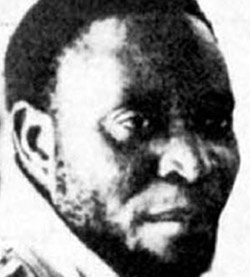
Josiah Tongogara was born in 1940 in the Charter District of Mashonaland — the farming country of the central plateau where the land alienation policies of the previous five decades had produced the landscape of European farms and African labour reserves that defined settler Rhodesia's agricultural economy. His father worked on white-owned farms, and Tongogara grew up in the compound communities of farm labour — the spaces where African families lived within earshot of the farmhouse but in conditions that illustrated, in the most direct possible terms, the racial hierarchy that the entire colonial system was designed to maintain.
The experience of farm labour and farm community life gave Tongogara a political education that was more visceral and more immediate than the mission school formation that shaped many of the liberation movement's more intellectually prominent figures. He knew what dispossession looked like — not as an abstraction or a historical account but as the daily reality of working on land that had belonged to his people's community within living memory and that the legal fictions of colonial land law had transferred to someone else. That knowledge gave his subsequent political commitment a personal grounding that the more abstract arguments for liberation could not have provided alone.
He attended mission schools and worked on farms in his early years before the political radicalisation that the conditions of his life were reliably producing brought him into the nationalist movement. He was recruited into ZANU's structures in the early 1960s, during the period when the movement was making the transition from political organisation to armed struggle, and he committed himself to the military dimension of that struggle with the completeness that his subsequent career demonstrated. He was sent for military training — to China, where the People's Liberation Army's tradition of combining political education with military instruction shaped his understanding of what guerrilla warfare was and how it worked, and to other African countries where the practical training he received gave him the technical military skills that the Chinese theoretical education required to become operationally useful.
Building ZANLA: The Political Army
When Tongogara was appointed ZANLA's commander-in-chief in 1972, the organisation he inherited was far from the disciplined, politically coherent force that it would become under his command. ZANLA's early operations in the late 1960s and early 1970s had demonstrated both the determination of its fighters and the limitations of an organisation that had not yet resolved the relationship between military effectiveness and political legitimacy — between the need to conduct operations that imposed costs on the Rhodesian state and the equally pressing need to maintain the relationship with the rural population that gave those operations their sustainability.
Tongogara's most important contribution to ZANLA's development was his insistence on the primacy of that relationship with the population. He had absorbed from the Chinese military tradition the understanding that a guerrilla army without popular support is not an army but a gang — that its operational effectiveness, however impressive in individual engagements, cannot be sustained because it lacks the intelligence, the logistical support, and the protection that only a genuinely sympathetic population can provide. And he had absorbed the corollary: that maintaining the population's support required treating it not as a resource to be exploited but as the constituency whose liberation was the purpose of the entire enterprise.
He enforced political discipline on ZANLA's fighters with a rigour that was sometimes harsh — the liberation war's internal justice was not gentle — but that reflected a genuine strategic understanding rather than mere authoritarianism. Fighters who stole from the communities they were operating in were disciplined. Fighters who abused civilians were disciplined. The political education programme that Tongogara instituted in ZANLA's camps was not just ideological decoration — it was the mechanism through which he tried to ensure that the fighters understood why the movement's relationship with the rural population was essential to military success, so that the discipline he required was internalised rather than merely complied with under threat.
The results were visible in the trajectory of ZANLA's military effectiveness across the 1970s. The north-eastern operations that Herbert Chitepo had helped establish were expanded; operations opened in new areas; the Rhodesian security forces found themselves fighting in an environment where the population they were policing was increasingly providing intelligence and logistical support to the fighters they were pursuing. By the mid-1970s, the character of the war had changed fundamentally — from a containable insurgency to a national military campaign that the Rhodesian state could not sustain.
The Specific Genius of His Command
What distinguished Tongogara as a military commander was not a single quality but the rare combination of several qualities that the specific demands of guerrilla warfare require simultaneously. He had the physical courage and the operational instinct that effective field command requires — the ability to make decisions under pressure, to read terrain and tactical situations, to project the authority that soldiers follow in dangerous conditions. He had the strategic intelligence to situate individual operations within the larger political and military context that gave them their meaning, to understand how tactical decisions shaped strategic outcomes and how strategic objectives should constrain tactical choices. And he had the political understanding to recognise that ZANLA's military effectiveness was inseparable from its political relationship with the population — that the army was not separate from the political movement but its military instrument, and that its conduct had to reflect the movement's political commitments if those commitments were to be credible.
He was also, by all consistent accounts, a man of remarkable personal authority — someone whose physical presence and force of personality generated the combination of respect and affection that great commanders in every tradition have been described as possessing. His fighters called him Comrade Tongogara with a warmth that went beyond the formal requirement of political address. The veterans of ZANLA who have been interviewed in the decades since the liberation war describe him with a consistency that suggests he genuinely earned the regard in which they held him — not through the management of his image but through the direct personal experience of his leadership in conditions where pretense would have been quickly exposed.
Lancaster House, the Ceasefire, and the Gathering Promise
Tongogara was present at the Lancaster House negotiations in London in the autumn of 1979 as the representative of ZANLA — the military arm of the movement whose battlefield performance had made those negotiations unavoidable for the Rhodesian government. The negotiations were difficult, the compromises were real, and the land question — the dispossession that had driven the liberation struggle and that the liberation movement had always promised to address — was effectively deferred to a future constitutional process that the Lancaster House agreement did not resolve.
He signed the ceasefire agreement on behalf of ZANLA on 21 December 1979. The liberation war was over. Zimbabwe's independence was five months away. He was expected — and widely reported to have been considered — for the position of commander of the new Zimbabwe National Army, the merged force that would combine the fighters of ZANLA, ZIPRA, and the Rhodesian security forces into a single national military institution. It was a role for which his experience and his authority uniquely qualified him, and his presence in it would have shaped the character of Zimbabwe's post-independence military in ways that the history that actually followed cannot fully assess because it did not happen.
He was killed five days after signing the ceasefire. The car accident on the road from Chimoio to the Zambian border — a collision with a lorry, according to the official account — came at a moment of such political consequence that the questions it generated were almost inevitable. The timing, the circumstances, the beneficiaries of his absence — all of these have been the subject of speculation and investigation that the passage of four decades has not fully resolved. Most historians of the period note the suspicious timing while acknowledging that the evidence for deliberate killing rather than accident remains inconclusive.
Legacy: What Zimbabwe Lost on 26 December 1979
The question of what Joshua Tongogara would have done with his life and his authority in post-independence Zimbabwe — had he lived — is one of the great speculative questions of Zimbabwean history, and it resists easy answers. What can be said is that the man who had insisted on political discipline in ZANLA's camps, who had argued for the treatment of civilians with respect and for the primacy of the political relationship with the population over the tactical imperatives of military operations, who had accepted the Lancaster House compromises with a strategic pragmatism that did not abandon the movement's core commitments — that man would have been a significant and probably moderating presence in the post-independence military and political landscape.
The post-independence Zimbabwe that actually developed — the Gukurahundi massacres, the systematic corruption of state institutions, the eventual economic collapse — was shaped by the absence of precisely the kind of military leader who combines genuine authority with genuine political seriousness. Whether Tongogara would have prevented any of this, had he lived, cannot be known. But the qualities his life demonstrated — the strategic intelligence, the political discipline, the concern for the people the movement claimed to serve — were the qualities that Zimbabwe's post-independence governance most conspicuously lacked.
He was thirty-nine years old when he died. The barracks of the Zimbabwe National Army are named after him — an honour that is real and that places his name before every recruit who passes through them. Whether the military institution that bears his name has been built in his image is a question that the history of Zimbabwe's post-independence security forces answers, painfully, in the negative. The name is honoured. The example has been insufficiently followed. The distance between the two is the measure of what Zimbabwe still owes to his memory.