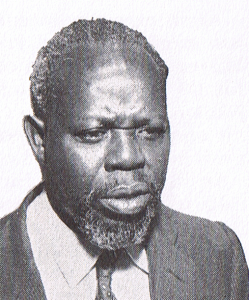
At a Glance
Adams College, the African Church, and an Eloquence Forged in Two Traditions
Leopold Takawira's formation was shaped by the intersection of two powerful traditions — the African Christian mission education that Adams College in Natal represented, and the community leadership tradition of the African churches of colonial Zimbabwe in which he served as a lay leader. Both traditions gave him gifts that the liberation movement needed and that he used throughout his political career: the first gave him the analytical tools and the communicative skills that formal education develops; the second gave him the moral authority and the community rootedness that political leadership in African communities required.
Adams College — the institution that had educated Albert Luthuli before his own transformation into South Africa's Nobel Peace Prize-winning liberation leader — was one of the most significant African educational institutions in southern Africa in the first half of the twentieth century. It was a place where the combination of intellectual rigour, Christian ethical formation, and exposure to the wider landscape of African political thought that the college's community provided produced graduates who were prepared not just for professional life but for the particular demands of leadership in communities whose dignity was under systematic assault.
Takawira returned from Adams College to Southern Rhodesia as a teacher — entering the profession that was, for mission-educated Africans of his generation, the primary vehicle for contributing to community development within the constrained spaces that colonial Rhodesia permitted. He taught, he worked in the African church, he built the community relationships and the reputation for principled engagement that made him a figure of authority in the nationalist circles that were developing through the 1950s. He was not a man who arrived at political commitment through a single dramatic conversion; he was a man whose entire formation had been preparing him for it, and who moved into activist politics when the conditions that made mass mobilisation possible arrived.
The NDP, ZAPU, and the First Years of Mass Nationalism
When the National Democratic Party was formed in January 1960, Takawira was among its founding leadership — serving as vice-president alongside Joshua Nkomo, who took the presidency. The NDP represented the first serious attempt to build a genuinely national African political movement in Southern Rhodesia, and the calibre of its leadership was central to its credibility. Nkomo brought the popular warmth and the organisational energy; Takawira brought the moral seriousness and the capacity for public argument that the movement needed to communicate its case beyond the communities of the already-committed.
His particular contribution to the NDP's public work was the articulation of the nationalist case in terms that engaged with the moral and political frameworks of the British and international audiences whose attention and support the movement was trying to cultivate. This was not simply translation — it was the genuinely difficult intellectual work of taking a set of political demands rooted in the specific experience of colonial dispossession and presenting them in terms that connected to the broader principles of human dignity and self-determination that the post-war international order had enshrined without, as yet, applying them consistently to Africa. Takawira did this work with an eloquence that his contemporaries consistently praised, and his public appearances in the forums where the Rhodesian question was being debated — in Britain, at the United Nations, in the Organisation of African Unity's predecessor bodies — were among the NDP and ZAPU's most effective moments of international advocacy.
When the NDP was banned in December 1961 and ZAPU was formed almost immediately in its place, Takawira continued in the senior leadership. When the ZAPU-ZANU split occurred in August 1963, he was among those who aligned with the new ZANU — a choice that placed him in the camp that Mugabe eventually led, though the Takawira-Mugabe connection in this period was one among many leadership relationships rather than the exclusive primary loyalty that the post-independence narrative tends to suggest.
Detention, Diabetes, and the Rhodesian State's Calculated Neglect
Takawira was detained by the Rhodesian government in 1964 — the same wave of mass detentions that swept up Joshua Nkomo and most of the nationalist movement's senior leadership as the Smith regime moved to neutralise organised African political opposition. He was held at Wha Wha detention centre, one of the facilities that the Rhodesian government maintained for long-term political detainees, and he spent the remainder of his life within the detention system.
He was a diabetic. The management of diabetes requires consistent medical attention — regular monitoring of blood sugar levels, appropriate medication, dietary management, and the prompt treatment of complications when they arise. These requirements are not exotic or expensive; they are the ordinary standard of care for a common and well-understood chronic condition. The Rhodesian detention system did not provide them adequately for Takawira, and the predictable consequence of inadequate medical management of diabetes in a detained person whose stress levels were high and whose dietary options were controlled — the progressive deterioration of his health toward the complications that untreated or undertreated diabetes produces — followed the predictable trajectory.
Appeals were made on his behalf for adequate medical treatment. The liberation movement's external representatives raised his case. International human rights organisations noted his situation. The Rhodesian government — which understood perfectly well what was happening and what the outcome of continued neglect would be — did not provide the care that his condition required. On 11 June 1970, Leopold Takawira died in Wha Wha detention centre of diabetic complications. He was fifty-three years old. He had been in detention for six years. He had spent those years without the independence he had given himself to achieve, and without the recognition that his contribution to building the movement that would eventually achieve it fully warranted.
The Outrage, the Martyr, and the Galvanising of a Generation
Takawira's death in detention — preventable, the result of deliberate neglect, coming after years of imprisonment without charge or trial — produced exactly the response that his life had perhaps not quite managed to generate while he lived: international outrage, focused attention on the conditions in which the Rhodesian government held its political prisoners, and a renewed commitment within the liberation movement to the struggle that his death had made viscerally real in a way that abstract political arguments could not.
Liberation movements require martyrs — not because death is a desirable outcome but because the concrete human cost of colonialism and repression, embodied in a specific person whose life and death the movement can point to, communicates the stakes of the struggle in terms that political argument alone cannot match. Takawira became that martyr for the Zimbabwean liberation movement — the named, specific, fully human representative of all the unnamed people whose lives and possibilities the Rhodesian system was consuming.
For the young men and women who joined ZANLA and ZIPRA in the years following his death — who underwent training in Mozambique and Zambia and China and the Soviet Union, who crossed the border into Zimbabwe to fight the liberation war's military campaign — Takawira's name was among those that embodied the human meaning of what they were fighting for. Not an abstraction of freedom and dignity but a specific man who had dedicated his specific life to the cause and whose death at the hands of the state they were fighting had made the cost and the necessity of the struggle concrete and personal.
Legacy: The Voice That Should Have Lived to Speak for the Free
Leopold Takawira deserves to be remembered as one of the foundational figures of Zimbabwean nationalism — a man whose contributions to the movement's early articulation and international advocacy were as important as the military contributions that the official historiography tends to privilege, and whose death gave the liberation struggle one of its most powerful human embodiments. He was a church leader and a teacher and a public intellectual and a political organiser — the combination of roles that the African colonial situation required of its most committed people, and that Takawira embodied with unusual completeness.
His death was not natural in any meaningful sense. It was the result of a political decision by the Rhodesian government to treat political prisoners as less than human — to deny them the medical care that their condition required, to use the detention system as a slow instrument of destruction for those the government could not or would not kill more quickly. That decision, and its consequence, must be part of any honest account of what the liberation movement was fighting against.
He died without seeing independence. The Zimbabwe that became independent in 1980 named streets after him and occasionally invoked his memory in the official ceremonies through which post-independence states acknowledge their liberation heritage. Whether the Zimbabwe that has existed since 1980 has been worthy of the principles he embodied — the moral seriousness, the concern for human dignity, the willingness to sacrifice personal comfort for collective liberation — is a question that the history of the post-independence decades answers with painful inadequacy. He gave what he had. Zimbabwe has not yet given back what it owes.