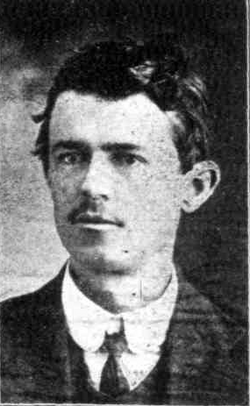
At a Glance
The Karoo to Cape Town: The Formation of a Marxist Scholar
Jack Simons was born in 1907 in Sutherland, a small wool-farming town in the semi-arid Karoo of the Northern Cape — as far from the centres of South African political and intellectual life as it was possible to be. The Karoo was a landscape of enormous distances and small communities, and growing up in it gave Simons a particular angle of vision on South African society — the perspective of someone who had come from the margins to the centre, who had seen the country from its periphery before engaging with its institutions.
He came to the University of Cape Town and found, in Cape Town's relatively more open social and political culture and in the international intellectual traditions that the university connected him to, the frameworks he needed to make sense of the society he had grown up in. The Marxist tradition — with its analysis of class, its historical method, its understanding of the relationship between economic structures and social and political forms — provided an approach to South African society that explained what the liberal tradition could not: why racial inequality was not an unfortunate side effect of an otherwise functioning capitalist economy, but a structural feature of the particular form of capitalism that South African colonial and industrial development had produced.
He joined the Communist Party in a period when the CPSA was the only significant political organisation in South Africa operating on a genuinely non-racial basis. The party's members were a small, diverse, intellectually serious group — lawyers, trade unionists, academics, workers — who shared a commitment to the Marxist analysis of South African society and to the practical work of building a non-racial movement for liberation. For Jack Simons, the Party was both a political home and an intellectual community, the place where his scholarly work and his political commitments found their most natural expression.
The Academic and the Political: Teaching at UCT
Jack Simons's appointment to the University of Cape Town as a professor of African law and administration placed him in an unusual position. He was a communist teaching in a liberal institution about a subject — the legal conditions of African life under apartheid and its predecessors — that was unavoidably political. His academic work was simultaneously rigorous scholarship and political analysis, and his students encountered in his lectures both the technical content of his subject and the analytical framework within which that content made sense.
The subject of African law and administration was, in the context of apartheid South Africa, an engagement with the machinery of racial domination. The laws governing where African people could live, what work they could do, whether they could own property, how their marriages and families were recognised by the state, what legal recourse they had when the state violated what rights they nominally possessed — these were not abstract legal questions. They were the structures that organised the daily lives of the majority of South Africans, and understanding them analytically was an act of political intelligence as well as of legal scholarship.
Simons brought to this teaching the Marxist method: the insistence on understanding legal and social structures in their historical context, on seeing them as products of particular economic arrangements and serving particular class and racial interests, on asking not just what the law said but why it said that and whose interests that served. His lectures were among the most politically serious teaching offered in any South African university in this period, and the students who passed through his courses carried away from them a capacity for structural analysis that was, for many of them, politically transformative.
His partnership with Ray Alexander Simons — whom he married and with whom he would collaborate for the rest of their lives — deepened and enriched both dimensions of his work. Ray was the organiser: the woman who built trade unions, who mobilised workers, who spent her life in the unglamorous but essential work of creating the organisational structures through which workers could act collectively. Jack was the theorist: the man who provided the analytical frameworks that made sense of what organising was for and where it fit in the broader project of social transformation. Together they constituted one of the great intellectual and political partnerships of the South African liberation movement.
Banning: The State Removes Its Most Articulate Critics
The apartheid government's use of banning orders against Jack Simons was characteristic of its strategy toward the intellectual left. The state understood that the most dangerous opponents of apartheid were not simply those who could organise mass action — though they were dangerous too — but those who could explain what apartheid was, why it existed, and what needed to change. An academic who could provide students with the analytical tools to understand South African society in its historical depth was, from the state's perspective, a threat to the ideological foundations on which the apartheid system rested.
The banning order removed Simons from his UCT position and subjected him to the standard restrictions: prohibition on attending meetings, prohibition on being quoted, prohibition on communicating with other banned persons. It was a form of intellectual silencing — an attempt to remove from South African public and academic life one of its most serious analytical voices. The loss to UCT was significant: Simons had been building a school of thought about African law and society that had real intellectual depth, and the banning ended that project as an institutional undertaking even as it continued in his own work and in the work of those he had taught.
The banning also demonstrated, for those who were paying attention, something important about the apartheid state's understanding of its own vulnerability. A government confident in the justice of its arrangements would not need to silence its academic critics. The banning of Jack Simons was an implicit acknowledgment that the analysis he was providing was correct — that apartheid was what he said it was — and that the state had no adequate intellectual response, only the blunt instrument of legal restriction.
Colour and Class in South Africa: The Book That Explained a Century
Published in 1969 from exile in Penguin's African Library series, Colour and Class in South Africa 1850–1950 is one of the most important works of South African social and labour history ever written. It traced the development of the relationship between racial classification and class formation over the century from the mid-Victorian period to the beginning of the apartheid era, showing how the racial structures of South African society had been produced through the interaction of colonial conquest, the development of mining capitalism, the organisation of migrant labour, and the political choices of successive governments.
The book's central argument — that race in South Africa was not a pre-existing social reality that capitalism had to accommodate, but a construction produced by and in the service of a particular form of capitalist development — was not original in its broad outlines, but Colour and Class made the argument with a depth of historical evidence and a precision of analytical method that no previous work had matched. It showed, chapter by chapter and decade by decade, how the racial structures had been built, how they had been contested, and how they had been reinforced against the challenges mounted by the labour movement and by African political organisations.
The book was immediately recognised as essential reading by everyone seriously engaged with South African history and politics, and it has retained that status. It is cited by historians, economists, sociologists, and political scientists. It was a key text in the training of the ANC and SACP cadres whom Simons taught in Lusaka. And it remains, more than half a century after its publication, the indispensable starting point for anyone seeking to understand how South African racial capitalism came to be and how it sustained itself through a century of organised resistance. Writing it required the combination of scholarly depth, political clarity, and sheer archival labour that only a scholar of Simons's calibre could have brought to it.
Lusaka: Teaching the Revolution's Next Generation
The years Jack Simons spent in exile, based principally at the University of Zambia in Lusaka, were among the most productive of his career in terms of direct political impact. Lusaka was the hub of the ANC's external mission — the exiled leadership of the liberation movement — and the university was close enough to that hub that Simons was able to combine his academic position with systematic teaching of ANC and MK cadres who came through the city.
The cadres who passed through Lusaka were people of various backgrounds and levels of education — some were highly trained professionals, others were young people who had left school in South Africa following the Soweto uprising of 1976 and had made their way into exile with limited formal education but fierce political commitment. Simons taught all of them: political economy, the history of the South African labour movement, Marxist theory, the strategic thinking of the liberation movement. He gave them the analytical framework within which their practical commitment could be grounded and through which the decisions they were making — about tactics, about organisation, about the kind of society they were building — could be thought through rigorously rather than simply acted on instinctively.
This teaching work was the continuation, in a different setting, of what Simons had done at UCT. The students were different, the circumstances were more urgent, and the stakes were higher — but the fundamental activity was the same: helping people develop the capacity to think clearly about the social and political world they lived in. In Lusaka, that world was one of exile and armed struggle and the daily work of keeping a liberation movement alive under the pressures of distance, surveillance, and the ordinary human difficulties of living for years in a country that was not one's own.
Legacy: Theory as Indispensable Practice
Jack Simons died in Cape Town in 1995, a year after the democratic election that brought Nelson Mandela to the presidency. He was eighty-eight years old and had spent more than six decades in the service of the liberation movement — as a scholar, as a teacher, as a communist, as an exile, and finally as a returning South African who lived to see the beginning of the transformation he had spent his life theorising.
His legacy operates at several levels. As a scholar, he produced in Colour and Class in South Africa a foundational text that reshaped the study of South African history and has not been superseded. As a teacher, he formed the analytical capacities of generations of students — at UCT, in exile in Lusaka, and through the informal networks of the liberation movement — who carried his method into their own work in the movement and beyond. As a political thinker, he contributed to the SACP's theoretical development over decades, helping to maintain the intellectual seriousness of a party that faced the constant temptation, common to all communist parties, to substitute orthodoxy for genuine analysis.
What perhaps most distinguishes his contribution is the consistency with which he held together the scholarly and the political — the refusal to treat rigorous analysis and committed engagement as mutually exclusive. He understood that the liberation movement needed both: the organisational capacity to mobilise people and the analytical clarity to know what they were mobilising for. Ray Alexander Simons provided the first; Jack Simons provided the second. Together they gave the South African left something that few liberation movements have possessed: a genuine theoretical tradition grounded in serious historical scholarship and animated by principled political commitment. That tradition outlasted the apartheid system that had tried to silence it, and its traces remain in South African political and intellectual life today.