At a Glance
Cape Town and the Communist Intellectual Tradition
Michael Harmel was born in Cape Town in 1915, into the Jewish immigrant community that had settled in the Western Cape in the preceding decades. His intellectual formation was at the University of Cape Town, an institution that in the 1930s — the decade of the Popular Front against fascism, of the Spanish Civil War, of the Great Depression's challenge to the assumptions of liberal capitalism — was a place where politically serious young people were encountering the full range of political traditions available to a generation facing the apparent collapse of the bourgeois order. He encountered Marxism in this environment and found in it not merely a political programme but an intellectual system — a way of understanding history, economics, and social structure that gave analytical coherence to his experience of South African society and its contradictions.
He joined the Communist Party of South Africa in the late 1930s, at a time when the Party was in the middle of a long debate about the relationship between class politics and race politics in South Africa — about whether the primary contradiction in South African society was between capital and labour (the Marxist analysis in its simplest form) or between racial groups (the nationalist analysis), and how these two analytical frameworks could be reconciled. This was not an abstract theoretical question; it had immediate practical implications for how the Party organised, who it sought alliances with, and what strategy it pursued. Harmel engaged with this question with the seriousness and the intellectual depth that would characterise his entire career.
His answer — developed over decades of theoretical work and refined through engagement with the South African Communist Party's practical experience — became the concept of colonialism of a special type, the theoretical formulation that resolved the tension between class and race by treating them not as competing explanatory frameworks but as two aspects of a single social formation. This was Harmel's most important contribution to the political theory of the South African liberation movement, and it remained the theoretical foundation of the SACP's programme for the remainder of the liberation struggle.
Colonialism of a Special Type: The Theory That Held the Movement Together
The concept of colonialism of a special type — CST, in the SACP's shorthand — addressed the question that had troubled the South African left since the earliest days of the Communist Party: how to understand a social formation in which the features of colonialism were present but in which the colonial relationship existed within a single territorial state rather than between a metropolis and a distant territory.
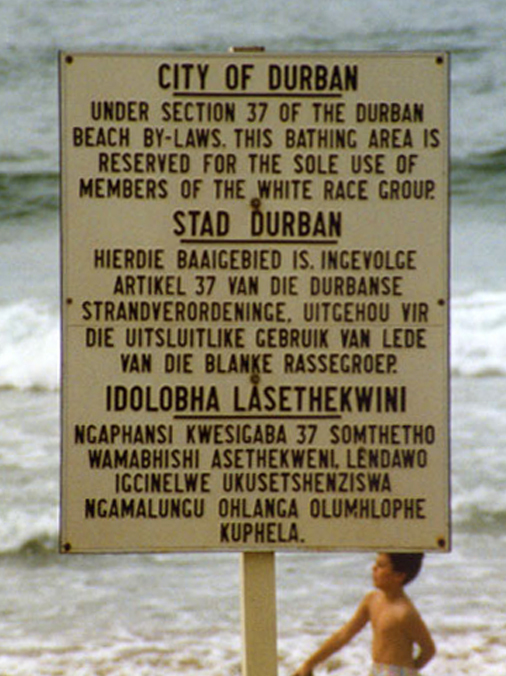
South Africa was, in the conventional sense, not a colony: it had been formally independent since 1910, it had its own government, its own parliament, its own military and police forces. The colonising power — Britain — had formally ceded sovereignty to the Union of South Africa. Yet the social relations that prevailed in South Africa — the dispossession of the indigenous population of their land, the use of racial law to confine the majority to low-wage labour, the political exclusion of the Black majority from the institutions of governance, the extraction of wealth from indigenous labour for the benefit of a racially defined minority — were precisely the social relations of colonialism. South Africa was, in every material sense, a colonised country. Its colonisers simply lived within it rather than across an ocean.
The CST formulation resolved this apparent paradox by describing South Africa as a society in which two nations existed within a single state: the white nation, which occupied the position of the colonial power, with access to political rights, economic resources, and social privileges; and the Black nation, which occupied the position of the colonised people, subjected to land dispossession, labour exploitation, and political exclusion. The liberation of the Black nation — national liberation — required the ending of this internal colonial relationship, which was simultaneously a racial relationship and a class relationship: the racial hierarchy was the mechanism through which the class exploitation was organised and maintained.
This analysis had profound implications for strategy. It meant that the liberation struggle had two necessary phases: first, national liberation — the ending of racial domination, the achievement of political democracy, the dismantling of the legal apparatus of apartheid; and second, socialist transformation — the addressing of the economic structures that the racial system had built and that would not automatically be dismantled by the achievement of political democracy. The two-stage theory of the South African revolution was the strategic expression of the colonialism of a special type analysis, and it shaped the SACP's and the ANC's understanding of what they were doing and what sequence of changes they were pursuing for decades.
The African Communist: Sustaining the Theoretical Tradition in Exile
The African Communist was founded in 1959 as the theoretical and political journal of the South African Communist Party — published initially in London, eventually in other locations, reaching its subscribers and readers through the international postal system and through the networks of the solidarity movement. It was the organ through which the SACP maintained its theoretical coherence through the decades when it was a banned underground organisation whose members were scattered across several continents.
Michael Harmel's editorship of the African Communist was among his most important contributions to the movement's intellectual life. He brought to the journal the same combination of theoretical rigour and analytical clarity that characterised his other work — ensuring that the articles it published engaged seriously with the political and theoretical questions the movement faced, that the debates within the SACP and the broader international communist movement were reflected in its pages, and that the journal served as a genuine intellectual resource for the movement's cadres rather than merely a vehicle for official pronouncements.
The journal was read not only by SACP members but by the broader circle of ANC activists, allied organisations internationally, and anyone who wanted to understand the theoretical foundations of the South African liberation movement's most explicitly Marxist current. The quality of its content under Harmel's editorship gave it an authority within the movement that outlasted his tenure, and the tradition of serious theoretical engagement that he established shaped the journal's character long after his death.
Writing Under Prohibition: The Pseudonym as Resistance
The Suppression of Communism Act of 1950 listed Michael Harmel as a communist, imposing restrictions that prohibited him from attending gatherings, from being quoted in publications, and from producing material for publication under his own name. For a person whose primary contribution to the movement was intellectual — whose work was in the writing, the analysis, the theoretical development — these restrictions were a direct attempt to silence him. The apartheid government understood that ideas were dangerous and that the person producing the most effective ideas for the liberation movement needed to be prevented from producing them.
Harmel's response was to continue producing them under other names. The pseudonym "A. Lerumo" — the name under which his most important published works appeared — was the practical solution to the legal constraint, a way of continuing the work the law was trying to prevent while maintaining the legal fiction of compliance with the banning order. The practice was not unusual among banned South African communists — many wrote under pseudonyms, contributed to publications through intermediaries, and found other ways to maintain their intellectual and political contributions while formally complying with the restrictions imposed on them.
But the choice of pseudonym was also, in a sense, a statement. "Lerumo" is a Sesotho word meaning "spear" — a name that situated the writer within the African political tradition rather than the European immigrant tradition to which Harmel belonged by birth and upbringing. It was a small act of identification with the movement and the people he was writing for and about, a refusal to allow the imposed anonymity of the banning order to be simply a neutral expedient rather than an expression of commitment.
Fifty Fighting Years: The Party's History of Itself
Fifty Fighting Years: The South African Communist Party 1921–1971, published in 1971 under the A. Lerumo pseudonym, was the culmination of Harmel's historical and theoretical work — the comprehensive account of the SACP's history from its founding as the Communist Party of South Africa in 1921 through five decades of development, repression, and transformation. The book was the primary document through which the Party understood and presented its own history, and it served both as a historical account and as a theoretical argument — an attempt to demonstrate, through the narrative of the Party's development, the validity of the communist analysis of South Africa and the correctness of the strategic framework the Party had developed.
As party history, Fifty Fighting Years is inevitably a partisan document — it presents the SACP's record in a favourable light, emphasises its contributions to the liberation movement, and minimises or contextualises its failures and contradictions. But all party histories are partisan in this sense, and the partisanship of the account does not negate its value as a primary source for understanding how the South African communist movement understood its own past. The questions it addresses — about the relationship between the Party and the ANC, about the significance of the Congress Alliance, about the role of the working class in the liberation struggle — were questions that the movement needed to be able to answer coherently, and Harmel's account gave them coherent answers.
Prague, Exile, and the Death Before the Dawn
Michael Harmel died in Prague on 14 August 1974, at the age of fifty-nine. He had spent the last decade of his life in exile — in London, where he edited the African Communist, and eventually in Prague, where the Czechoslovak Communist Party provided accommodation and support for southern African liberation movement exiles. He died without having returned to South Africa, without having seen the democratic transition that his theoretical work had helped to prepare, without having lived in the country that was free.
His death in Prague placed him in the company of the SACP's other exiles who died far from home — JB Marks, who died in Moscow in 1972; Moses Kotane, who died in Moscow in 1978; Yusuf Dadoo, who died in London in 1983. These were the men who had built the South African communist movement in its most active period, who had developed its theory and its practice, who had shaped its relationship with the ANC and the Congress Alliance, and who had been driven from their country by a state that understood how dangerous they were. They died at a distance from the country they had loved, sustained by the conviction that the movement they had built would eventually achieve what they could not live to see.
Legacy: The Theory That Outlasted the Theorist
Michael Harmel's legacy is primarily a legacy of ideas — of the theoretical framework that he developed and articulated and that shaped the South African liberation movement's understanding of itself and its strategy for more than half a century. The concept of colonialism of a special type remained the SACP's foundational theoretical framework from its development in the late 1940s and 1950s through the democratic transition of 1994 and into the post-apartheid era. The two-stage theory of the South African revolution — national liberation followed by socialist transformation — which the CST analysis generated was the strategic framework within which the ANC and the SACP understood the sequence and the content of the changes they were pursuing.
Whether the CST framework adequately accounts for all the dimensions of the South African situation — whether the two-stage theory correctly described the relationship between the national and the social dimensions of the transformation — is a question that South African political debate has continued to engage with since the democratic transition, particularly as it became clear that political liberation did not automatically produce economic transformation and that the question of socialist transformation raised by the second stage of the revolution was more complex in practice than in theory. These debates are a testament to the continuing relevance of the framework Harmel developed: the questions he posed are still the questions that matter.
He was a man who spent his intellectual life in service to a movement rather than to his own career or reputation, who wrote under pseudonyms for decades rather than claim credit for work that the banning order made dangerous to acknowledge, and who died in exile having given everything he had to a liberation whose achievement he could not survive to see. The ideas outlasted the man. That is what intellectual legacies are made of.