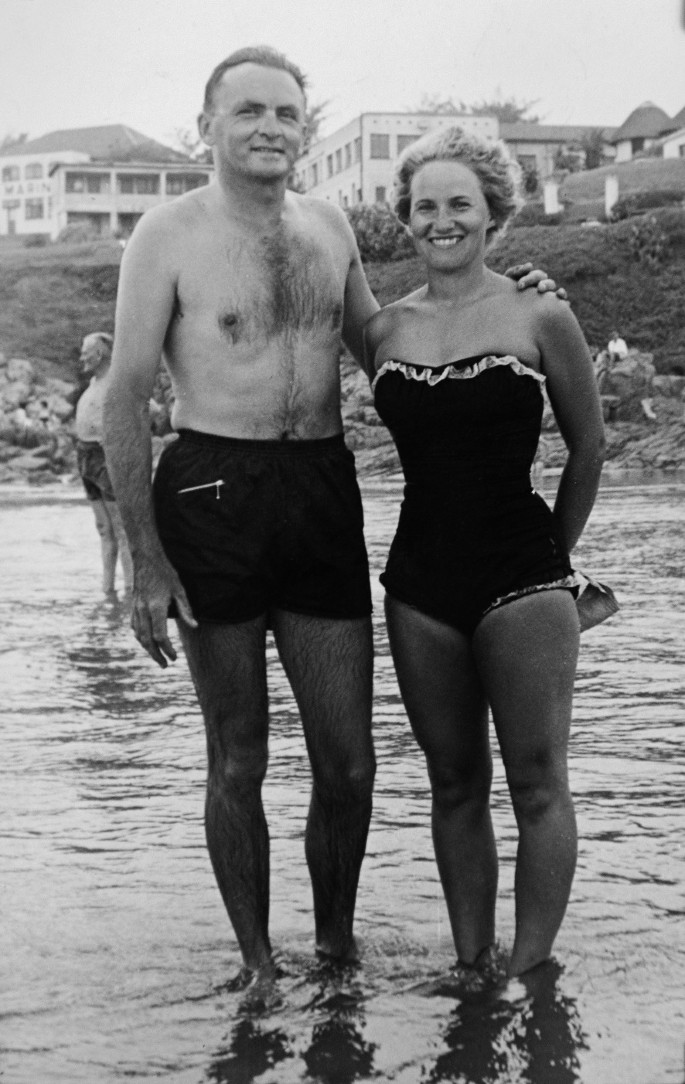
At a Glance
White in Apartheid South Africa: The Politics of a Privileged Position
To understand Ivan Schermbrucker's political choices, it is necessary to understand the position in which apartheid placed white South Africans and the range of political responses that position made available. Apartheid was, among other things, a system designed to secure the loyalty of the white population through a combination of material benefit and racial solidarity. White South Africans — regardless of their class position, regardless of their political views, regardless of their personal relationships with Black South Africans — were the beneficiaries of a system that reserved the best jobs, the best housing, the best schools, and the best legal protections for people classified as white. They were also the system's political constituency: white South Africans voted; no one else did.
The political options available to a white South African who found this arrangement unjust were limited. One could vote for the opposition United Party, which accepted the basic racial structure of South African society while opposing the more extreme measures of the National Party. One could join a liberal organisation like the Black Sash, which confined itself to legal protest and documentation. One could withdraw from politics altogether, living a private life that neither supported nor actively opposed the system. Or one could join the Communist Party and the Congress Alliance, accept the non-racial politics of that movement, and participate in the liberation struggle as a genuine comrade of the African, Indian, and Coloured activists who were its majority constituency.
The last option was the most radical and the most costly. It meant accepting the legal consequences of involvement in a movement that the state defined as subversive and treated as an existential threat. It meant exposing oneself and one's family to the attention of the security apparatus. It meant sacrificing the professional stability and social acceptance that came with conformity to the norms of white South African society. And it meant doing all of this not for the benefit of one's own community — as a Black activist could reasonably claim to be doing — but out of conviction, out of the refusal to accept that the privileges of whiteness were legitimate simply because they were available.
The Communist Party and the Theory of Change
The South African Communist Party offered white activists a theoretical framework for understanding apartheid and a practical vehicle for working against it. The Party's analysis — drawing on Marxist theory but grounded in the specific conditions of South African racial capitalism — understood apartheid not as an aberration from normal capitalist development but as a particularly brutal form of capitalist organisation, one that used racial classification as the mechanism for creating a super-exploited labour force that generated the profits of the mining and industrial economy.
This analysis had important implications for how white activists understood their own position. They were not simply moral opponents of an unjust system. They were participants in a class analysis that understood the connection between racial oppression and economic exploitation and that saw the liberation of the Black majority as inseparable from the transformation of the economic structures that racial oppression served. The Party's commitment to non-racialism was not merely a matter of principle — though it was that — but also a logical implication of its analysis: if apartheid was racial capitalism, then dismantling it required a movement that crossed racial lines and built solidarity between the workers and the poor of all racial categories.
For a white South African joining the Party, this framework meant that the commitment to the liberation struggle was not an act of charity toward the oppressed but a recognition of shared political interests — interests that apartheid ideology obscured by constructing a false solidarity of race that bound white workers to white capitalists and separated them from the African workers with whom they actually shared the economic conditions of their lives. Ivan Schermbrucker's membership of the Party was an act of political analysis as much as of moral commitment.
MK and the Decision for Armed Struggle
The founding of uMkhonto we Sizwe in December 1961 represented a fundamental shift in the liberation movement's strategic orientation. The ANC had been committed to nonviolent protest throughout the 1950s — the Defiance Campaign, the Congress of the People, the Women's March, the campaigns against the pass laws — and had maintained that commitment even as the state responded to peaceful protest with increasing violence. Sharpeville changed the calculation. The massacre of 69 unarmed protesters on 21 March 1960 demonstrated that the state was willing to use lethal force against peaceful protest, and the banning of the ANC and the SACP in 1960 removed the legal vehicles through which the movement had operated.
MK's early campaign was carefully calibrated to avoid loss of life. Sabotage of electricity pylons, railway lines, government offices, and industrial facilities was designed to impose economic costs on the apartheid system and to demonstrate that the liberation movement had the capacity for armed action, without creating the moral complications of attacks on people. White members of MK were particularly involved in this phase of the campaign because their access to technical expertise and to the physical spaces of white South Africa made them effective operators in a campaign that required precision and planning rather than mass mobilisation.
Ivan Schermbrucker's involvement in MK placed him in this network at its most dangerous period. The Rivonia arrests of July 1963 had decapitated the MK high command and given the security police the documents and the intelligence to begin systematically dismantling the networks that remained. The ninety-day detention law gave them the legal instrument to extract further information through interrogation, and they used it aggressively. The period between the Rivonia arrests and the mid-1960s saw the destruction of most of the underground networks that MK had built, and many of the people involved in those networks — including Schermbrucker — were arrested, tried, and imprisoned.
Detention and Interrogation: The Ninety-Day Law in Practice
The General Law Amendment Act of 1963 — known colloquially as the Ninety-Day Law — was one of the most powerful instruments of repression in the apartheid state's legal arsenal. It authorised any commissioned officer of the police to detain any person suspected of having committed or intending to commit a range of offences, or of having information about such offences, for ninety days without charge, without access to legal counsel, and without any obligation to bring the detainee before a court. At the end of ninety days, the detainee could be released — or re-detained for another ninety days. The cycle could in theory continue indefinitely.
The conditions of ninety-day detention were designed to break the detainee's resistance to interrogation. Isolation from family and legal counsel was absolute. The interrogation procedures used by the security police in this period are well documented: they included sleep deprivation, extended standing, physical assault, and various forms of psychological pressure. The purpose was to extract information about the underground networks — names, locations, documents, operational details — that could be used to make further arrests. The information obtained through ninety-day detention was the raw material of the prosecutions that followed.
Ivan Schermbrucker's detention subjected him to this process. His experience was shared by dozens of other activists in the same period, including people who did not survive their detention — most notoriously Neil Aggett, the trade unionist who died in security police custody in 1982, and Steve Biko, who was killed in detention in 1977. The deaths of Aggett and Biko were the most visible instances of a pattern of abuse that was systematic rather than exceptional, and Schermbrucker's detention was part of that pattern even if he survived it.
The Community of White Communists: Solidarity Across the Colour Line
Ivan Schermbrucker was part of a community of white South African communists and ANC allies whose contributions to the liberation movement have sometimes been overshadowed by those of the movement's most iconic African leaders, but whose role was significant and whose costs were real. Bram Fischer — the Afrikaner QC who defended the Rivonia accused and was subsequently convicted of Communist Party membership and imprisoned for life — was the most celebrated of this group. Joe Slovo, the Lithuanian-born communist who became MK's chief of staff and eventually the SACP's chairman, was another. Ruth First, the journalist and communist who was assassinated by a parcel bomb in 1982, was another. Hilda Bernstein, the writer and artist whose husband Lionel stood trial at Rivonia, was another.
These figures, and others like them, made choices that were not structurally required of them. Their whiteness protected them from the worst of what apartheid imposed on the majority of South Africans, and they could have used that protection to live comfortable lives within the system. They chose not to. They chose to accept the risks that their political commitments entailed, and many of them paid those costs in full — imprisonment, exile, death, the destruction of careers and families and the ordinary structures of a settled life.
Ivan Schermbrucker belongs to this community. He was not one of the most celebrated or most studied figures within it, but his life and his choices were characteristic of the community's essential qualities: the refusal to accept the privileges of whiteness as sufficient justification for political conformity, the commitment to the non-racial politics of the SACP and the Congress Alliance, and the willingness to bear the personal costs that commitment entailed.
After Prison: The Long Continuation
The period after Schermbrucker's release from prison was the period in which the anti-apartheid movement, inside South Africa and internationally, was rebuilding and reorienting after the destruction of the early underground networks. The Soweto uprising of 1976, the labour movement's renaissance in the late 1970s and 1980s, the formation of the United Democratic Front in 1983, the international sanctions campaign — all of these developments created new spaces for anti-apartheid activity and new ways of contributing to the struggle. White activists who had served their time and returned to civilian life could contribute in ways that were different from underground MK operations but no less important: legal work, trade union organisation, community activism, international solidarity networks, documentation of human rights abuses.
Schermbrucker's continued involvement after his release was characteristic of the resilience of the South African left — the refusal, even after imprisonment, to accept that the political commitment had been a mistake or that the personal costs incurred justified withdrawal from the struggle. The people who made the South African liberation movement were, in large part, people who had already paid a price for their politics and who continued paying it rather than using their suffering as a justification for retreat.
Legacy: The Meaning of the Voluntary Choice
Ivan Schermbrucker's life is an example of what it meant to make a genuinely voluntary political choice in apartheid South Africa — to choose, from a position of structural privilege, to work against the system that created that privilege and to accept the consequences of that choice. The apartheid state's architects understood that the greatest threat to the system was not the organised resistance of the oppressed majority, which could be met with the instruments of racial state power, but the defection of members of the privileged minority — the white South Africans who refused to accept the terms on which their privilege was offered.
The figures who made that refusal were never numerically large. The white community's commitment to the liberation movement was always a minority position within white South African society. But the minority that held that commitment held it seriously and maintained it at real personal cost, and their contribution to the liberation movement — as organisers, as legal and technical experts, as bridges between the underground movement and the international solidarity networks, as witnesses and chroniclers of what the apartheid state was doing — was significant beyond their numbers.
Understanding the South African liberation movement requires understanding the full range of people who made it. The movement was not a simple story of the oppressed rising against their oppressors, though it was that. It was also a story of solidarity across the lines that apartheid had drawn — of people who looked at those lines and decided to cross them, at whatever cost. Ivan Schermbrucker was one of those people. He crossed the line. He paid the cost. He continued. That is not a minor thing.