At a Glance
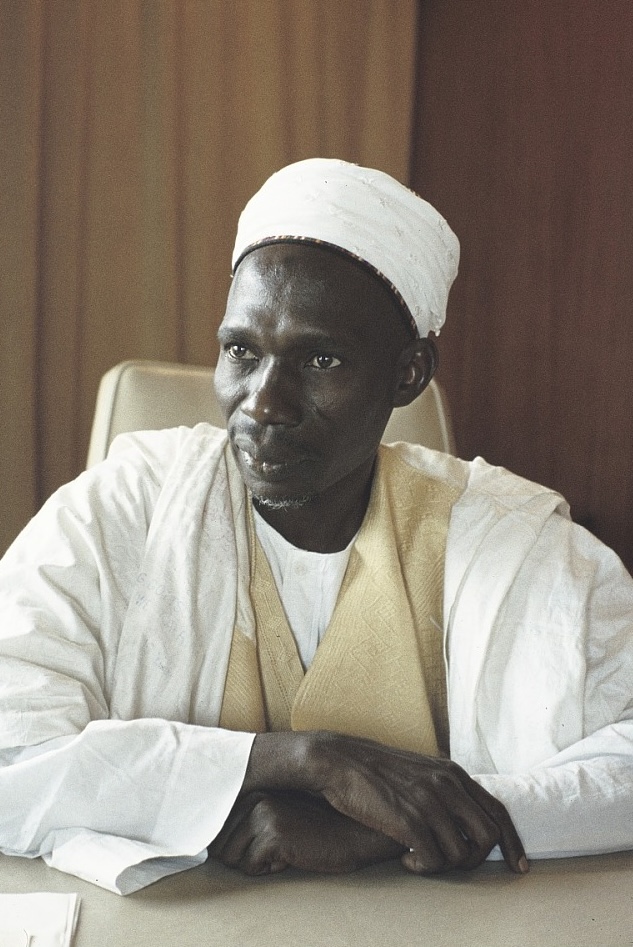
Tafawa Balewa Town and the World That Made Him
Abubakar Tafawa Balewa came from a world that the Nigerian political establishment of his era rarely acknowledged: the talakawa world of the Northern Plateau, the non-aristocratic, often non-Muslim communities of the Bauchi area whose relationship to the emirate system that dominated Northern Nigerian political life was one of subordination rather than participation. The Bauchi Plateau was a region of considerable cultural diversity — home to numerous smaller peoples, many of them practising indigenous religions rather than Islam, whose incorporation into the colonial Northern Region placed them administratively within a political structure organised around the Hausa-Fulani emirate system that was culturally and politically foreign to them.
His rise from this background — through the merit-based pathway of colonial education, teacher training, and adult education work — was itself a challenge to the assumptions on which Northern Nigerian political culture was built. The NPC's founding logic was the representation of Northern interests against the threat of Southern domination in an independent Nigeria, and this logic was genuine enough that it attracted support from across the North's diverse communities. But the NPC's internal culture was dominated by the aristocratic establishment of the emirate system, and a commoner from the Bauchi Plateau rising to national political leadership through the NPC was both a vindication of the party's nominal inclusiveness and an implicit challenge to its actual hierarchical structure.
What gave Tafawa Balewa the standing to make this rise was a combination of exceptional personal qualities and historical circumstance. His eloquence — in Hausa, in English, in the formal register of parliamentary debate and the informal register of community engagement — was recognised from early in his career as something unusual, a gift for language and for persuasion that transcended the social advantages of birth and educational access that most of his political contemporaries possessed in greater measure than he did. His teaching career had developed this gift systematically, giving him practice in the art of clear explanation and the habit of attending to whether the person he was addressing had actually understood what he was trying to communicate.
The Teacher in the Legislature: Early Parliamentary Years
Tafawa Balewa entered the Northern Region's House of Chiefs in the early 1950s and quickly established himself as one of the most effective speakers in the Nigerian legislative system. His parliamentary performances — in the Northern Regional legislature and then in the federal Legislative Council and later the House of Representatives — were characterised by a combination of intellectual clarity, moral seriousness, and the kind of measured eloquence that holds an audience not through theatrical effect but through the quality of what is being said and the conviction with which it is said. He was not a demagogue and not a performer — he was a man who thought carefully about political questions and expressed his conclusions in language that reflected that care.
His speeches on the constitutional questions of the late colonial period — on the pace of independence, on the structure of Nigerian federalism, on the relationship between the Northern and Southern regions — were more analytically careful and more genuinely concerned with the practical implications of constitutional arrangements than most of the political rhetoric of the period. Where many politicians used constitutional debates as platforms for assertion and positioning, Tafawa Balewa engaged with the actual structural questions: what federal arrangements would actually serve the interests of Northern Nigeria's diverse peoples, what pace of constitutional change was compatible with the development of the administrative capacity that self-governance required, what kind of Nigerian federation was genuinely workable rather than merely rhetorically appealing.
Independence Day and the Voice of Africa at the United Nations
When Nigeria took its seat at the United Nations on 7 October 1960 — the culmination of the independence process that the Nigerian flag had inaugurated on 1 October — Tafawa Balewa represented the country at the General Assembly in a speech that became one of the most celebrated statements of the African independence era. The speech was not the kind of confrontational, anti-Western pan-Africanism that Nkrumah's interventions had made internationally famous; it was something different and in its own way more demanding — a quiet, serious statement of the responsibilities that independence entailed, of Nigeria's commitment to the principles of the UN Charter, of the specific contribution that a country of Nigeria's size and diversity could make to the project of building a world governed by law and human dignity rather than by power and exploitation.
The international response to the speech — and to Tafawa Balewa's subsequent interventions in Commonwealth and UN forums — reflected a recognition that his was a voice worth listening to, that behind the measured eloquence was a genuine political intelligence engaging seriously with the actual questions of international order rather than using the international stage primarily for domestic political purposes. He was compared, by diplomats and journalists who heard him, to the great parliamentary speakers of the British tradition — not in imitation but in the quality of thought and expression that his speeches demonstrated.
This international standing served Nigeria's interests directly. At the moment of independence, Nigeria needed to establish credibility as a responsible, serious actor in international affairs — a country whose size and population gave it potential significance in African and Commonwealth politics and whose first years of independence would set the terms on which it would be treated by the international community for decades. Tafawa Balewa's personal authority at the UN and in Commonwealth forums was one of the most important instruments through which this credibility was established.
Governing the Ungovernable: The NPC-NCNC Coalition
The coalition between the Northern People's Congress and the NCNC that formed Nigeria's first federal government was an arrangement of convenience rather than conviction — the NPC needed Southern partnership to govern nationally, and the NCNC needed access to federal power to advance its interests. Tafawa Balewa, as Prime Minister, had the task of making this coalition work in practice, managing the competing demands of two parties whose interests were often in tension and whose regional bases had fundamentally different economic and political priorities.
His management of the coalition was characterised by the same qualities that distinguished his public speaking: patience, care, attention to what the different parties actually needed rather than what they were publicly demanding, and a willingness to work through the slow processes of negotiation and compromise that coalition governance requires. He maintained personal relationships of mutual respect with figures across the political spectrum — including Azikiwe, with whom the formal relationship was constitutionally defined but personally warm, and even with opposition figures like Awolowo, whose imprisonment he did not initiate and whose continued detention he managed with evident discomfort.
The structural challenges of the coalition — the NPC's dominance of Northern constituencies, the NCNC's Eastern Region base, the Action Group's Western Region challenge, and the minority peoples' demands for structural protection — created political pressures that constitutional propriety alone could not resolve. Tafawa Balewa's response to these pressures was consistently constitutional: he worked through the institutions, respected procedural constraints, and maintained the forms of democratic governance even when the substance was under severe strain. This constitutionalism was not weakness — it was a genuine commitment to the principle that the rules of democratic governance applied to the government as well as to the opposition, and that a Prime Minister who bent those rules for short-term advantage undermined the system he was supposed to be protecting.
The Final Years: Crisis, Legitimacy, and the Countdown to Catastrophe
The final years of the First Republic — the Western Region crisis, the disputed federal election of 1964, the deterioration of governmental legitimacy — placed Tafawa Balewa under pressures that his constitutional approach was insufficient to resolve. The federal election of December 1964 produced results that the NCNC and other opposition parties refused to accept, alleging widespread fraud and intimidation; Azikiwe, as President, initially refused to invite Tafawa Balewa to form a government; the constitutional crisis that followed was resolved through compromise rather than through any genuine resolution of the underlying political conflict.
The Western Region elections of October 1965 produced even more serious disorder — the violence, the fraud allegations, the "Operation Wet ie" that reflected the depth of political alienation from Akintola's government — and the federal government's inability or unwillingness to intervene effectively to restore order in the Western Region demonstrated the limits of constitutional governance in a system where the structural pressures toward political manipulation had become overwhelming. Tafawa Balewa's personal integrity was insufficient to compensate for the systemic dysfunction that the First Republic's political culture had produced.
The Night of 15 January and Its Meaning
Tafawa Balewa was taken from his official residence in Lagos in the early hours of 15 January 1966 by soldiers acting under the orders of Major Kaduna Nzeogwu and his fellow coup plotters. His body was found several days later, discarded on a roadside outside Lagos. The manner of his death — a man of exemplary personal probity, killed and abandoned without ceremony by soldiers who had served the government he led — captured something essential about the relationship between individual virtue and institutional failure in the First Republic's collapse.
He was fifty-three years old, had served as Prime Minister for nearly six years, and had spent that service in the genuine attempt to govern Nigeria with the constitutional propriety and personal integrity that democratic governance requires. The First Republic's structural failures — the political incentives toward manipulation, the ethnic and regional pressures that the constitutional arrangements could not contain, the gap between the formal institutions of democracy and the informal realities of power — were not primarily of his making. But he was the government's face and its formal head, and when the coup came, he was among those the plotters chose to remove.
Nigeria has never had another Prime Minister. The office exists in the constitutional memory of the First Republic as the position that Tafawa Balewa held and that no subsequent government — not the Second Republic's presidential system, not the Fourth Republic's democracy — has reproduced. In this specific sense, his title belongs to him alone: the first and the last, the only man who held it, whose personal qualities gave it a dignity that the office itself could not always sustain. The country he governed is still there — still improbable, still significant, still working through the consequences of the choices made in the years when he was Prime Minister. His shadow falls across all of it.