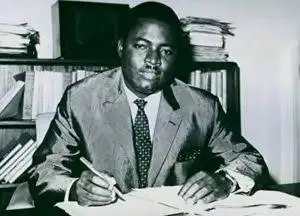
At a Glance
The Tiv and the Middle Belt: A World Resistant to Control
The Tiv occupy a specific and significant place in the history of Nigerian resistance to external authority. Among the most numerous of the Middle Belt's many peoples — estimates of Tiv population in the independence era ranged from one to two million — they were also among the most politically distinctive, with a social organisation built around egalitarian principles of lineage and community that had no place for the hereditary chiefs and emirs on whom the British system of indirect rule depended. Where the emirate-based societies of the far North could be governed through their existing hierarchies — the emir and his district heads providing ready-made administrative intermediaries for colonial authority — the Tiv presented a structural problem: they had no equivalent hierarchy, no traditional authority figures whose cooperation could be purchased in exchange for administrative recognition, and a deeply rooted cultural resistance to the kind of hierarchical submission that colonial governance required.
The British solution — the imposition of warrant chiefs on communities that had no chiefly tradition, and the extension of Hausa-Fulani administrative authority into the Middle Belt through the emirate system — generated resistance wherever it was tried. The Tiv were particularly resistant, and the history of Tiv-colonial relations was punctuated by episodes of open confrontation — the Tiv riots of the 1930s and 1960s being among the most significant — that reflected both the Tiv's refusal to accept imposed authority and the colonial and later national administration's inability to find an accommodation with a people whose political culture rejected the premises of the administrative system being imposed on them.
The Middle Belt more broadly — the vast arc of territory between the Hausa-Fulani North and the southern peoples, home to dozens of different ethnic groups including not only the Tiv but the Birom, Angas, Nupe, Igala, Idoma, and many others — had a political character shaped by this history of external pressure and internal resistance. The peoples of the Middle Belt were predominantly Christian or practitioners of indigenous religions rather than Muslim, which distinguished them from the emirate North and made the NPC's claim to represent all Northerners — a claim built on the conflation of Northern identity with Islamic identity and emirate authority — both inaccurate and politically threatening. The NPC's political monopoly in the Northern Region depended on its ability to control all Northern constituencies, including the Middle Belt's, and J.S. Tarka's career was fundamentally about breaking that monopoly.
Building the United Middle Belt Congress
The United Middle Belt Congress, which Tarka founded in 1955 at the age of twenty-three, was the organisational expression of a political argument that had been developing among Middle Belt educated figures for years: that the Northern Region's diversity required political representation that the NPC was structurally unwilling to provide, and that the Middle Belt's peoples needed their own political vehicle to advance their specific interests. The UMBC's founding brought together activists from across the Middle Belt's many communities — Tiv, Birom, Angas, and others — around the shared demand for a separate Middle Belt State that would give these peoples their own governmental structure rather than leaving them as permanent minorities within a Northern Region dominated by the emirate-backed NPC.
The decision to ally the UMBC with the Action Group was strategically significant and politically controversial. The Action Group was the Yoruba party of the Western Region — culturally distant from the Middle Belt's peoples and geographically separated from the constituencies the UMBC was trying to represent. But the logic of the alliance was straightforward: the UMBC needed parliamentary allies, resources, and the protection that connection with a major national party could provide against the NPC's administrative and political pressure; and the Action Group, seeking to build a national presence beyond its Western Region base, needed partners in the North who could challenge NPC dominance. The alliance was marriages of convenience rather than of conviction, but it worked well enough to give Tarka the support he needed to build the UMBC into a genuine political force.
Electoral Victory Against the NPC Machine
Tarka's victory in the Benue federal constituency in the 1959 elections deserves more recognition than it typically receives in accounts of Nigerian political history. The NPC's control of Northern Region politics was not merely a matter of popular preference — it was sustained by the systematic deployment of the emirate system's administrative authority, its control of local courts and markets, its ability to use district and village heads to apply pressure on voters, and its access to governmental patronage that could be used to reward compliance and punish dissent. Winning a federal seat against this machine, as a young man in his twenties leading a relatively new party with limited resources, required both exceptional personal qualities and the deep roots in the Tiv community that his Mkar origins and his family connections gave him.
The victory announced to Nigerian political observers that the NPC's Northern dominance was not total, that the Middle Belt's political distinctiveness was real and could be organised, and that minority communities with determined and capable leadership could break through even the most apparently solid political structures. For the Tiv and for Middle Belt peoples more broadly, it was a demonstration that their interests could be represented in the national parliament — that they were not, as NPC dominance seemed to imply, permanently marginal to Nigerian national politics but active participants in it with the same right to representation as any other Nigerian community.
Opposition Parliamentarian: Voice of the Voiceless North
Tarka's performance in the Federal House of Representatives during the First Republic was among the most vigorous of any opposition member in the parliament's history. He used the floor of the House to do what the NPC's political dominance of the Northern Region prevented him from doing through normal regional political channels: to challenge the treatment of Middle Belt communities under NPC governance, to press the case for a separate Middle Belt State, to document the specific grievances — the denial of access to appointments, the manipulation of local administration, the use of emirate courts against political opponents — that the NPC system generated in non-emirate areas, and to make the argument that a truly democratic Nigeria required the protection of minority rights through structural constitutional arrangements rather than through the goodwill of majority communities.
His parliamentary style was characterised by the combination of specific factual detail — he came to debates with evidence, with named cases, with documented grievances that could not be dismissed as mere political rhetoric — and moral passion rooted in his community's lived experience of NPC rule. He was not an abstract constitutional theorist but a practical politician representing people with immediate, concrete problems, and he brought the immediacy of those problems into the parliamentary chamber in ways that forced even hostile interlocutors to engage with the substance of his arguments.
The Middle Belt State demand was the constant spine of his parliamentary activity. The argument was structural: that the Northern Region's combination of geographic size, population, and political power — it was larger than any other region and its population gave the NPC a potential federal majority — made genuine Nigerian federalism impossible unless the region was divided into units that reflected its actual diversity rather than the administrative convenience of colonial and post-colonial governance. A separate Middle Belt State would give the region's non-emirate peoples their own governmental structure, their own revenue allocation, and their own representation in the federal system — ending their dependence on a Northern Region government whose priorities were systematically different from their own.
The Tiv Riots and the Crisis of Middle Belt Governance
The Tiv riots of 1960 and the more serious upheavals of 1964 were the violent expression of the political frustrations that Tarka was articulating through parliamentary means. The riots — involving the widespread destruction of property associated with NPC loyalists and local government figures seen as instruments of NPC control — reflected the depth of Tiv resistance to the administrative system that the NPC government in Kaduna was seeking to impose on Tiv local government, and the federal government's response — the deployment of military and police forces against Tiv communities — demonstrated the coercive dimensions of the NPC's regional dominance that Tarka's parliamentary speeches had been documenting.
The riots placed Tarka in a difficult position. He was committed to parliamentary politics as the vehicle for Middle Belt rights, and the violence was both a reflection of the frustrations he had been articulating and a challenge to the political approach he had chosen. His response — condemning the violence while insisting on the political legitimacy of the grievances that had generated it, pressing for a political solution rather than a purely military one — was characteristic of his approach: keeping the structural argument alive even when the immediate political situation was pulling toward confrontation and repression.
Military Government, Ministerial Office, and the Complications of Power
The military coup of January 1966 that ended the First Republic and the subsequent civil war transformed the political environment in which Tarka had built his career. The military government's dissolution of political parties and the ban on political activity removed the parliamentary platform that had been his primary vehicle, but the military governments — first Gowon's and then those that followed — sought civilian expertise and political credibility in their governmental arrangements, and Tarka's national profile and his Middle Belt base made him an attractive appointee for a government that needed to demonstrate its inclusivity across Nigerian regional and ethnic diversity.
His ministerial service under Gowon — including the Communications portfolio — represented the transition from opposition politician to governmental insider that many Nigerian politicians of his generation made during the military period. It was a transition that brought both opportunities and risks: the opportunity to influence policy from within, but the risk of association with a government whose accountability mechanisms were weaker than the parliamentary system's had been. The cement importation scandal — the allegation that he had used his ministerial position to benefit personally from the inflated cement import contracts that became one of the most notorious episodes of the oil boom era's corruption — damaged his reputation severely and led to his removal from the government.
Exile and Death
Tarka went into exile in Britain after his removal from the Gowon government, and he died in London in March 1980 at the age of forty-seven — too young, and far from the Benue homeland whose political cause he had spent his life advancing. The creation of Benue State in 1976 — one of the outcomes of the Murtala Mohammed government's state creation exercise that divided Nigeria's twelve states into nineteen — was the partial realisation of the Middle Belt State demand he had championed through the 1950s and 1960s, though it came after his political career had already been damaged and in a form that reflected military rather than civilian political logic.
His legacy is consequently ambiguous in ways that the legacies of some of his contemporaries are not. The opposition politician of the First Republic — the man who won Benue against the NPC machine, who used the parliamentary floor to document the grievances of the Middle Belt's peoples, who refused to accept that minority communities had no right to political self-determination within the Nigerian federation — was a figure of genuine moral authority and political achievement. The ministerial career that followed was less clearly admirable, and the scandal that ended it cast a shadow over the whole. But Nigeria's political history has rarely produced many figures whose careers were without such complications, and Tarka's contribution to the principle and the practice of minority rights in Nigerian politics remains one of the most significant of any figure of his generation.