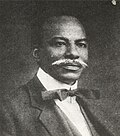
At a Glance
The Lagos of Herbert Macaulay's Formation
Lagos in 1864, the year of Herbert Macaulay's birth, was a city in the early stages of its transformation under British colonial rule. The British had bombarded Lagos and forced the cession of the town from the Oba in 1851, formally annexed it as a Crown Colony in 1861, and had been building the colonial administrative, commercial, and missionary infrastructure ever since. The result was a city unlike any other in West Africa — a dense, complex, intensely political place where indigenous Yoruba families, Saro returnees from Sierra Leone, Brazilian returnees, European merchants and administrators, and migrants from across the region and beyond all coexisted in a social environment whose pressures and opportunities produced, in the educated African community, an unusually concentrated political consciousness.
The Macaulay family was embedded in the most distinguished stratum of this community. Herbert's grandfather Bishop Samuel Ajayi Crowther was one of the most significant Africans of the nineteenth century — a Yoruba man who had been enslaved as a child, liberated by the Royal Navy, educated by the Church Missionary Society in Sierra Leone and England, ordained as an Anglican priest, contributed to the translation of the Bible into Yoruba, and in 1864 — the year of Herbert's birth — consecrated as the first African bishop of the Anglican Church. Crowther's career was both an achievement and, in its later years, a humiliation: European missionaries eventually used charges of mismanagement to undermine his authority and effectively remove him from meaningful episcopal power, an episode that demonstrated to the educated Lagos African community the limits of the colonial system's tolerance for African achievement even when that achievement was conducted entirely on the system's own terms.
Herbert Macaulay grew up in the shadow of this family history — the achievement and the humiliation both. The lesson he drew from it, and from his own subsequent experience, was that African people could not secure their dignity and their rights by demonstrating their compatibility with colonial standards but only by building the political power to demand those rights on the basis of justice rather than merit. This was not an argument against education or professional achievement — Macaulay was himself rigorously educated and professionally accomplished — but against the illusion that colonial authority would respond to African excellence with respect rather than with the management of that excellence in ways that served colonial interests.
Engineering, Return, and the Turn to Politics
Macaulay's training as a civil engineer in England in the 1890s gave him a professional formation that was unusual in his political milieu and that shaped his subsequent career in ways both practical and intellectual. He returned to Lagos qualified in a technical discipline that the colonial economy genuinely needed, worked as a surveyor and engineer, and moved increasingly into the journalism and legal advocacy that his political convictions demanded. The transition from engineering to politics was not a departure from his training but an extension of it: the same analytical habits that approached structural problems through careful measurement and systematic solution were applied to the structural problem of colonial governance and its consequences for African people.
His journalism — in the Lagos Weekly Record and subsequently in his own Lagos Daily News — was the primary medium through which he built his political reputation and his political organisation in the early decades of his career. The Lagos press tradition he was writing in was already several decades old, but Macaulay pushed it toward a new level of political directness: naming colonial officials, challenging specific decisions and specific policies, arguing that the interests of Lagos Africans were systematically different from and systematically subordinated to the interests that colonial governance actually served. The colonial administration responded with prosecutions — for seditious libel, for contempt, for various charges that the creative application of colonial law could generate against a determined press critic — and Macaulay responded to the prosecutions by turning them into political theatre, conducting his own defence in ways that transformed the courtroom into a platform for the political arguments his journalism had been making.
The Eleko Case and the Rights of Traditional Authority
One of the defining episodes of Macaulay's early political career was his sustained advocacy for the Eleko of Lagos — the traditional Yoruba ruler of Lagos whose authority the British had progressively diminished through the colonial period and whom the colonial administration attempted to remove entirely when he became a focal point for African political resistance. The case occupied Macaulay for years, taking him to London to lobby the Colonial Office, generating pamphlets and legal arguments, and eventually achieving a partial victory when the Eleko was restored. Its significance went beyond the specific case: Macaulay was arguing that the traditional political authority of Lagos Africans had a legal standing that the colonial administration was bound to respect, and that the relationship between colonial rule and African political traditions was one of negotiated authority rather than total colonial sovereignty.
This argument — rooted in the specific terms of the Lagos cession treaty of 1861 rather than in abstract nationalist principle — was characteristic of Macaulay's approach to anti-colonial politics in his earlier decades. He challenged colonial authority through its own legal and administrative frameworks, pointing out the contradictions between colonial professions of legality and the actual conduct of colonial governance, and using the colonial legal system's own procedures as instruments of resistance. It was a strategy appropriate to the political possibilities of the early twentieth century, when the demand for outright independence was not yet politically sustainable, and Macaulay pursued it with a tenacity and skill that no colonial official who crossed him could easily dismiss.
The NNDP and the Invention of Nigerian Party Politics
The Nigerian National Democratic Party, which Macaulay founded in 1923 in response to the limited electoral opportunities created by the Clifford Constitution, was a genuine political innovation in the context of colonial Nigeria. Previous African political activity in Lagos had taken the form of petition-based advocacy — the submission of formally phrased requests to the colonial administration — and of journalism. The NNDP introduced something different: a party with members, with organisational structures that persisted between elections, with the capacity to contest elections and win them, and with the ability to use elected positions to press African interests within the colonial political system while building the organisational base that made broader demands possible.
The NNDP won Lagos seats in the colonial Legislative Council in 1923, 1928, and 1933 — a consistent electoral record that demonstrated its genuine roots in the Lagos African community and its ability to mobilise voters around a programme that addressed their actual concerns. Macaulay's political base was not confined to the educated elite: the NNDP drew support from across the social spectrum of Lagos African life, from the professional and commercial class to the market traders and artisans of the old Lagos Island communities, and this cross-class character gave the party a durability that purely elite organisations lacked.
The party also provided, for the first time in Nigerian political history, a training ground for political organisation — the experience of running campaigns, maintaining membership, managing internal disputes, and translating political support into electoral outcomes that subsequent generations of Nigerian politicians could build on. When the Nigerian Youth Movement emerged in the 1930s to challenge the NNDP's Lagos dominance, and when the NCNC emerged in the 1940s to build on a truly national scale, they were building on foundations that Macaulay had laid. The organisational culture of Nigerian party politics — its strengths and its pathologies both — has roots that run back to the NNDP.
The Challenge of the Nigerian Youth Movement
The emergence of the Nigerian Youth Movement in the 1930s — a younger, more assertive, more explicitly pan-Nigerian organisation that challenged the NNDP's dominance in Lagos politics — was both a challenge to Macaulay personally and a vindication of his life's work. The NYM's founders had been educated in the political culture that his decades of organising had created, and their more radical demands were an extension of the political tradition he had built rather than a rejection of it. The generational tension between the NYM's pan-Nigerian nationalism and the NNDP's Lagos-centred constitutionalism reflected a genuine political evolution — the nationalist movement was outgrowing the specific forms that Macaulay's generation had developed, and this was, from the perspective of the independence cause, a good thing.
Macaulay's response to this challenge was characteristically pragmatic. He competed with the NYM where he had to, but he also recognised that the broader nationalist coalition required figures from both generations and both tendencies, and his co-founding of the NCNC with Azikiwe in 1944 represented a genuine synthesis — bringing together the organisational tradition of the NNDP and the mass nationalist ambition of the newer movement into a single organisation capable of speaking to the whole of Nigeria rather than only to Lagos.
The NCNC and the Final Years
The National Council of Nigeria and the Cameroons, co-founded by Macaulay and Azikiwe in 1944, was the organisation in which the two strands of Nigerian nationalism — the older Lagos constitutionalism and the newer mass pan-Nigerianism — were finally brought together. Macaulay, at seventy-nine, was the elder statesman whose presence gave the new organisation legitimacy and historical continuity. Azikiwe, in his thirties, was the dynamic leader whose rhetorical force and pan-Nigerian connections gave it energy and reach. The partnership was unequal in terms of the future — Azikiwe would lead the NCNC for its most important years — but Macaulay's contribution was essential: his name, his reputation, and the organisational tradition he represented brought into the NCNC the respect of the Lagos political establishment without which the new organisation would have seemed merely a vehicle for Azikiwe's personal ambitions.
He died in May 1946, on an NCNC tour of Northern Nigeria — a man of eighty-two, still working for the cause, still travelling, still building the movement. The tour was itself a statement: the NCNC's ambition to be a genuinely pan-Nigerian organisation required presence in the North, where nationalism had barely penetrated, and Macaulay's willingness to make that journey at his age was a demonstration of the seriousness with which he and the NCNC took the pan-Nigerian project. He did not live to see independence — he missed it by fourteen years — but the country that became independent in 1960 was shaped, in its political culture, its organisational forms, and its sense of what self-governance meant and required, by the tradition he had built across four decades of sustained, combative, brilliant political work.