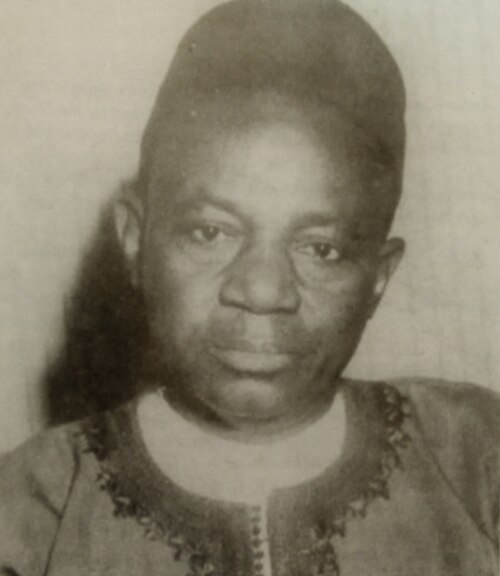
At a Glance
Kano: City of Commerce, City of Inequality
Kano in the early twentieth century was one of the great cities of sub-Saharan Africa — a place of extraordinary commercial vitality, ancient Islamic learning, and dense social complexity whose history stretched back centuries before European colonialism arrived to reshape it in its own image. The Kano Emirate, established after the Fulani jihad of the early nineteenth century, had created a political order organised around the Fulani aristocracy's control of administrative, judicial, and economic power, with the predominantly Hausa talakawa — the commoners, the farmers, the traders, the artisans and labourers who were the majority of the city's and the emirate's population — in a condition of structural subordination to aristocratic patrons whose authority the emirate system made almost impossible to challenge.
British indirect rule, introduced after the conquest of Northern Nigeria by Frederick Lugard's forces at the turn of the century, did not challenge this order. It preserved it. Lugard's system was explicitly designed to govern through existing African political structures rather than replacing them, and in Northern Nigeria that meant working through the emirs and their subordinate hierarchy of district heads and village heads. The British added a new layer of colonial authority above the emirate system but left its internal structures essentially intact, which meant that the talakawa's relationship to power — their dependence on aristocratic patrons, their lack of access to formal political processes, their subjection to a legal system controlled by emirate courts — continued into the colonial period without fundamental change.
For the educated Northern Nigerian of Aminu Kano's generation, the implications of this arrangement were clear and troubling. The British had introduced Western education — modestly, compared to southern Nigeria, where the missions had built a much more extensive school system, but enough to produce a small class of Northern Nigerians with literacy, analytical tools, and exposure to political ideas from beyond the emirate world. What that education revealed, to those who looked at it clearly, was the radical injustice of the system in which they lived: a system that distributed power and resources not on the basis of merit, effort, or desert but on the basis of birth into the aristocratic lineages that the emirate order privileged.
The Formation of a Radical: Becoming Aminu Kano
Aminu Kano's path to radicalism was shaped by education, travel, and the experience of teaching — the last of which gave him daily contact with the consequences of the system he would spend his life fighting. As a teacher in Northern Nigeria in the late 1930s and 1940s, he saw the effects of the emirate system on the children of the talakawa: the poverty that meant children came to school hungry if they came at all, the lack of educational investment in commoner communities, and the systematic channelling of educational resources toward the children of the aristocratic families who would fill the administrative positions the colonial system reserved for them.
His studies in London in the early 1940s exposed him to the British labour movement, to socialist political thought, and to the international current of anti-colonial and anti-feudal politics that was reshaping political possibilities across the colonial world. He returned to Northern Nigeria with a clearer political framework for what he had observed throughout his life — a framework that combined Islamic concepts of justice and equality (the Qur'anic insistence on the equality of all believers before God, the prophetic tradition of solidarity with the poor) with a socialist analysis of class exploitation and a democratic political programme of universal suffrage and popular sovereignty.
This combination was not as unusual as it might seem to observers familiar with the standard dichotomy between Islam and socialism. In the Hausa-Fulani world, the Islamic tradition contained its own resources for social criticism — the memory of the Fulani jihad itself had been in part a movement of religious reform against the corruption and un-Islamic practices of earlier rulers, and the Islamic concept of justice (adl) provided a vocabulary for criticising the gap between the emirate system's Islamic claims and its actual practice of aristocratic privilege. Aminu Kano was able to speak to the talakawa in Islamic terms that resonated with their own religious identity while simultaneously advancing a political programme of democratic transformation.
NEPU and the Challenge to the NPC
The Northern People's Congress, founded in 1949, was in its origins a cultural organisation of the Northern educated elite that became a political party. Its leadership — dominated by the aristocratic families of the emirates and their educated clients — was committed to maintaining the Northern social order while gradually acquiring political power as the British prepared to transfer authority. The NPC under the Sardauna of Sokoto, Sir Ahmadu Bello, was conservative, federalist (in the sense of insisting on Northern autonomy from southern influence), and deeply opposed to any challenge to the emirate system from below. It was, in Aminu Kano's analysis, a vehicle for the continuation of feudal privilege under the cover of Nigerian nationalism.
The Northern Elements Progressive Union, which Aminu Kano founded in 1950, was the explicit counter to this. NEPU's founding declaration attacked the feudal system directly, calling for the abolition of hereditary privilege in appointments, free universal education, democratic elections in which the talakawa had genuine political power unconstrained by emirate authority, and land reform that would give peasant farmers security against the arbitrary exactions of aristocratic landholders. It was a programme that challenged not the colonial system alone but the entire social order of Northern Nigeria — and it was this comprehensive challenge that made it both genuinely radical and genuinely dangerous in the eyes of the establishment.
The NPC's response was to use every instrument of emirate authority to suppress NEPU. District heads and village heads — the emirate's local representatives — pressured their communities to support the NPC and penalised NEPU supporters with denial of access to land, markets, and the patronage networks that the emirate system controlled. The colonial administration, committed to indirect rule and to the preservation of the Northern social order as the basis of Northern stability, generally cooperated in this suppression. NEPU supporters were prosecuted under emirate courts on charges that were often transparently political. Aminu Kano himself was harassed, followed, and periodically detained.
The Voice of the Talakawa
What sustained NEPU through years of repression and electoral defeat was the quality of Aminu Kano's connection with the people he claimed to represent. His campaign style — speaking in Hausa, in the idiom and the imagery of ordinary Northern life, drawing on Qur'anic references familiar to his audience, and speaking directly to the concrete grievances of the talakawa rather than in the abstract language of constitutional politics — was unlike anything else in Northern Nigerian political life. He spoke to market traders about the taxes they paid to aristocratic middlemen. He spoke to farmers about land rights. He spoke to labourers about wages. He spoke to women — at a time when Northern Nigerian women were largely excluded from public political participation — about the rights they were entitled to as citizens and as Muslims.
The loyalty this generated was personal as much as political. People followed Aminu Kano not only because they agreed with his programme but because they believed that he was genuinely one of them — that his commitment to their interests was not a political strategy but a moral conviction that he had demonstrated through years of sacrifice. He was not a wealthy man and did not become one. He lived modestly, maintained his connections with ordinary people, and refused the trappings of power and privilege that Nigerian politicians typically accumulated as rapidly as possible. This integrity was itself a form of political argument — a daily demonstration that a different kind of politics was possible.
Independence, the First Republic, and Continuing Struggle
Nigerian independence in 1960 was a moment of genuine achievement, but it was also, from Aminu Kano's perspective, a transfer of power that left the Northern social order essentially intact. The NPC-NCNC coalition that formed the first federal government preserved the Northern emirs' political influence within the structures of the independent Nigerian state, and the Federal Prime Minister, Abubakar Tafawa Balewa — himself a commoner from Northern Nigeria, and in some ways a parallel figure to Aminu Kano — operated within a system dominated by the aristocratic NPC leadership rather than challenging it.
NEPU's alliance with the NCNC at the federal level gave it a voice in national politics, but the structural power of the NPC in the North meant that this voice remained marginal to actual policy-making. The First Republic's electoral system — with its manipulation, violence, and the use of state and emirate resources to suppress opposition — made genuinely competitive politics in the North nearly impossible for a party without access to the patronage networks that sustained NPC dominance. Aminu Kano contested elections, lost, and continued organising, maintaining the presence of a radical alternative in Northern political consciousness even when that alternative could not win power.
Military Rule, Return, and the PRP
The military coup of January 1966 ended the First Republic and suspended the party politics in which NEPU had operated. The years of military rule — through the Ironsi government, the counter-coup, the Biafran War, the Gowon years, and the Murtala-Obasanjo transition — removed Aminu Kano from electoral politics but did not eliminate his significance as a political figure. His reputation as the authentic voice of Northern Nigeria's poor was if anything enhanced by the contrast with a military government whose Northern commanders were drawn disproportionately from precisely the aristocratic classes he had spent his career fighting.
The transition to the Second Republic in 1979 gave him one more opportunity to translate the movement he had built into governmental power. The People's Redemption Party — the successor organisation to NEPU in the new party system — won the governorship of Kano State under Abubakar Rimi, a genuine achievement that represented the first time the movement Aminu Kano had built over thirty years actually held governmental power anywhere in Nigeria. Aminu Kano himself contested the presidential election, coming fourth but demonstrating once again that his support was real and durable across Northern Nigeria.
He died in April 1983, at the age of sixty-two, just months before the elections he was preparing to contest once more. His death was mourned across Nigeria but most intensely in Kano, where the people whose cause he had championed — the traders, the artisans, the labourers, the farmers of the talakawa — came out in their tens of thousands to mark the passing of the man who had, for three decades, refused to accept that their poverty and their political powerlessness were natural or inevitable.
The Legacy of an Honest Man
What makes Aminu Kano's legacy distinctive in Nigerian political history is not only the content of his politics — the consistent radicalism, the democratic socialism, the insistence on the rights of the poor — but the character with which he pursued them. Nigerian political history is full of men who began their careers with radical programmes and ended them with large personal fortunes accumulated through the exercise of the very power they had once attacked. Aminu Kano is not among them. He remained, through an entire career of political activity that spanned the colonial period, independence, multiple military interventions, and the Second Republic, a man who lived by the values he proclaimed.
Bayero University in Kano bears his name. More importantly, his name is remembered with genuine affection and respect by the descendants of the talakawa he fought for — people whose political consciousness was formed, in many cases, by the knowledge that someone had fought for them without betraying them. In a political history as scarred by betrayal and cynicism as Nigeria's, that is no small legacy.