At a Glance
The Nigerian Railway and the Making of a Working Class
The Nigerian Railway was, in the colonial economy, something more than a means of transport. It was the spine around which the entire colonial economic system was organised — the infrastructure that moved groundnuts from the Northern plains, cotton from the Middle Belt, cocoa from the Western forests, and palm products from the Eastern Delta to the ports at Lagos and Port Harcourt from which they were exported to European markets. Without the railway, the colonial economy as it was organised could not function, which meant that the men who built, maintained, and operated the railway had a structural power that their formal position in the colonial hierarchy entirely obscured. They were subordinate workers in a racially stratified system — lower paid than European employees doing identical work, subject to discipline that European workers were not, excluded from the promotion channels that led to better conditions — but they were also indispensable, and their indispensability was the foundation on which industrial organisation could build.
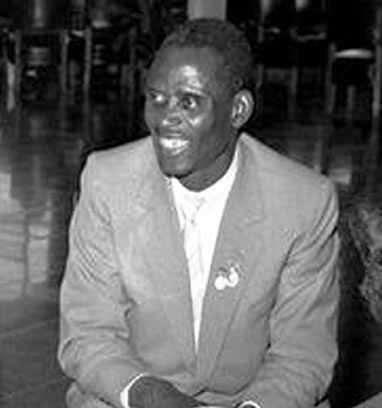
Michael Imoudu joined the railway in this environment and quickly grasped what it meant. The conditions of railway work — the physical danger of track maintenance, the heat and hazard of locomotive engineering, the arbitrary discipline of European supervisors, and above all the systematic racial wage differential that paid African workers a fraction of what European workers received for identical labour — were grievances shared across the thousands of men the railway employed. A union that could organise those grievances collectively could exercise real leverage over an employer that could not simply replace its entire workforce without destroying the economic system it was supposed to serve.
The Nigerian Railway Workers' Union that Imoudu came to lead was the organisational vehicle for this leverage. But under his leadership, the union became something more than a vehicle for wage negotiations — it became a school of political consciousness, a space in which Nigerian workers could understand their situation not merely as a set of economic disadvantages to be addressed through negotiation but as part of the systematic exploitation of African people by colonial power that the nationalist movement was challenging through other means. The connection between labour organisation and anti-colonial politics was, for Imoudu, not a strategic alliance between separate movements but a recognition of a single truth: that the conditions of Nigerian workers and the conditions of Nigerian subjects were aspects of the same colonial relationship, and that the struggle for workers' rights and the struggle for self-governance were ultimately the same struggle approached from different directions.
The 1945 General Strike: Forty-Five Days That Shook Colonial Nigeria
The general strike of June 1945 was the defining event of Imoudu's early career and one of the most significant events in the history of colonial Nigeria. Its immediate cause was economic: wartime inflation had eroded the real wages of Nigerian workers sharply, and the demand for a cost-of-living allowance to compensate for this erosion was both economically reasonable and politically symbolically charged — it was a demand that the colonial administration and colonial employers had every reason to resist, because accepting it would establish the principle that Nigerian workers' living standards mattered and that organised labour could compel the colonial economy to respect that principle.
The strike began on 21 June 1945 and lasted forty-five days — an extraordinary duration that reflected both the discipline of the strikers and the depth of the grievance that had generated them. At its peak, over 150,000 workers across multiple industries — railway workers, port workers, civil servants, teachers, commercial employees — were out, shutting down the colonial economy's key nodes with a thoroughness that demonstrated how completely the colonial system depended on African labour. The ports through which exports moved could not function. The railway that moved goods from interior to coast was stopped. The administrative machinery of the colonial government ground to a halt wherever African labour had been withdrawn.
The colonial administration's response was characteristically mixed: on one hand, the deployment of police and the arrest of union leaders including Imoudu; on the other, the recognition that the strikers' demands had to be addressed to end the stoppage. The partial victory — the award of a cost-of-living allowance that fell short of full demands but represented a real material improvement — was a demonstration of what collective industrial action could achieve and a vindication of Imoudu's approach. The strike also served as a political education for both the colonial administration and the nationalist movement: for the administration, evidence that African labour was not as passive as colonial ideology preferred to believe; for the nationalists, evidence that the organised working class was a potential force in the independence struggle rather than merely a constituency to be represented by the educated professional class.
Imoudu's role in organising the strike — coordinating across multiple unions, maintaining strike discipline through forty-five days of sustained pressure, negotiating with colonial officials while keeping the strikers' confidence — demonstrated an organisational capacity that went well beyond the simple militancy for which he was sometimes caricatured. He was not merely a man who was willing to confront authority — he was a man who could build and sustain the structures that made confrontation effective.
Imprisonment, Deportation, and the Politics of Persecution
The colonial administration's response to Imoudu's labour activities included multiple imprisonments and his deportation from Lagos — measures that reflected how seriously the administration took the threat that organised labour represented to the colonial economic order. Each of these persecutions was politically counterproductive in the specific sense that it increased Imoudu's standing among Nigerian workers rather than diminishing it. A labour leader who was willing to go to prison for his convictions, who returned from deportation and continued his work, who refused to be silenced by administrative harassment — this was exactly the kind of leader that workers needed to believe in, and Imoudu's personal history of persecution became one of the most important sources of the moral authority that the title "Labour Leader Number One" expressed.
The colonial administration's difficulty with Imoudu was structural as well as personal. Trade union organisation was, in principle, legal under British colonial policy — Britain had allowed trade unions in its African colonies as part of its claimed distinction from other European colonial powers, and the legal framework for union activity existed. But a labour leader who used that framework to organise strikes that shut down the colonial economy, who made the connection between workers' rights and anti-colonial politics explicit, and who built an organisation capable of sustaining mass industrial action across multiple sectors was operating at the boundary of what the colonial system's tolerance could accommodate. The persecution Imoudu faced was the system's attempt to enforce that boundary; his persistence was his refusal to accept it.
Labour, Nationalism, and the Independence Movement
The relationship between the Nigerian labour movement and the independence movement was close but not uncomplicated. The major nationalist parties — the NCNC, the Action Group, the NPC — all claimed to represent the interests of Nigerian workers as part of their broader claim to represent the Nigerian people, but their leadership was overwhelmingly drawn from the educated professional class whose relationship to the concerns of industrial workers was one of sympathy rather than experience. Imoudu represented a different current: the voice of the workers themselves, expressed not through professional advocacy but through direct organisation and direct action.
His relationship with the NCNC and with Nnamdi Azikiwe was characteristically complex. Azikiwe's pan-Nigerian nationalism and his genuine concern for African workers' conditions gave him and Imoudu significant common ground, and the 1945 general strike — which Azikiwe's newspaper supported and in which the NCNC's organisational networks played a role — was a moment of genuine alignment between the labour and nationalist currents. But Imoudu's labour politics were in some respects more radical than the NCNC's nationalism: his concern was not primarily with who governed Nigeria but with the conditions under which Nigerian workers lived, and the formal achievement of independence — the transfer of authority from British to Nigerian hands — did not, in his analysis, automatically address the exploitation that the colonial economic system had institutionalised.
This distinction — between the political achievement of independence and the economic transformation that would give that independence material content for ordinary workers — was one that Imoudu continued to press after 1960, making him an occasionally uncomfortable figure for the independence-era political establishment that preferred to celebrate the achievement of self-governance rather than to confront its limitations from below.
After Independence: The Long Continuing Struggle
Michael Imoudu lived to be 103 years old, and the extraordinary span of his life meant that he witnessed the full arc of post-independence Nigerian history — the First Republic and its destruction, the civil war, the oil boom and its squandering, the multiple military governments, the Second Republic, and the return to civilian democracy in 1999 — from the specific perspective of a man whose concern throughout had been not Nigeria's constitutional arrangements but the conditions of its workers. Through all of these transitions, the fundamental question that his career had posed — whether independent Nigeria would be a country in which the workers who had built it could live with dignity — remained incompletely answered.
He remained associated with the labour movement and with workers' causes into his final decades, a living symbol of what the movement stood for and a reminder — to whoever was prepared to listen — that the independence generation had included not only the lawyers and the politicians and the educators but also the railway workers and the dock workers and the factory workers whose collective action had demonstrated that colonial power had limits. His survival into the twenty-first century made him one of the last living witnesses to the 1945 general strike, to the independence struggle conducted from the workshop floor rather than the legislative chamber, and to the conviction that workers' rights and human dignity were not gifts that colonial or post-colonial employers could choose to extend or withhold but demands that organised workers had the right and the power to enforce.