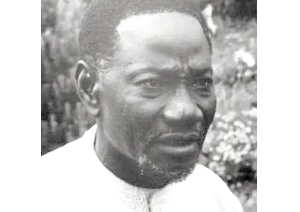
At a Glance
The Northern Territories: The Colony Within a Colony
To understand Yakubu Tali's career and its significance, it is necessary to understand the specific colonial context within which it was conducted — the Northern Territories of the Gold Coast, a region whose relationship to the colonial order was distinct from and more disadvantaged than that of the Colony proper in ways that shaped everything that northern political figures attempted to do.
The Northern Territories had been administered since their incorporation into the British sphere of influence in the 1890s as a Protectorate rather than as part of the Colony of the Gold Coast. This distinction was not merely administrative; it had concrete consequences for the treatment of northern communities and the legal framework governing their lives. Protectorate status meant fewer legal rights for the inhabitants, less investment in infrastructure and institutions, and a political framework that prioritised the maintenance of order through traditional authority rather than the development of the educated class and the representative institutions that the Colony proper was, however slowly and unevenly, developing. The north was administered to be governed cheaply, not to be developed.
The educational consequences of this approach were starkest. The Colony's southern communities had access to an expanding network of mission schools — imperfect, colonial in their orientation, inadequate to the full needs of the communities they served, but present in sufficient numbers that literacy was achievable for families willing to invest in it, and secondary education was available to the most determined and the most fortunate. The Northern Territories had a fraction of this provision. The mission schools that did exist in the north were fewer, smaller, and more poorly resourced than their southern equivalents; government schools were scarcer still; and the communities that lay beyond any school's catchment area — which was the majority of the population — had no realistic access to literacy at all.
This educational deficit was not merely a welfare problem; it was a political problem. Literate communities could engage with the colonial administration on its own terms — writing petitions, reading ordinances, understanding the legal framework within which their rights and obligations were defined. Illiterate communities could not. The north's educational deficit therefore translated directly into political disadvantage — into the inability to navigate the colonial institutional world on anything approaching equal terms with the south's educated communities, and into the difficulty of producing the literate organisers and political advocates that the independence movement required.
Education as Political Infrastructure
Yakubu Tali's work as an educator in the Northern Territories was conducted within this specific context — not the relatively well-resourced educational environment of the south, where mission schools competed to attract students and where Achimota College provided an elite secondary education, but the sparse and underfunded northern school system where each school established and each student educated represented a real achievement against structural disadvantage. Teaching in the north in the independence era was not merely a professional activity; it was a form of community building whose political consequences extended well beyond the classroom.
The students who passed through the northern schools where educators like Tali worked were not simply acquiring literacy and numeracy; they were being equipped with the tools that political participation required. A northern community with a literate population — even a partially literate population — was a community that could read the newspapers that covered the independence movement's development, could correspond with political organisations and government departments, could produce candidates for the political positions that the successive constitutional changes of the 1950s were making available to African representatives, and could engage as citizens rather than merely as subjects with the political institutions of the colonial and subsequently the independent state. Building that literate community, one school and one class and one student at a time, was the contribution that northern educators made to the political project of independence.
This educational work also built, through the relationships between teachers and communities, the social networks that political organising required. A teacher who had worked in a northern community for years had established trust, had built knowledge of the community's specific concerns and interests, and had created the personal relationships that allowed political messages to be communicated and political participation to be mobilised. The teacher-as-community-leader was a pattern that repeated across the Gold Coast's independence generation, but its significance was particularly acute in the north, where the alternatives — the commercial networks of the coastal traders, the professional networks of the urban barristers — were absent or much less developed.
The Political Argument: Inclusion, Not Separation
The central political argument that Yakubu Tali and his generation of northern political figures made was an argument for inclusion rather than separation — for the full integration of the Northern Territories into the national political project, with all that full integration implied about developmental equity and political representation, rather than for a separate northern political dispensation that would have reinforced rather than addressed the north's marginalisation.
This argument was not self-evident in the political environment of the late colonial Gold Coast. The Northern People's Party, which organised the traditional chiefly establishment's political interests, was not an independence organisation in the same sense as the UGCC or the CPP — its primary concern was the protection of northern traditional authority structures and northern autonomy within whatever constitutional arrangement emerged, rather than the acceleration of independence from British rule. Some northern leaders' instinct was toward a degree of separation from the southern-dominated national movement, on the grounds that southern dominance of the independence project would reproduce in a different form the south's dominance of the colonial order.
Tali's engagement with the national independence movement — like that of Egala and Bawumia — argued against this separatist instinct. His argument was that northern interests were best served by full participation in the national movement, with the north's specific developmental needs pressed as claims on national resources rather than as reasons for separate political arrangements. This was not a naive position; it recognised that the national movement was dominated by southern interests and that northern inclusion required active advocacy rather than passive participation. But it was a position that judged the risks of marginalisation within a unified national movement to be preferable to the risks of exclusion from the independence that the movement was likely to achieve regardless of whether the north participated in it or not.
The Broader Context: Northern Ghana's Political Tradition
Yakubu Tali's career cannot be fully understood in isolation from the broader political tradition of northern Ghanaian engagement with national politics — the tradition that Imoru Egala and Mumuni Bawumia represented more prominently and that would, in the Fourth Republic era, produce the political prominence of northern leaders whose access to national power exceeded anything that the independence generation had achieved.
This tradition's central achievement — and it is an achievement that required sustained work over many decades — was the establishment of the principle that northern Ghana was not simply a region to be governed by others but a political community capable of governing itself and of contributing to the governance of the nation. Establishing this principle required producing the literate northern professionals who could engage with national institutions on equal terms, building the political organisations that could press northern claims effectively, and maintaining the consistent advocacy for northern developmental equity that prevented the north's specific needs from being indefinitely deferred in favour of the south's more politically vocal communities.
The educational work that Tali and his contemporaries did was the foundation of this tradition — the necessary preliminary that made everything else possible. Without the schools that northern educators built, there would have been no literate constituency for the political arguments that northern politicians made; without the literate constituency, the political arguments would have had no organised support; without the organised support, the arguments would have had no institutional weight. The chain of contribution runs from the classroom to the parliament, and those who built the classrooms deserve acknowledgement alongside those who occupied the parliamentary seats.
What the Pioneering Generation Made Possible
The independence that Ghana achieved on 6 March 1957 was, in its immediate political form, primarily the achievement of the southern educated class whose UGCC and CPP had driven the constitutional negotiations and the mass politics that produced it. But the independence was formally for all of the Gold Coast — for the Northern Territories' communities as much as for the Fante and the Akan coastal communities, for the Muslim north as much as for the Christian south, for the illiterate farmer as much as for the educated barrister.
Making that formal universality into a practical reality — ensuring that independence delivered something meaningful for northern communities rather than merely transferring the colonial order's southern-dominated structure into a post-colonial frame — was the work of the northern political tradition that Yakubu Tali's generation had helped to build. The schools that educated northern professionals, the political networks that gave northern interests voice in national deliberations, the persistent advocacy for developmental equity that prevented northern needs from being indefinitely ignored — these were the contributions of a generation whose work has been less thoroughly celebrated than it deserves.
The Fourth Republic's democratic consolidation, and the increasingly competitive role that northern Ghana plays in Ghanaian electoral politics — a competitiveness that reflects the educational development, the political organisation, and the civic engagement of northern communities across decades of sustained effort — is the long-term outcome of the work that Tali's generation initiated. The pioneer's contribution is always partially invisible, buried under the achievements of the successors whose work it enabled. But it is not less real for being invisible, and the political tradition that Yakubu Tali helped build — the tradition of northern engagement with national politics, of insistence on inclusion and equity, of treating the north's development as a national responsibility rather than a regional problem — remains one of the most important threads in the fabric of Ghanaian national life.