At a Glance
Bepong, Kwahu, and the Formation of a Scholar-Politician
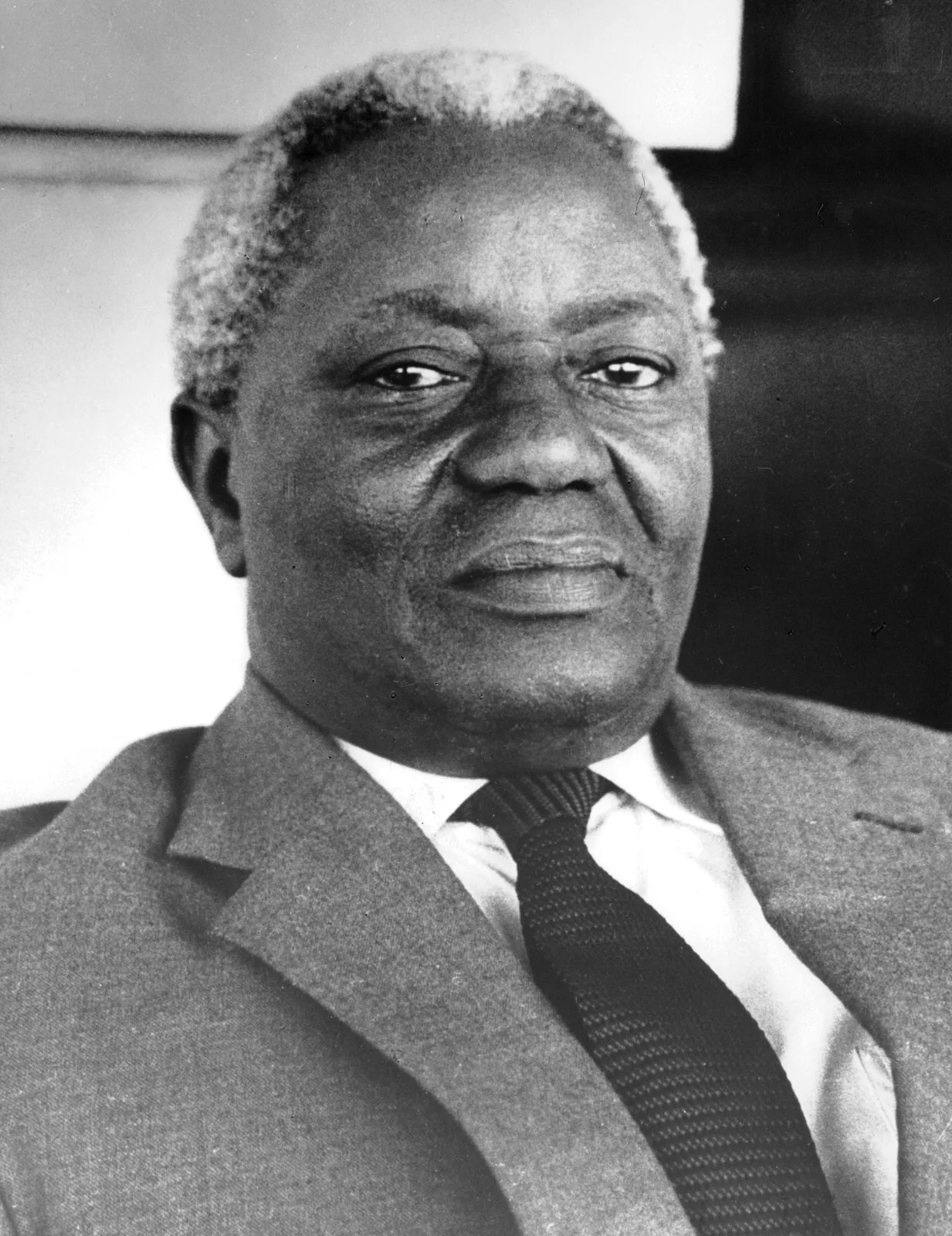
Joseph Boakye Danquah was born on 21 December 1895 in Bepong, a village in the Kwahu uplands of the Eastern Region of the Gold Coast. The Kwahu are an Akan people with a distinctive cultural tradition — shaped by the geography of their ridge-top homeland, which is fertile but limited in extent, into a pattern of seasonal migration and commercial enterprise that has made them among the most commercially active of all Akan groups. Kwahu men traditionally migrate to trade during the dry season, establishing commercial networks across the Gold Coast and beyond, and return to the home community to invest their earnings in land, education, and community development. Growing up Kwahu in the 1890s and early 1900s meant growing up in a society where educational ambition was understood as the contemporary equivalent of commercial migration — the route by which individuals advanced and by which resources flowed back to the community.
Danquah's family occupied a prominent position in the Kwahu social world. His elder brother Nana Sir Ofori Atta I would become Omanhene — paramount chief — of Akyem Abuakwa, one of the most important Akan states, and a figure of enormous political influence in the Gold Coast from the 1910s through the 1940s. Growing up in the shadow of this connection gave Danquah an intimate understanding of Akan chiefly governance, of the relationship between traditional authority and colonial administration, and of the intellectual and ethical frameworks within which Akan political life operated. It also gave him a social positioning — younger brother of a paramount chief, connected to the highest levels of the Akan establishment — that influenced how he was received in the Gold Coast's political and social world.
His educational trajectory was exceptional even by the standards of the Gold Coast's most ambitious families. He excelled through the mission school system, came to the attention of the educational authorities as a student of outstanding ability, and eventually made his way to London — first to University College London for general studies and then for the doctoral programme that produced his 1927 thesis on the philosophy of Akan customary law. The thesis was a landmark work. It applied the analytical methods of European academic philosophy — the tradition of Kant, Hegel, and Bradley in which Danquah had been trained — to the examination of Akan legal and ethical concepts, demonstrating that Akan customary law embodied a coherent philosophical framework that could be articulated in European philosophical terms without being reduced to or assimilated into European categories. The work was both philosophically serious and politically significant: it was a refutation, conducted on philosophy's own terms, of the colonial claim that African societies lacked the intellectual depth and systematic organisation that justified self-governance.
His subsequent legal training at the Bar produced not only professional qualifications but a lawyerly precision of argument and a deep knowledge of constitutional law that would characterise his political work throughout his career. He returned to the Gold Coast in the late 1920s as one of the most formidably educated Africans the colony had produced — a philosopher, a lawyer, a scholar of Akan culture, and a man whose intellectual range was genuinely extraordinary. He established a legal practice, began publishing the scholarly work that would define his contribution to the study of Ghanaian culture, and entered the political and journalistic life of the Gold Coast's educated community as one of its most prominent and most intellectually formidable voices.
Founding the UGCC: The Intellectual as Political Organiser
The United Gold Coast Convention, which Danquah did more than anyone else to bring into existence, was the political expression of a particular moment in the Gold Coast's development — the moment when the educated professional class had grown large enough and confident enough to press, as a collective political force, for the constitutional changes that would make African self-government possible. Danquah had been working toward this moment for years, through journalism, through legal practice, through his scholarly work, and through the networks of the Gold Coast's educated community that his brother's position and his own reputation gave him access to.
The founding meeting in August 1947 took place in Danquah's office in Accra — a detail that signals his centrality to the enterprise. He was not merely one of the six founders; he was the principal architect of the organisation, the man whose intellectual vision of what the UGCC should be and do shaped its programme and its character. The UGCC's constitutionalist approach — self-government through constitutional negotiation, within the framework of British imperial structures rather than in defiance of them — reflected Danquah's legal formation and his deep knowledge of how British constitutional politics worked. He believed that the British government, pressed through the proper channels by an organised and articulate African political movement, would deliver the constitutional reforms that independence required, and he designed the UGCC to be the vehicle for that pressure.
The decision to recruit Kwame Nkrumah as the UGCC's secretary was Danquah's decision as much as anyone's — it was in his office that the recruitment was discussed, and his authority within the organisation that made the appointment possible when Ako Adjei proposed Nkrumah's name. Danquah knew of Nkrumah's reputation from London and the Pan-African circles; he knew that Nkrumah was an extraordinary organiser. What he perhaps did not fully anticipate was that Nkrumah's conception of what independence required — mass mobilisation rather than constitutional negotiation, immediate self-government rather than gradual constitutional reform, the Convention People's Party rather than the UGCC — was fundamentally different from his own, and that Nkrumah would use the UGCC as a platform for building his own organisation rather than building the one Danquah had created.
The 1948 arrest of the Big Six — coming at the moment when Nkrumah's organisational energy was already transforming the UGCC in directions Danquah had not planned — made Danquah a national figure in a way that his intellectual and professional work, however distinguished, had not done. His detention at Kumasi, the Watson Commission's investigation, the international attention that the arrest of six prominent professionals attracted — all of these elevated the UGCC's founding father to a symbolic status that gave his subsequent political battles a national audience they would otherwise have lacked.
The Rupture with Nkrumah and the Long Opposition
Nkrumah's founding of the Convention People's Party in June 1949, his explicit rejection of the UGCC's constitutionalist approach, and his articulation of a programme of Positive Action — strikes, boycotts, civil disobedience — as the means to achieve immediate self-government was a direct repudiation of everything Danquah had designed the UGCC to be. The rupture between the two men was immediate, total, and never healed. Danquah regarded Nkrumah as an irresponsible demagogue who was using the emotional energy of mass politics to short-circuit the careful constitutional work that genuine self-government required. Nkrumah regarded Danquah as a representative of a conservative educated elite whose constitutional caution served its own class interests at the expense of the masses whose liberation independence was supposed to deliver.
Both characterisations contained some truth and some distortion. Danquah's constitutionalism was not purely cynical class politics — he genuinely believed that constitutional institutions, built carefully and maintained consistently, were the precondition for the kind of freedom that independence was supposed to deliver. But his constitutionalism was also shaped by a social position that disposed him toward institutional methods rather than mass mobilisation, and his dismissal of the CPP's mass base as manipulated ignorance reflected a class condescension that was real and politically costly. Nkrumah's mass politics were not simply demagogic — they were responding to genuine popular demand for a more rapid and more complete independence than the UGCC's gradualism offered. But Nkrumah's willingness to use whatever political methods worked, including methods that undermined the democratic institutions that independence was supposed to establish, was the flaw that Danquah identified from the beginning and that the CPP government's subsequent authoritarianism would dramatically confirm.
The Gold Coast's constitutional evolution through the 1950s — the Coussey Constitution, the 1951 elections that the CPP won, Nkrumah's release from prison, the further constitutional reforms, the 1954 and 1956 elections, and finally independence in March 1957 — proceeded with Danquah in opposition. He contested elections, maintained his legal practice, wrote and published, built the networks of the opposition movement that would become the United Party, and argued with relentless intelligence that the CPP government's democratic credentials were insufficient for the task of building the genuinely free Ghana that independence was supposed to create. He was not always wrong about specific criticisms; he was rarely effective in translating those criticisms into electoral support against the CPP's enormous organisational advantage and Nkrumah's extraordinary personal popularity.
The Name Ghana: A Scholarly Act of Political Reclamation
Among Danquah's most enduring contributions to the independence project was one that is often overlooked in the political drama of his conflict with Nkrumah: it was Danquah who proposed that the independent state should be named Ghana. The Gold Coast — named for the commodity that European traders had sought there, a name that located the territory's significance entirely in European commercial interest — was the obvious colonial name to discard at independence. What should replace it was a question that Danquah approached with the same scholarly seriousness he brought to all his historical work.
The Ghana Empire — known to Arab geographers of the medieval period as the empire whose ruler bore the title Ghana, located in the region of the upper Niger and Senegal rivers rather than in the Gold Coast itself — was the most powerful of the pre-colonial West African empires, a sophisticated state that controlled the gold and salt trade of the western Sudan from roughly the fourth to the eleventh centuries. Danquah's proposal to name the independent Gold Coast after this empire was a deliberate act of historical reclamation: a claim that the new state stood in a tradition of African political achievement that predated European contact by centuries, that its independence restored a historical continuity interrupted by colonialism rather than creating something entirely new, and that Africa had a history of statecraft and civilisation that the colonial narrative of African primitivism denied.
The geographical inexactness of the name — the Ghana Empire was not located where Ghana is — was a point that Danquah's critics raised, but it somewhat missed the point. The name was a symbolic claim rather than a geographical description, an assertion of African historical depth rather than a precise territorial reference. As such, it succeeded entirely: Ghana became the name that announced to the world that this new state understood itself as part of a long African story, and that announcement was itself a political act of considerable importance in the context of 1957.
Presidential Challenge, Detention, and Death
The Gold Coast's transition to the republic of Ghana in 1960 included a presidential election in which Nkrumah stood against Danquah — the most direct electoral confrontation between the two men who had defined the Gold Coast independence movement's political polarities. The election was conducted in conditions that were not free and fair by any serious standard: the CPP government controlled the state apparatus, the broadcast media, and the organisational infrastructure; the opposition was harassed and its meetings disrupted; and the climate of political intimidation that the Preventive Detention Act's existence created hung over the entire process. Danquah nevertheless stood, argued, campaigned, and received a substantial minority of the votes cast — a demonstration that his political support, however unable to match the CPP's organisational power, was real and geographically distributed across the country.
His first detention under the Preventive Detention Act came in 1961, the consequence of his continued opposition at a moment when the Nkrumah government's tolerance for dissent was diminishing. He was held without trial, without charge, and without the legal process that his entire career had been devoted to upholding. The detention lasted until 1962, when he was released — not because the government acknowledged any illegality in his imprisonment, but because the political calculus had shifted sufficiently to make releasing him less costly than continuing to hold him. He resumed his opposition activities, continued to write and argue, and continued to make the case for democratic governance in a political environment that was becoming progressively less hospitable to such arguments.
The second detention came in January 1964, following the declared one-party state and in the context of the CPP government's most acute paranoia about internal opposition. Danquah was taken to Nsawam Prison, the country's most secure detention facility, and held in conditions of considerable hardship. He was seventy years old, in declining health, and in need of medical attention that the prison either could not or would not provide adequately. Amnesty International, which had been founded in 1961, adopted him as one of its earliest prisoners of conscience — a designation that generated international pressure on the Nkrumah government but did not result in his release or in improved conditions of detention.
He died on 4 February 1965, in Nsawam Prison, at seventy years of age. The official cause of death was heart failure. His family and supporters believed — with good reason, given the conditions of his imprisonment and the denial of medical care — that the detention itself had killed him. International condemnation of his death was immediate and substantial. The British press, which had followed Danquah's career since his London years, was particularly forthright; other African governments and liberation movements expressed varying degrees of concern, calibrated against their own relationships with Nkrumah's Ghana. The Nkrumah government issued a statement characterising his death as natural and unremarkable. Almost no one outside the government believed this characterisation.
The Conscience of Ghanaian Nationalism
Danquah's death in Nkrumah's prison gave the conflict between constitutionalism and authoritarian populism in Ghanaian politics its most powerful symbol — a symbol that would be invoked repeatedly in the subsequent history of Ghanaian democracy as a reminder of what was at stake when governments chose to silence their critics through imprisonment rather than argument. The Danquah-Busia tradition — named for Danquah and for Kofi Busia, who led the opposition through the early 1960s and subsequently governed Ghana as Prime Minister from 1969 to 1972 — became one of the two main political traditions of post-independence Ghana, the tradition that located itself in constitutional democratic politics, in the rule of law, in the opposition to executive excess, and in the memory of J.B. Danquah as the man who had paid the ultimate political price for holding to these principles.
His scholarly legacy is equally substantial. The Akan Doctrine of God (1944), his most widely read book, presented Akan religious and philosophical thought in terms accessible to international academic audiences while maintaining the integrity of Akan conceptual frameworks rather than forcing them into European categories. Akan Laws and Customs (1928), his earlier work, drew on his doctoral research to provide a systematic account of Akan legal traditions that remains a reference point for scholars of Ghanaian history and jurisprudence. His journalism — he founded and edited newspapers throughout his career — provides an invaluable record of Gold Coast political thought across four decades. Taken together, his scholarly and journalistic output constitutes the most significant body of work produced by any single figure of the Gold Coast independence generation.
The political tradition that bears his name eventually produced the New Patriotic Party, which brought to power Danquah's one-time protégé Kofi Busia's intellectual heirs and, later, the son of his UGCC colleague Edward Akufo-Addo — Nana Akufo-Addo, who served as Ghana's President from 2017. The continuities are imperfect, as political continuities always are, but the tradition of constitutional democratic opposition to executive excess that Danquah established in his own career — and that he maintained unto death in Nsawam Prison — has proven more durable than the political structures that killed him. That durability is perhaps the most fitting testament to a man who believed, against all the evidence of his last years, that constitutional democracy was the only form of independence worth dying for.