At a Glance
Anomabo, the Atlantic Trade's Deep Shadow, and the Making of a Merchant
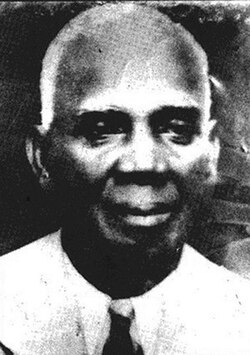
George Alfred Grant was born in 1878 in Anomabo — a small coastal town in the Central Region whose history contained, in concentrated form, two centuries of the Gold Coast's engagement with the Atlantic world. Anomabo had been one of the busiest slaving ports on the West African coast during the eighteenth century, the site of forts built by competing European powers to control access to the enslaved people who were the original source of wealth for the Atlantic trade that connected West Africa, the Americas, and Europe. The abolition of the slave trade in 1807, and of slavery itself across the British Empire in 1833, had transformed Anomabo's commercial character without ending its commercial activity — the town's Fante merchant families had pivoted, through the nineteenth century, from the slave trade to the legitimate commerce in palm oil, groundnuts, and eventually cocoa that the Victorian moral economy preferred, maintaining their commercial networks and their commercial sophistication through the transition.
Growing up in Anomabo in the 1880s and 1890s meant growing up in this specific history — in a community whose commercial identity was centuries old, whose relationships with European trading firms were deeply embedded in family and institutional memory, and whose understanding of how commerce worked across cultural and linguistic boundaries was a form of inherited knowledge passed down through generations of practical engagement. The English literacy that the mission schools provided was, for a family like Grant's, an extension of a commercial education that was already underway — adding the formal institutional tools to the practical commercial intelligence that the community had been developing since long before the schools arrived.
Grant did not follow the professional path — the law, the church, the civil service — that was the aspiration of many of the Gold Coast's educated families. He went into trade, building on the commercial tradition of his Anomabo background and expanding it into the sectors that the colonial economy's twentieth-century development was making profitable. Timber was the key. The Gold Coast's forest zone — the belt of tropical rainforest that covered the southern part of the colony, particularly in the Ashanti and Western Regions — contained hardwoods that European markets, particularly the British furniture and construction industries, were increasingly willing to pay well for. Accessing those hardwoods required capital to fund felling operations, organisational capacity to manage the transport of logs from forest to coast, commercial relationships with European export firms to convert logs into sales, and the political skills to navigate the colonial concession system that governed who could exploit the forest's timber resources and on what terms.
Building the Empire: Timber, Trade, and the Political Economy of Colonial Success
Grant built his timber enterprise through the first four decades of the twentieth century with a combination of commercial intelligence, personal energy, and a capacity for managing the complex relationships — with European firms, with African forest communities, with colonial administrators who controlled concession approvals — that large-scale colonial commerce required. Each element of the enterprise had its own challenges: timber concessions required negotiation with both the colonial forestry administration and the customary landowners whose communities inhabited the forest; felling operations required labour management, equipment investment, and the logistical capacity to move heavy loads through difficult terrain; export relationships required the maintenance of commercial credibility with European buyers who had many alternative suppliers.
That Grant built the largest African-owned commercial enterprise in the Gold Coast within this demanding environment was not simply the result of having good commercial instincts, though he clearly did. It was also the result of operating at a scale that most of his African commercial contemporaries did not attempt — of being willing to make large capital commitments, to employ significant numbers of workers, and to extend his operations geographically and commercially beyond the safe boundaries that smaller operators preferred. The scale created its own advantages: larger operations could negotiate better terms with European firms, could absorb the shocks that smaller enterprises would not survive, and could generate the surplus capital that new investments required. By the 1930s and 1940s, when the independence movement was beginning to organise, Grant's enterprise had achieved a self-reinforcing scale that made it qualitatively different from any other African commercial operation in the colony.
The political implications of this commercial success extended beyond the specific financial support that Grant could provide to the independence movement. His very existence as a successful African businessman of this scale was itself a political argument — a demonstration, conducted through the daily reality of commercial operations rather than through political speeches, that the colonial premise of African economic incapacity was false. Every timber concession he managed, every export deal he negotiated, every African worker he employed in a skilled capacity was evidence that African commercial ambition was capable of operating at the largest scale the colonial economy made available. The colonial economy had been designed, in part, to direct economic surplus toward European enterprises and away from African ones; Grant's success demonstrated that the design had not been entirely effective, that African commercial intelligence and commercial determination could accumulate capital and generate economic activity even within a system structured to make this difficult.
The UGCC Founding and the Decision That Made Everything Else Possible
When the United Gold Coast Convention was founded in August 1947 at J.B. Danquah's office in Saltpond, Grant's presence as founding chairman and principal financier was the condition that made the organisation's existence operationally viable. The barristers and intellectuals who gathered at that meeting — Danquah, Adjei, Akufo-Addo, Ofori Atta, Plange — had the political ideas, the professional credentials, and the social networks that a formal political organisation required. What they did not have was the money to run one. Political organising is expensive: it requires offices, correspondence, travel, meetings, publications, and — most critically — the ability to pay full-time staff who can devote their working hours to the organisation's activities rather than to earning their own livings. Grant had the money. His agreement to fund the UGCC was therefore not merely a contribution to the independence movement; it was the precondition for the UGCC's existence as a functional organisation rather than a gathering of like-minded professionals who met occasionally and issued statements.
The decision to bring Nkrumah back from London — made on Ako Adjei's recommendation, formalised through Danquah's letter of invitation, and made operationally possible by Grant's financial commitment — was the most consequential single act of patronage in the history of Ghanaian independence. Nkrumah was in London, operating the West African National Secretariat and embedded in the Pan-African intellectual and political milieu that had formed his political consciousness. Bringing him to the Gold Coast required covering his passage, establishing a salary that would allow him to work full-time for the UGCC, and providing the operational budget that a national organiser working across the colony required. All of this was Grant's money.
What the money purchased, in this specific case, was not merely an organisational secretary but the most consequential political figure in the history of Ghanaian independence. Nkrumah arrived in November 1947 and within months had transformed the UGCC's political character, built a genuinely mass following that the constitutionalist founders had not intended, broken with the UGCC to found the CPP, won the 1951 elections from prison, and set Ghana on the course to independence in 1957. None of this was what Grant had funded when he agreed to pay for the UGCC secretary's salary. But all of it was the consequence — in ways that neither Grant nor anyone else could have predicted — of the financial commitment that made Nkrumah's return possible.
The Risk of Commercial Patronage in a Colonial System
Grant's willingness to fund the UGCC — to identify his commercial success publicly with the independence campaign — carried genuine risks in the colonial system that his business operated within. The colonial government had regulatory authority over the timber concessions that were the foundation of his enterprise; it could, if it chose, use administrative delays, additional requirements, or unfavourable interpretations of concession terms to harass his business operations without taking the more politically costly step of direct prosecution. Commercial enterprises that depended on government approvals — and timber concessions, by their nature, required ongoing governmental interaction — were vulnerable to this kind of administrative pressure in ways that purely trading operations were somewhat less exposed to.
That Grant was not subjected to the kind of sustained administrative harassment that the colonial government could theoretically have directed at his enterprise reflects several factors: the practical difficulty of targeting a commercial operation of his scale without visible consequences for the colonial economy that depended on his and similar enterprises; the calculation that the political costs of being seen to target the Gold Coast's most successful African businessman would exceed the political benefits; and perhaps some residual respect, within the colonial administration, for commercial success of the magnitude that Grant had achieved. But the risk was real, and his willingness to accept it — to fund the independence campaign in the full knowledge that doing so made him politically exposed — was a form of courage whose commercial rather than physical character should not diminish its significance.
Death Before the Flag: The Patron Who Did Not See His Investment Mature
Paa Grant died in 1956 — a year, as it turned out, before the independence whose campaign he had funded was finally achieved. He had lived long enough to know the outcome; by 1956, the trajectory of the Gold Coast's constitutional development made independence on terms broadly consistent with what the UGCC had originally demanded effectively certain. The 1954 and 1956 elections had confirmed the CPP's mandate; the British government had accepted the principle of independence; the date had not yet been set but the direction was no longer in doubt. Grant died knowing that the project had succeeded, even if he did not live to see the specific moment of its success.
The relationship between his commercial legacy and his political legacy is difficult to separate — which is, in its way, the most fitting conclusion to the story of a man whose politics were always expressed through commerce. His timber enterprise, which had accumulated through decades of work the capital that funded the independence campaign, continued after his death as a demonstration that African commercial success at the largest scale was possible. The UGCC, whose existence his money had made possible, had been superseded by the CPP but had provided the constitutional framework within which the CPP operated. The independence of Ghana, which was achieved in the year following his death, was in some real sense the return on the investment he had made.
He is remembered in Ghana as Paa Grant — the great patron, the merchant prince whose generosity funded a liberation. The Paa Grant Stadium in Sekondi-Takoradi, named in his honour, is one of the most visible institutional acknowledgements of his contribution. But the more durable monument is the independence itself, which he helped fund and which carries forward the names and the story of the Gold Coast's transition from colonial territory to independent state. His name belongs in that story — not at the front, where Nkrumah and Danquah stand, but in the foundation, where the money that made everything else possible was quietly and decisively placed.