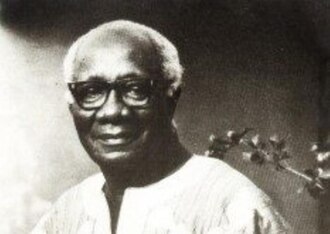
At a Glance
Akyem Abuakwa, the Constitutional Tradition, and the Formation of Paa Willie
William Ofori Atta was born in 1910 into the Akyem Abuakwa royal family — a lineage that in the subsequent decades would produce three of the Gold Coast independence generation's most consequential constitutionalist figures. J.B. Danquah, whose scholarly and political work defined the UGCC's constitutional programme and who died in Nkrumah's detention, was from the same family. Edward Akufo-Addo, who served as Chief Justice and ceremonial President of the Second Republic, was from the same family. The concentration of constitutional principle and political courage in this single Akyem lineage was not a coincidence but a reflection of the specific political culture that the Akyem Abuakwa royal and educated class had developed over generations of engagement with both Akan traditional governance and British legal and institutional forms.
The Akyem Abuakwa state had maintained its traditional political organisation through the colonial period by a combination of negotiation and assertion — ceding enough authority to the colonial government to avoid the forcible subjugation that Asante had experienced, while retaining enough autonomy to preserve the chiefly structures and the cultural identity that distinguished Akyem Abuakwa from a purely administered colonial territory. Growing up in this context meant growing up with an intimate understanding of how political authority worked — both the traditional Akan forms that the chieftaincy embodied and the British institutional forms that colonial governance had overlaid — and with the political awareness that came from belonging to a family that had been managing this dual system for decades.
His legal training, like that of Danquah and Akufo-Addo and the other barrister members of the UGCC, gave him the specific constitutional grounding that transformed political instincts into articulable political arguments. A barrister who understood how colonial law worked — who had argued cases before colonial courts, navigated the colonial legal system's procedures, and developed the analytical capacity to identify precisely where and how the law was being violated — was a different kind of political actor from a politician without legal training. Ofori Atta's constitutional arguments were not merely rhetorical; they were legal, grounded in the specific texts and precedents that defined what constitutional governance required and what its violations consisted of.
The Founding, the Detention, and the Making of a Constitutional Democrat
The United Gold Coast Convention's founding in August 1947 committed Ofori Atta, as one of its six founding members, to the constitutional programme that Danquah had articulated — self-government in the shortest possible time, sought through constitutional negotiation and political pressure, with the democratic governance of an independent Gold Coast as the endpoint. This was not merely a political programme; for Ofori Atta it was a constitutional programme, grounded in the belief that legitimate governance required institutional frameworks that protected individual rights, maintained the separation of powers, and subjected political authority to democratic accountability. The constitutional character of the demand — its framing in terms of rights and constitutional principles rather than merely of national self-determination — was as important to him as the independence itself.
The colonial government's arrest of the Big Six in March 1948, and his detention at a remote Northern Territories location for weeks while the Gold Coast's political landscape was transformed by the mass sympathy his imprisonment generated, gave Ofori Atta the personal experience of detention without due process that would define his subsequent political arguments. He had now been imprisoned by a colonial government for exercising constitutional rights that the colonial order claimed to protect — arrested without charge, detained without trial, isolated without access to legal counsel, in the way that colonial security legislation allowed and that the rule of law as understood by the common law tradition he had been trained in absolutely forbade. The experience was formative: it gave him a direct, lived understanding of what detention without constitutional safeguards meant, and it created in him the specific personal commitment to due process and judicial accountability that would make his opposition to the Preventive Detention Act so intellectually serious and so personally felt.
The Watson Commission's subsequent findings — effectively validating the nationalists' demands and recommending constitutional reform — vindicated the UGCC's constitutional approach in the specific case of the 1948 crisis. But the subsequent political developments, in which Nkrumah's CPP demonstrated that mass mobilisation was a more effective independence strategy than the UGCC's constitutionalism, created the political context in which Ofori Atta would spend the rest of his career: the context of a man whose constitutional commitments were correct but whose political method had been superseded, who was pressing arguments that the dominant political forces found inconvenient and that the institutional arrangements of the post-independence state were structured to marginalise.
Opposition to the CPP: Arguing Against the Preventive Detention Act
The Nkrumah government's Preventive Detention Act of 1958 — which allowed imprisonment without charge, without trial, and without judicial oversight — was the piece of legislation that most completely violated the constitutional principles that Ofori Atta had committed himself to at the UGCC's founding. As a barrister, he understood precisely what the Act violated: the right to know the charges against one, to contest the evidence, to be heard by an independent court operating under established legal procedures. As a man who had been detained without these protections by the colonial government in 1948, he understood viscerally what it meant to be held without due process. And as a politician whose career was built on the constitutional argument that independence should mean governance under law rather than governance by executive fiat, he understood that the Act was not merely a legal violation but a political betrayal — the abandonment, by the independent government, of the constitutional commitments that the independence movement had used to justify its demands.
His opposition to the Act was expressed through parliamentary debate, through legal argument, through journalism, and through the political organisations he participated in — the United Party coalition that brought together the UGCC tradition's surviving political forces and other anti-CPP groupings. The opposition was principled and persistent: he argued against the Act not because he was personally threatened by it — though he would eventually be detained under it — but because it was constitutionally wrong, because it reproduced the colonial state's instruments of arbitrary power in an independent government that had claimed to supersede colonial arbitrariness, and because the constitutional order that independence had promised could not coexist with a law that allowed the government to imprison its opponents without judicial accountability.
He was detained under the Act — the independent government using the same instrument against him that the colonial government had used against him in 1948, demonstrating with particular clarity the continuity between colonial and post-colonial state power that critics of the CPP's authoritarianism had identified. The detention confirmed rather than silenced his opposition; it added to the personal experience of unjust detention that informed his constitutional arguments and gave those arguments the moral authority of someone speaking from experience rather than from theory.
The Long Democratic Argument Through Coup, Counter-Coup, and Military Rule
The National Liberation Council's coup of February 1966 ended the Nkrumah government and opened what appeared, briefly, to be the possibility of the constitutional democratic order that Ofori Atta had always sought. The Busia government that came to power through the 1969 elections was the closest Ghana came, in the post-independence period before the Fourth Republic, to the constitutional parliamentary governance that the UGCC's founding programme had sought. Ofori Atta's political positioning in the Second Republic — supporting the democratic framework while maintaining his independence from the specific factional allegiances that the Progress Party and its opponents represented — was consistent with the constitutional rather than partisan character of his democratic commitment.
Acheampong's coup of January 1972, which ended the Busia government and returned Ghana to military rule, was for Ofori Atta another demonstration of the pattern that had characterised his entire political life: the constitutional order being swept aside by force, the democratic argument having to begin again from a position of institutional powerlessness. His opposition to Acheampong's government — through the People's Movement for Freedom and Justice, through public statements, and through the constitutional arguments he continued to make from the political margins — maintained the democratic argument through years when its prospects appeared genuinely bleak.
The political community that Ofori Atta represented through these decades — the Danquah-Busia tradition of Ghanaian constitutional democracy, which the Progress Party, the Popular Front Party, and eventually the New Patriotic Party would claim as their intellectual inheritance — was not a coherent electoral force capable of winning power in any of the political configurations between 1966 and 1992. But it was a living political tradition whose continued existence — maintained by figures like Ofori Atta whose personal commitment to constitutional principle gave the tradition its moral credibility — was itself politically significant. Democratic traditions do not survive purely by winning elections; they survive through the consistent advocacy of people who maintain the argument through the periods when winning is impossible, keeping alive the institutional memory of what constitutional governance means and why it matters.
Death Before Democracy: The Second Danquah Parallel
William Ofori Atta died on 26 January 1988 — four years before the democratic consolidation of the Fourth Republic that the political tradition he had spent his career defending finally, belatedly, produced. His death at this particular moment in Ghanaian political history is the fact that most completely captures the specific tragedy of his career. Danquah had died in 1965, before independence had been democratically consolidated. Ofori Atta died in 1988, before the Fourth Republic's democratic consolidation — another founder, another long fighter for constitutional governance, denied by a matter of years the sight of the democratic arrival he had spent his life working toward.
The 1992 constitution that established the Fourth Republic, the elections that followed it, the democratic competition between NDC and NPP that has defined Ghanaian political life since — these were the institutional expression of the constitutional tradition that Ofori Atta had maintained across four decades of political adversity. The Danquah-Busia tradition's claim to have kept alive the constitutional democratic argument during the long years of one-party rule and military government is a claim that Ofori Atta's career supports more completely than that of almost any other individual: he had been there at the founding, he had been detained by both colonial and independent governments for his constitutional commitments, he had maintained his opposition across every political configuration Ghana experienced between 1947 and 1988, and he had never given up the democratic argument even when its prospects seemed most remote.
His name is less prominent in popular Ghanaian historical memory than Danquah's or Nkrumah's — he did not name the country, he did not lead it to independence, he did not die with the dramatic circumstances that transform political figures into martyrs. He argued, persistently and principally, for constitutional governance across five decades, and he was right throughout. The democracy that the Fourth Republic eventually delivered was the vindication of the argument he had spent his political life making, and the vindication arrived four years too late for him to witness it.