At a Glance
The Prime Minister's Household: Political Formation from Birth
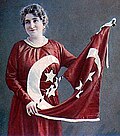
Safiya Mustafa Fahmi was born in 1876 into one of the most politically significant households in Egypt — the family of Mustafa Fahmi Pasha, who served twice as Egypt's prime minister under the British occupation and who was one of the most senior Egyptian officials in the colonial administrative structure. Growing up in this household was a political education of the most direct and most intimate kind: she observed from childhood how Egyptian politics worked, who held power and on what terms, how the relationship between Egyptian governmental authority and British colonial power operated in practice, and what the specific limitations of Egyptian sovereignty under the occupation meant for the people who were nominally responsible for governing the country.
This formation distinguished her from other prominent Egyptian women of her generation in a specific way. Hoda Shaarawi had grown up in the world of the Egyptian elite but in the specifically female world of the harem — with its own political culture but one that was by definition separate from the world of formal political decision-making. Safiya had grown up in the household of a man who was himself one of the primary decision-makers of Egyptian governance, and she had observed that process in ways that most Egyptian women, however elite their social position, had not. When she subsequently became the wife of Saad Zaghloul and the political partner of the independence movement's leader, she brought to that role a specific political intelligence shaped by this unusual formation.
The Marriage as Political Partnership
The marriage of Safiya Mustafa Fahmi to Saad Zaghloul in 1896 was understood by the participants and observers at the time as a significant political alliance as well as a personal union. Zaghloul was a rising official — a lawyer, a judge, a man of reformist nationalist inclinations who had been associated with Muhammad Abduh's circle and who was building the career in the legal and educational institutions of the khedival state that would eventually lead to ministerial positions. His marriage to the prime minister's daughter gave him social connections and access to the elite political world that his provincial origins and his professional career had not fully provided, and Safiya's family connections continued to be relevant to Zaghloul's political life long after her father's death.
But the marriage was more than a political alliance of convenience. The evidence of their correspondence — the letters that passed between them during the exiles, the accounts of their relationship left by contemporaries and by Zaghloul's own diary — suggests a genuine partnership of affection and mutual respect. Zaghloul addressed Safiya in terms that reflected genuine emotional dependence as well as practical political reliance, and Safiya's management of the household and the political networks during his absences reflected not only duty and political commitment but genuine engagement with the nationalist project as her own cause rather than merely her husband's.
March 1919: From the Harem to the Street
The 1919 revolution created the specific political moment in which Safiya's political role became public in ways that it had not previously been. When Zaghloul was arrested on 8 March 1919 and exiled to Malta, Safiya was the immediate link between the imprisoned leader and the nationalist movement — the person through whom communication could flow in both directions, and the person whose management of the political situation in Cairo would shape the movement's capacity to respond effectively to the British action.
Her coordination with Hoda Shaarawi and other elite Egyptian women to organise the women's demonstrations was one of the earliest and most significant responses to the exile. The demonstrations — groups of veiled elite women in carriages, moving through the streets of Cairo in public protest — were not spontaneous expressions of popular feeling but organised political actions, planned and led by women who understood their political purpose and their specific political impact. The sight of elite Egyptian women demonstrating publicly against the British occupation — women who by all social convention were confined to the domestic sphere and who had no previous tradition of public political action — was itself a political statement of the first importance, and Safiya was at the centre of its organisation.
The Bayt al-Umma: Politics in the House
The Zaghloul family home in the Munira district of Cairo — which the Egyptian people had named Bayt al-Umma, the House of the Nation — was the physical centre of the Wafd movement and of Egyptian nationalist politics throughout the independence struggle. The name itself was politically significant: it expressed the popular sense that the house was not merely the private residence of a particular family but the common property of the Egyptian nation — the place where the nation's independence struggle was centred, where the nation's leader received the Egyptian people and directed their collective project.
Safiya managed this house as a political as well as a domestic institution — a distinction that the social conventions of the period made unusual and that the specific demands of the independence struggle made necessary. The Bayt al-Umma was visited by everyone who mattered in Egyptian nationalist politics: Wafd leaders and party members, nationalist intellectuals and journalists, ordinary Egyptians who came to demonstrate their support for Zaghloul and the movement he led, foreign visitors and diplomats who needed to understand the Egyptian political situation. Receiving all of these visitors, managing the specific political work that their visits represented — the information they provided, the decisions they sought, the reassurances they needed — was Safiya's specific contribution to the Wafd's functioning.
During Zaghloul's exiles, this political management role became her primary function. The Bayt al-Umma remained open and politically active even when its ostensible occupant was in Malta or the Seychelles; Safiya received the visitors who would otherwise have visited Zaghloul, communicated the movement's position on political questions, and maintained the organisational coherence of the Wafd through the periods of maximum pressure. The specific decisions she made in this role — what to communicate to whom, how to frame the movement's position on specific political questions in Zaghloul's absence, which relationships to cultivate and which to cool — were political decisions of real consequence, made by a woman whose political intelligence and whose specific formation in the household of a prime minister gave her the capacity to make them effectively.
Umm al-Misriyyin: The Mother and Her Nation
The title that the Egyptian people gave Safiya — Umm al-Misriyyin, Mother of the Egyptians — requires careful attention to understand what it meant and what it did not mean. It was not simply an honorific for the wife of a beloved national leader, the conventional verbal gesture of a patriarchal society that honours wives through their husbands' achievements. It was a recognition, genuine and widely shared, that Safiya was herself a political figure — that she had made her own contribution to the independence movement that was distinct from her husband's and that deserved its own recognition alongside his.
The maternal metaphor was specifically chosen and specifically appropriate. The father-of-the-nation formulation that expressed the people's relationship with Zaghloul was a metaphor of authority and leadership — the father who guides and protects. The mother-of-the-Egyptians formulation that expressed the people's relationship with Safiya was a metaphor of care and sustenance — the mother who maintains the household, who keeps the family together through difficulty, who provides the emotional and practical foundation on which the father's leadership rests. Both metaphors reflected a gendered division of political labour that the feminist tradition would subsequently challenge, but both also reflected genuine realities about the specific kinds of work that Saad and Safiya Zaghloul did and the specific kinds of relationships they maintained with the Egyptian people.
After Zaghloul: The Widow's Continuing Role
Zaghloul died in August 1927, and Safiya lived until January 1946 — eighteen years after her husband's death, in which she continued to maintain the Bayt al-Umma as a political and national institution, continued to receive visitors who came to honour Zaghloul's memory and to maintain their connection to the nationalist tradition he had founded, and continued to be a figure of political and symbolic significance in Egyptian national life. The house became after his death a place of pilgrimage for the Egyptian nationalist tradition — a physical monument to the independence movement and a continuing centre of Wafd political identity — and Safiya was its guardian and its hostess.
She did not play the same active political role after Zaghloul's death that she had played during his exiles — the specific function she had served, of managing the political dimensions of the Wafd's leadership in the leader's absence, was no longer required when Mustafa al-Nahhas had assumed the leadership in his own right. But her continued presence at the Bayt al-Umma, her continued reception of political visitors, and the specific authority she derived from her relationship to Zaghloul's legacy made her a figure that Egyptian politicians of all tendencies continued to cultivate and to honour throughout the final decades of the constitutional order. She died in January 1946, sixteen years before the last British troops left Egypt under the 1954 evacuation agreement that ended the occupation that her husband had spent his life resisting.
Legacy: The Political Partner the History Books Overlooked
Safiya Zaghloul's significance in Egyptian independence history has been systematically understated — partly because of the general tendency of political history to focus on leaders rather than on their partners and their households, and partly because of the specific conventions of a political culture in which women's work, however essential, was rarely formally documented in the same way as men's. The popular recognition expressed in the title Umm al-Misriyyin was more accurate than the historical record has been: she was a political partner in the full sense, whose specific contributions — the organisation of women's demonstrations in 1919, the management of the Bayt al-Umma during three exiles, the sustaining of the Wafd's networks through the periods of maximum British pressure — were essential to the independence movement's capacity to function and to endure.
Her legacy is the legacy of the political partner who understood what was being built, who contributed to building it in ways that were necessary rather than merely supportive, and who maintained what had been built through the periods when the person most publicly associated with it was absent, imprisoned, or under direct attack. That is a specific kind of political contribution — less visible than the heroic individual act, more durable than the dramatic gesture — and it deserves the specific recognition that the popular title gave it and that the historical record has too rarely provided.