At a Glance
Tanta and the Making of a Revolutionary Feminist
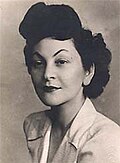
Doria Shafik was born in Tanta in December 1908, into a middle-class Egyptian family whose social position was just sufficient to give her access to the educational opportunities that her intelligence required. Tanta was one of Egypt's significant provincial cities — a commercial centre, a railway hub, the site of one of Egypt's largest religious festivals, and a place with enough educational infrastructure to give a girl of exceptional ability a foundation for advancement. The specific social world of the Egyptian middle class in the first decades of the twentieth century was a world of contested norms — traditional and modern, Islamic and Westernised, conservative and reformist — and Shafik grew up in the currents of this contestation, absorbing the arguments on all sides and eventually developing her own position that drew on all of them without being reducible to any.
The connection to Hoda Shaarawi — who had unveiled publicly in 1923 and who had built the Egyptian Feminist Union into the country's most significant women's organisation — came through the networks of educated Egyptian women that the development of girls' schooling in the early twentieth century had created. Shaarawi recognised in Shafik a student of exceptional ability and sponsored her education in ways that made the Paris years possible. The mentorship was genuine and the gratitude was real, but the relationship also contained the seeds of the political difference that would eventually distinguish Shafik from Shaarawi: Shaarawi believed in the gradual transformation of Egyptian society through education, cultural change, and persistent advocacy; Shafik believed in political confrontation, in the direct assertion of rights, in the occupation of the spaces that society denied women as an act of political theatre and political will.
Paris, Philosophy, and the Feminist Intellectual
Shafik's years in Paris — where she studied at the Sorbonne, earned her doctorate, encountered the French feminist tradition, and lived through the intellectual ferment of postwar Paris — gave her a philosophical formation that shaped her feminism in specific and important ways. Her doctoral thesis on Plato's conception of beauty and its relationship to the Egyptian aesthetic tradition was a work of comparative philosophy that demonstrated both her mastery of Western philosophical method and her specific investment in the Egyptian cultural tradition — a combination that rejected the simple choice between becoming European and remaining Egyptian by insisting that an Egyptian woman could be both at once, that the engagement with European thought enriched rather than replaced the Egyptian intellectual inheritance.
This philosophical position — the refusal of the false choice between Western modernity and Egyptian tradition — shaped her approach to the feminist question as well. Her argument for women's full citizenship rights was not primarily an argument from Western liberal theory that Egyptian women should become like Western women. It was an argument from Islamic jurisprudence, from Egyptian history, and from the specific character of Egyptian political life that Egyptian women deserved full political participation as Egyptians — that the historical Islamic tradition supported rather than opposed women's public roles, that the restriction of women's political participation was a product of specific historical conditions rather than an Islamic requirement, and that genuinely Egyptian nationalism, genuinely Islamic governance, required the inclusion of Egyptian women as full participants rather than as passive beneficiaries.
Bint al-Nil and the Organisational Achievement
The Bint al-Nil Union that Shafik built after her return to Egypt was a genuinely political organisation in ways that the Egyptian Feminist Union had not been. Shaarawi's organisation had been primarily social and educational — it had advocated for women's rights, supported girls' education, and worked to change the social norms that restricted women's public roles, but it had operated within the political framework of the existing order rather than directly challenging that framework's fundamental exclusion of women from citizenship. Bint al-Nil was explicitly about political rights — the vote, the right to stand for election, full constitutional citizenship — and it organised women around that explicit political programme rather than around the broader social agenda of the earlier organisation.
Shafik built the union into a mass organisation through the combination of her personal charisma, her journalistic platform in the Bint al-Nil magazine, and her willingness to engage with the political issues of the day — the British occupation, the Palestine question, the constitutional debates — in ways that connected the feminist agenda to the broader nationalist and political concerns of Egyptian society. She was not a feminist who thought that women's rights were a separate issue from the political issues that defined Egyptian public life; she was a feminist who insisted that the political issues of Egyptian public life were also women's issues, and that women who remained excluded from political participation were being excluded from the debates about their own country's future.
19 February 1951: The Day Women Occupied Parliament
The storming of the Egyptian parliament on 19 February 1951 was planned, organised, and led by Shafik with the specific intention of creating a political event that could not be ignored — an act of mass direct action that would force the question of women's political rights onto the parliamentary agenda by physically inserting women's bodies into the parliamentary space that the political system had reserved for men. She assembled approximately fifteen hundred Bint al-Nil members at the parliament building, led them through the gates and past the guards — who were not prepared for the scale and determination of the action — and into the building itself, where they presented a petition demanding constitutional amendment to include women's suffrage and the right to stand for election.
The action lasted several hours before the women were persuaded to leave. The parliament did not immediately grant the demands. But the political impact was immediate and significant: the action was reported across Egypt and internationally, Shafik became the most talked-about feminist in the country, and the question of women's political rights — which the nationalist political class had consistently deferred as a secondary concern that would be addressed after the primary goals of independence had been achieved — was forced into the public conversation in a way that passive advocacy had not achieved. The action also demonstrated something about Shafik's political method that distinguished her from virtually every other Egyptian feminist of her generation: she was willing to use her body — the bodies of the women she organised — as political instruments, to occupy public space by force of collective presence, and to accept the political and social risks that such action entailed.
The Hunger Strikes: The Body as Political Argument
Shafik's two major hunger strikes — in 1954 and 1957 — were extensions of the same political method: the use of the body as a political argument, the assertion that the political demands being made were serious enough to justify the risk of physical harm. The 1954 hunger strike, conducted in the Press Syndicate building while demanding both British withdrawal and women's political rights, was a tactical masterstroke: by connecting the feminist demand to the nationalist demand that unified Egyptian opinion, she made it politically difficult for nationalist politicians to oppose women's suffrage without appearing to oppose the nationalist agenda that everyone professed to support.
The 1957 hunger strike was a different and more desperate act — a protest against the Nasser government's suppression of political freedoms that was conducted from the Indian embassy in Cairo, apparently in the hope that foreign diplomatic protection would give her some security from the government's response. The choice of the Indian embassy was itself politically significant: India under Nehru was one of the leading voices of the Non-Aligned Movement, and its political prestige might give Shafik's protest an international audience that a purely domestic protest would not reach. The government's response was to end the hunger strike by ordering her to stop and by placing her under the political ban that effectively ended her public life. She had pushed too far, in a direction that the Nasserist project — for all its genuine achievements in women's legal rights, which Nasser's government did extend — could not permit: the assertion that women had the right to political participation on their own terms, not as beneficiaries of a government's social programme but as autonomous political actors with the right to dissent.
The Silencing and Its Method
The silencing of Doria Shafik by Nasser's government after 1957 was conducted with the specific efficiency of a regime that had learned how to destroy political figures without making martyrs of them. She was not imprisoned. She was not exiled. She was not subjected to the public humiliations that Egypt's political system sometimes inflicted on its opponents. She was simply removed — from the public record, from the publications that bore her name, from the organisations she had built, from the intellectual and political life that had given her work its meaning and its context. The Bint al-Nil Union was dissolved. The magazine was suppressed. Her name was erased from the official account of Egyptian feminist history, which was rewritten to make Hoda Shaarawi the primary figure and Shafik herself a secondary and contested footnote.
This form of silencing — the erasure rather than the punishment — was in some ways more devastating than imprisonment would have been. A prisoner can maintain her political identity through the act of resistance that imprisonment represents. A woman whose publications are suppressed, whose organisation is dissolved, whose name is removed from the record, and who is left with her physical freedom but without the institutional and social context that gave her life its meaning is a different kind of victim — one whose suffering is invisible precisely because it takes the form of absence rather than presence, of erasure rather than persecution. Shafik's declining years — the decade and a half between the political ban and her death in 1975 — were years of increasing isolation, depression, and the specific anguish of a woman who had been at the centre of Egyptian public life and was now effectively non-existent within it.
1975: The Window and the Question
Shafik died in January 1975 from a fall from the window of her sixth-floor apartment in Cairo. She was sixty-six years old. The circumstances of the fall — whether she jumped, whether she fell, whether the death was intentional — were never legally established with certainty. No note was found. The Egyptian government, which had been responsible for her political destruction, expressed no particular interest in investigating the circumstances of her death. Her biographers and the feminist scholars who have recovered her history have generally understood her death as a suicide — the final act of a woman who had been driven by political suppression, social isolation, and the systematic erasure of her life's work to a place from which no other exit seemed available.
The ambiguity of the death is appropriate in a specific way: it reflects the ambiguity that the political system had imposed on her entire final chapter — alive but not living, present but erased, physically free but politically dead. The window is the moment of absolute clarity in an otherwise systematically obscured story, and even the window does not provide the clarity of a note or a witness. It provides only the unambiguous fact of the fall, and the question — was this chosen? — that the fall poses without answering.
Recovery and the Debt of History
Shafik was largely absent from the official account of Egyptian feminist history for decades after her death — a continuation of the erasure that Nasser's government had initiated. The recovery of her history began primarily through the work of feminist scholars, particularly the American historian Cynthia Nelson, whose biography Doria Shafik: Egyptian Feminist (1996) brought Shafik's story to international scholarly attention and initiated the process of recognition that has continued since. In Egypt itself, the recognition of Shafik as a central figure of Egyptian feminist history has been slower and more contested, reflecting the ongoing complexities of the nationalist historical narrative within which Nasser and his era occupy a central and largely positive position.
Doria Shafik deserves to be understood as one of the most significant figures in the history of Egyptian women's liberation — not because she was always tactically wise or personally easy, but because she understood what she was doing and what it cost, because she was willing to pay the cost, and because the claims she made — for women's full political citizenship, for the right to dissent, for the recognition that feminist politics were national politics and not a subsidiary concern — were correct. The Egyptian women who vote today, who stand for election, who participate in political life as citizens rather than as dependents, are exercising rights that the 1951 parliament storming and the hunger strikes and the political sacrifice of Doria Shafik helped to make imaginable and eventually possible. That debt is real, even if the Egyptian state has been slow to acknowledge it.