At a Glance
Ibyana: The Village That Made the Leader
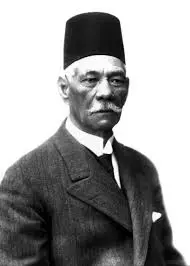
Saad Zaghloul was born around 1859 in Ibyana — a small village in the Gharbia governorate of the Nile Delta, in the agricultural heartland of Lower Egypt where the cotton economy that the khedival modernisation had built was transforming the landscape and the social structure of rural Egyptian life. His father was the village umda — the headman, the local notable who served as the interface between the village community and the state's administrative apparatus. This position was not grand: the umda was a man of local standing and local authority, not a great landowner or a member of the Turkish-speaking governing class. But it gave the family a specific social position — above the landless fellaheen majority, below the urban elite — that was the specific social location from which Egyptian nationalist leadership would repeatedly emerge.
The umda's son who went to Cairo and then to Paris and then returned to become the father of his nation was not a rags-to-riches story in the conventional sense — the family's local standing gave him the starting position for the educational trajectory that followed. But it was genuinely a story of social mobility through education, of a provincial notable family's son rising through the khedival educational system to reach the heights of Egyptian political life. And the specific origins — the village, the Delta, the umda's family — were not incidental to his political character. They gave him a connection to the Egyptian peasant world that the Turkish-speaking elite had never had, and they gave him the political language of the people rather than the political language of the court.
Education, Law, and the Muhammad Abduh Connection
Zaghloul's education followed the path that the khedival system provided for able sons of the provincial educated class: the Quranic school in the village, then the religious educational institutions of Cairo including Al-Azhar, then the legal training that the khedival court system required. He was involved in the circle around Jamal al-Din al-Afghani — the Islamic modernist pan-Islamist who was one of the most influential intellectual figures in the late nineteenth century Muslim world — and through this connection came to know Muhammad Abduh, whose Islamic modernism would be the most significant intellectual influence on Zaghloul's political formation.
Abduh's influence was multiple and lasting. His reinterpretation of Islamic tradition in ways that were compatible with the demands of modernity — that argued for rational inquiry, educational reform, and the adaptation of Islamic legal and ethical frameworks to the conditions of the contemporary world — gave Zaghloul a framework for Egyptian nationalism that was rooted in Egyptian cultural and religious tradition without being reactionary. It allowed him to appeal to Egyptian Muslims as a nationalist leader who understood and respected their religious identity, while simultaneously maintaining the secular nationalist commitment to cross-confessional Egyptian unity that the Wafd embodied. The specific combination — Islamic cultural rootedness and secular political nationalism — was the formula that gave Egyptian nationalism its specific character and that gave Zaghloul his specific appeal to the Egyptian masses.
The Years of Accommodation: Judge, Minister, Reformer
Zaghloul's early political career was not that of a nationalist agitator — it was that of a reformist administrator working within the system of the British occupation. He served as a judge, as a minister of education (1906–10), and as a minister of justice (1910–13), in roles that reflected both his professional competence and his willingness to work within the constitutional framework that the occupation had created. His educational reforms as minister of education — an attempt to expand Egyptian access to the educational system and to reduce the domination of foreign teachers in Egyptian schools — were genuinely nationalist in their orientation, but they were pursued through the administrative machinery of the occupation rather than against it.
This early accommodation — the years of working within the system — has been used by some historians to question the consistency of Zaghloul's nationalism, suggesting that his transformation into the leader of the independence movement was primarily opportunistic. The more compelling interpretation is that the accommodation was strategic: Zaghloul was building the position, the knowledge, and the networks that he would need when the moment for more confrontational politics arrived, and the specific knowledge of how the colonial administration worked that his ministerial career gave him proved invaluable in the subsequent political struggles. The transformation that 1918 produced was real — the emergence of Wilsonian self-determination as an international principle created the specific political opportunity that Zaghloul was able to exploit — but it was not the transformation of a careerist into an opportunistic nationalist. It was the activation, by specific historical circumstances, of political commitments that had been forming throughout his career.
1918: The Formation of the Wafd and the Political Crisis
The specific political calculation that Zaghloul made in November 1918 — the decision to form a delegation to request permission to travel to Paris to argue Egypt's case for independence before the Peace Conference — was a calculation about the specific political opportunity that the First World War's end had created. Woodrow Wilson's Fourteen Points had proclaimed national self-determination as the principle on which the postwar international order would be built. Britain and France had just won a war partly on the basis of that principle. The specific moment of 1918–19 was the moment when the gap between the principle and the British practice in Egypt was most visible and most embarrassing, and Zaghloul understood that using that gap — making the British position in Egypt accountable to the principle they had just been fighting for — was the most effective political strategy available.
The Wafd that he formed for this purpose was explicitly cross-confessional — including Coptic Christians alongside Muslim Egyptians in the delegation, embodying in its composition the secular nationalist claim that Egypt was a single nation whose independence was the common cause of all its people. The British refusal to permit the delegation to travel was the miscalculation that converted Zaghloul's political strategy from a diplomatic initiative into a political crisis. The British had assumed that Egyptian nationalism was the politics of a small educated elite that could be managed by refusing to engage with it; they had not reckoned with the possibility that refusing to engage would trigger a popular response that would overwhelm their capacity to contain it.
The Exile That Made the Revolution
Zaghloul's arrest and exile to Malta on 8 March 1919 was the act that started the revolution. The British had calculated that removing the Wafd's leader from Egypt would end the political agitation; they had not calculated that the Egyptian public's attachment to Zaghloul was deep enough that the news of his arrest would produce an immediate and nationwide uprising. The specific character of the 1919 revolution — its extraordinary cross-class and cross-confessional breadth, its geographic spread across the entire country, its combination of peaceful demonstrations with attacks on British installations — reflected the depth and the breadth of Egyptian national feeling that the Wafd's formation had mobilised and that Zaghloul's exile had ignited.
Students from Egyptian and foreign universities joined the demonstrations. Workers in Cairo and Alexandria went on strike. Peasants in the Delta and Upper Egypt attacked British railway and telegraph installations. Egyptian women — including the elite women that Hoda Shaarawi organised into demonstration groups in carriages — participated in public political protest for the first time. The cross-confessional character of the uprising was embodied in the specific symbolism of its flags and slogans — the crescent and the cross together, the insistence that the uprising was the common cause of Muslim and Christian Egyptians alike. The 1919 revolution was the moment at which Egyptian nationalism ceased to be the politics of an educated minority and became the politics of a people.
The Negotiations and the Path to 1923
The years between the 1919 revolution and the 1923 constitution were years of sustained political pressure — of Zaghloul and the Wafd maintaining the demand for complete independence while Britain attempted to manage the situation through a combination of concessions and repressions that would satisfy enough of the Egyptian political class to isolate the more radical demands. Zaghloul was exiled twice more — to the Seychelles in 1921 for resuming political agitation that the British had hoped the first exile would end — and returned each time to the same position, maintaining the independence demand rather than accepting the various partial settlements that the British offered.
The British declaration of Egyptian independence in February 1922 — unilateral, conditional, and subject to four specific reservations that maintained British control over defence, communications, foreign nationals, and Sudan — was the specific accommodation that this period of pressure produced. It was not what Zaghloul had demanded — the four reserved points maintained British power in essential areas — but it was a formal acknowledgement of Egyptian independence that created the constitutional framework within which the Wafd could contest elections and Zaghloul could eventually become prime minister. The 1923 constitution established the parliamentary system within which the Wafd's electoral dominance would make Zaghloul prime minister in January 1924.
Prime Minister: The Achievement and Its Limits
Zaghloul's prime ministership — from January to November 1924, after the Wafd's overwhelming victory in the first elections under the new constitution — was the political culmination of the independence struggle and simultaneously its demonstration of the limits of what constitutional politics could achieve in a country still subject to British reserved powers. He was prime minister of an Egypt that was formally independent but where British forces remained in the Canal Zone, where British advisers retained significant influence in Egyptian administrative life, where the Sudan — which Egypt considered part of its territory — remained under effective British control.
The crisis that ended his government in November 1924 was produced by the assassination of Sir Lee Stack, the British commander of the Egyptian army, by an Egyptian nationalist. The British response — an ultimatum demanding the withdrawal of Egyptian troops from the Sudan and an indemnity — was delivered in terms that Zaghloul refused to accept in full. He resigned rather than capitulate entirely, and the government that succeeded his was more accommodating to British demands. His refusal to accept the full terms of the British ultimatum — accepting the parts he judged unavoidable while resigning in protest at the totality of British demands — was the final expression of the specific quality of his nationalism: the willingness to resist as far as resistance was possible without making a futile gesture that would destroy what had been achieved.
The Za'im and the People: What Made Zaghloul Irreplaceable
The specific quality that distinguished Zaghloul from every other Egyptian political leader of his era — the quality that made him Za'im, the leader, in a way that no one before or after him achieved quite the same degree — was the genuineness of his connection to the ordinary Egyptian people and their genuineness of connection to him. This was not a manufactured political persona. It was the expression of a man whose origins in the village world of the Delta gave him an instinctive understanding of how the Egyptian majority lived and what they cared about, whose political intelligence allowed him to translate that understanding into political action, and whose specific personal qualities — his directness, his humour, his obvious emotional investment in the Egyptian cause, his willingness to accept personal sacrifice for the independence he was fighting for — made him feel to ordinary Egyptians like someone who was genuinely fighting for them rather than for an abstract principle or for personal advancement.
The specific depth of Egyptian popular affection for Zaghloul — the intensity of the grief at his death, the persistence of his memory across the decades since — reflects something real about the relationship between this man and his people. Egyptian political history has produced many capable leaders, many courageous activists, many figures of genuine nationalist commitment. It has produced very few figures who combined all of these qualities with the specific personal warmth and the specific popular connection that made Zaghloul the father of his nation in something more than a formal sense.
Death and the Permanence of the Legacy
Zaghloul died on 23 August 1927, having spent his final years in the role of elder statesman — as president of the Chamber of Deputies, the formal head of the parliamentary institution he had built, presiding over a constitutional order that was always compromised but that was also always better than what had preceded it. He was around sixty-eight years old, his health worn by decades of political struggle, three exiles, and the specific stresses of leading a mass nationalist movement under colonial occupation from the moment of his political transformation in 1918 until his death nine years later.
The grief at his death was one of the most intense collective expressions in Egyptian history — hundreds of thousands of people in the streets, the mourning of a loss that felt personal to an entire people. He was buried in the mausoleum in the Cairo neighbourhood that bears his name, and the political tradition he founded — the Wafd, the cross-confessional secular nationalism, the insistence on Egyptian independence as the right of all Egyptians — continued under the leadership of Mustafa al-Nahhas for another twenty-five years, until the 1952 revolution swept away the constitutional order within which it had operated.
His specific legacy is the 1919 revolution — the moment he created, and that would not have been created without him, when Egyptian nationalism became a mass political force rather than an elite aspiration. That revolution established the political culture within which every subsequent Egyptian independence movement operated, and its specific character — cross-class, cross-confessional, nationwide — remained the ideal against which Egyptian political life measured itself and found itself wanting. Zaghloul did not achieve full Egyptian independence — that had to wait for 1952 and then for 1956 — but he made it inevitable, and making inevitable what was thought to be impossible is the specific achievement that defines his historical significance.