At a Glance
Alexandria and Cairo: The Formation of a Revolutionary
Gamal Abdel Nasser was born in Alexandria on 15 January 1918, the city of the Mediterranean coast where Europe met Africa and where the cosmopolitan character of Egyptian commercial and cultural life was most visible and most contested. His father, Abd al-Nasser Hussein, was a postal clerk from the Upper Egyptian town of Beni Mur — a man of modest means and provincial origins who had come to Alexandria through the postal service's network of transfers across the country. His mother, Fahima Muhammad Hammada, was from a merchant family in Alexandria. The family moved several times during Nasser's childhood, living in various Egyptian cities as his father's postings changed, and this itinerant early childhood gave him exposure to the diversity of Egyptian society — the Delta and Upper Egypt, the cities and the provinces — that gave his political vision its specifically Egyptian breadth.
He grew up in the Egypt of the interwar period — the Egypt of the 1919 revolution's aftermath, of the Wafd's negotiations and betrayals, of the British occupation's humiliations and the constitutional politics' inadequate responses to them. He was a politically conscious adolescent in the 1930s, when the Arab world's relationship to European imperialism was being shaped by the Italian invasion of Ethiopia, the Spanish Civil War, the Palestinian uprising against British rule and Jewish immigration, and the beginning of the European crisis that would produce the Second World War. He wrote letters and kept diaries that record a young man consuming the political events of his era with intense engagement and developing the specific conviction that the Arab world's problems required radical rather than incremental solutions.
The Military Academy and the Forging of the Officers' Network
Nasser's entry into the military academy in 1936 was made possible by the specific political concession that the year's Anglo-Egyptian Treaty had produced: the expansion of the military academy's intake to include students who previously would have been excluded by financial and social barriers. He was among the first cohort of students from genuinely modest origins to enter the academy, and the experience of military training and military community building gave him the organisational framework and the personal networks that the Free Officers' organisation would eventually use.
The military academy of the late 1930s was, for the young Egyptian officers who passed through it, a specific political environment. They were being trained by British officers in the techniques of a British-style military, for an army whose ultimate strategic direction was controlled by the British occupation, in an institution whose entire framework was shaped by the colonial relationship that their nationalist politics told them had to end. The gap between the professional identity being formed — the officer's loyalty to his institution, his commitment to military excellence, his sense of the soldier's role — and the political reality of what that institution actually served was experienced as a specific form of political education, and it produced the specific combination of professional military competence and radical nationalist politics that the Free Officers would bring to the 1952 revolution.
Palestine and the Education of Failure
The 1948 Arab-Israeli war was the defining experience of Nasser's political formation — the moment at which his theoretical nationalism was confronted with the practical consequences of what he had been theorising about. He served in the Negev, was besieged at Faluja with a force of approximately four thousand Egyptian soldiers for several months, and was eventually evacuated under the terms of the armistice — a warrior who had fought competently in impossible circumstances but who came home defeated and who processed that defeat with an analytical intelligence that made it politically generative rather than simply painful.
The analysis he developed — that Arab defeat was not primarily a military problem but a political problem — was the foundation of his revolutionary politics. The Egyptian army had fought with defective weapons, purchased through corrupt procurement processes in which Egyptian officials had taken bribes from arms suppliers. The Arab armies had been poorly coordinated, their operations shaped more by the competitive politics of the Arab states than by any coherent military strategy. The Arab leaders who had sent their armies to fight had been more concerned with preventing one another from gaining disproportionate influence in any post-war settlement than with actually winning the war. And the broader Arab political order — the kingdoms, the oligarchies, the colonial survivals — had demonstrated in Palestine that it was incapable of defending Arab interests because it had no genuine commitment to those interests: it was committed instead to its own survival, which European power required it to maintain through accommodation rather than resistance.
This analysis led Nasser to the Free Officers' programme: not the reform of the existing order but its replacement. The Free Officers were not a military improvement association; they were a revolutionary organisation committed to the overthrow of the Egyptian political system. The bloodlessness of their eventual coup was a tactical choice, not an ideological limitation — they were willing to use force if necessary, and the efficiency with which the coup was executed demonstrated military planning of a high order. The choice not to shed blood was the choice of men who understood that a bloody revolution would create political enemies that a bloodless one would not, and who calculated that King Farouk's departure was achievable without violence.
The Revolution and Its Meaning: What 1952 Actually Changed
The Free Officers' revolution of 23 July 1952 ended the Egyptian monarchy, expelled King Farouk, and began the process of transforming Egypt from a British-occupied constitutional kingdom into a republic with genuine sovereignty over its own territory and its own political life. The specific changes that the revolution produced in the first years were substantial. The land reform of September 1952 — which limited individual land ownership to two hundred feddans (later reduced to one hundred) and redistributed the excess to landless peasants — broke the power of the large landowning class that had dominated Egyptian politics since the Ottoman period and transferred a meaningful portion of agricultural wealth to the peasant majority. The negotiation of the British withdrawal from the Canal Zone, completed in June 1956, ended the seventy-four-year British military occupation that had been the central political fact of Egyptian life since Orabi's defeat.
The political dimension of the revolution was more contested. The Free Officers' Egypt was not a democracy — it was a military-civilian hybrid that concentrated power in Nasser's hands and that suppressed political opposition with methods that included imprisonment and torture. The Muslim Brotherhood, which had been one of the Free Officers' early supporters, was banned and its leadership imprisoned after an assassination attempt on Nasser in 1954. The communists were imprisoned in waves. The liberal political parties — including the Wafd — were dissolved. The press was controlled. The specific political freedoms that the constitutional period had nominally provided — freedom of association, parliamentary representation, a free press — were significantly curtailed under the revolutionary government, and this curtailment was the shadow on the genuine achievements that the revolution produced.
Suez: The Speech, the Crisis, and the Victory
The nationalisation of the Suez Canal on 26 July 1956 was Nasser's masterpiece of political theatre and political substance combined. He delivered the announcement in a four-hour speech in Manshiyya Square in Alexandria, weaving the history of Egyptian suffering under European imperialism — the canal built on Egyptian labour and Egyptian land for European profit — into the announcement of the act that would reverse it. The specific theatrical device of embedding the code word "de Lesseps" in the speech — triggering the physical takeover of canal installations across the canal zone at the moment he spoke the name of the man who had built it — gave the announcement a dramatic quality that the radio audience and the assembled crowd experienced as a theatrical event and that the world's press covered as the most significant challenge to European imperial power since Indian independence.
The British-French-Israeli response — the Operation Musketeer attack of October-November 1956, which included Israeli invasion of Sinai, Anglo-French bombing of Egyptian airfields, and a paratrooper assault on the canal zone — was in military terms a success. Egypt's air force was largely destroyed, the canal zone was occupied, and Egyptian forces suffered significant losses. But the military success was rendered politically meaningless by the American response: President Eisenhower, furious at being excluded from the planning of an operation that threatened to wreck American Cold War strategy in the Middle East and the developing world, demanded British and French withdrawal and used financial pressure — specifically threatening to withhold the International Monetary Fund support that Britain's sterling crisis required — to make the demand effective. The Soviet Union threatened missile attacks. Britain and France withdrew.
Nasser had lost the military battle and won the political war. The Suez crisis established him as the symbol of Arab resistance to European imperialism in a way that a genuine military victory could not have achieved more completely. Across the Arab world, across Africa, across the non-aligned developing world, the Suez crisis was understood as the moment when an Arab leader had defied European imperialism and survived — the moment that proved that the era of European dominance in the Middle East and Africa was ending. The emotional impact was enormous and lasting, and it gave Nasser a political authority in the Arab world that he retained even through the subsequent failures of his presidency.
Pan-Arabism: The Dream and Its Limits
Nasser's pan-Arab vision — the aspiration for the political unity of the Arab nation under a single state, overcoming the colonial-era borders that had divided it — was the most ambitious political programme of the postwar Arab world, and its most significant institutional expression was the United Arab Republic, the union of Egypt and Syria declared in February 1958. The UAR was the product of Syrian enthusiasm — the Syrian Baath Party had been urging union with Egypt for years — as much as of Egyptian initiative, and its specific character reflected the tensions between Egyptian and Syrian political cultures from the beginning. Egyptian officials were sent to administer Syrian affairs; Syrian political parties were dissolved; the specific Syrian political traditions of competitive multiparty politics were subordinated to the Egyptian single-party framework.
Syria's withdrawal from the union in September 1961 — a military coup in Damascus that ended the UAR — was a political humiliation that revealed the limits of pan-Arabism as a practical political programme. The Arab states' different histories, different political cultures, different economic interests, and different ruling class structures could not be overcome by the force of a shared ideology, however genuine the emotional commitment to Arab unity that the ideology expressed. The UAR's failure did not end Nasser's pan-Arab ambitions — he continued to pursue Arab unity through different means — but it significantly curtailed his ability to project Egyptian power as the vehicle of a unified Arab political project.
Africa and the Non-Aligned World
Nasser's connections to the broader liberation politics of the postcolonial world extended well beyond the Arab world. His participation in the Bandung Conference of 1955 — alongside Nehru, Sukarno, Zhou Enlai, and the other leaders who founded the Non-Aligned Movement — placed him in the context of the global challenge to Cold War bipolarity that was one of the most significant political developments of the 1950s. His commitment to African liberation was genuine and practically expressed: Egypt under Nasser provided training, financial support, and diplomatic backing for liberation movements across the continent, from the Algerian FLN to African nationalist movements south of the Sahara. The Voice of the Arabs radio station — broadcasting revolutionary nationalism across the continent — was one of the most effective instruments of anti-colonial political mobilisation in Africa in the 1950s and 1960s.
His relationship with African leaders — with Nkrumah of Ghana, with Ben Bella of Algeria, with Sékou Touré of Guinea — was part of the specific political community of the anti-colonial moment, and it gave his presidency a continental significance that purely Arab nationalist politics could not have had. Egypt under Nasser was not simply an Arab state; it was one of the leading powers of the non-aligned developing world, with connections and commitments that extended from Morocco to Indonesia, from Cuba to Vietnam.
1967 and the Shattering of the Dream
The Six-Day War of June 1967 was the catastrophe that broke the pan-Arab political project and shattered the specific confidence that the Suez victory had created. In six days, the Israeli air force destroyed the Egyptian, Syrian, and Jordanian air forces on the ground, and the Israeli army occupied Sinai, the West Bank, Gaza, the Old City of Jerusalem, and the Golan Heights. Egypt lost Sinai, Jordan lost the West Bank and Jerusalem, Syria lost the Golan. The combination of the military defeat and the political humiliation — the exposure of the gap between Nasserist rhetoric and military reality — was devastating.
Nasser's immediate offer of resignation was genuine — he had led the Arab world to catastrophic defeat, and he understood that the moral logic of leadership required accountability for failure. The popular rejection of his resignation — the millions in the streets of Cairo and across the Arab world who refused to accept it — was the most complex and most moving moment of his political life: a demonstration that he remained personally loved even as the political project he had embodied had demonstrably failed, that the emotional bond between leader and people survived the failure of the programme that had generated it. He stayed, continuing as president through the three years of the War of Attrition that followed, working to reconstruct the Egyptian military, attempting to find a political path toward the recovery of Sinai, and dying of exhaustion and heart failure in September 1970 before he had resolved any of the problems that 1967 had created.
Death and the Grief of Millions
Nasser died on 28 September 1970, at the age of fifty-two, of a heart attack at his home in Manshiyya after spending a long day mediating between the Jordanian government and the PLO at a summit in Cairo. He had been in poor health for years — he was a diabetic who had suffered several cardiac episodes — and the physical toll of the stress of the post-1967 period had been enormous. He died suddenly, in the early evening, and the news spread across Egypt and the Arab world within hours.
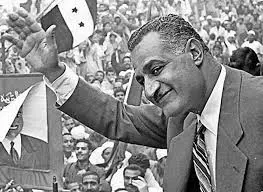
The grief that followed was of an intensity that no subsequent Arab political event has matched. Millions of Egyptians poured into the streets of Cairo for his funeral — estimates ranged from four to six million people, in a city that was then home to approximately five million. The grief was not simply performative: it was the expression of a genuine emotional relationship between a leader and a people that had been built over eighteen years of political transformation, national assertion, and shared aspiration. Nasser had given Egyptians a sense of dignity — a sense that Egypt was a significant force in the world, that Egyptian interests mattered, that an Egyptian could stand before the great powers and not be subordinate — that no previous ruler had provided and that no subsequent ruler has replicated. The grief was for the dignity as much as for the man.
Legacy: The Giant Shadow
Nasser's legacy is one of the most contested in modern Arab history — contested between those who emphasise the genuine achievements and those who emphasise the genuine failures, and between those who understand the political context that shaped both and those who evaluate the record against abstract standards of liberal democracy or economic development that the specific conditions of Cold War Egypt make anachronistic. The achievements were real: the end of the British occupation, the land reform, the nationalisation of the canal, the expansion of public education and healthcare, the building of the Aswan High Dam, the genuine authority that Egypt achieved in the non-aligned world. The failures were equally real: the authoritarianism, the suppression of political opposition, the imprisonment of communists and Islamists and anyone who challenged the Nasserist political framework, the economic inefficiencies of the public sector that his Arab socialism created, and above all the catastrophic military defeat of 1967 that ended the pan-Arab project and left Egypt, Jordan, and Syria permanently diminished.
What resists simple evaluation is the relationship between the achievements and the failures — the degree to which the political system that produced the achievements also produced the failures, and the degree to which a different political system would have produced different results in both directions. These are questions that historians of Egypt and the Arab world continue to debate, and they are questions that the specific conditions of twenty-first-century Egypt — with the Arab Spring's aspirations and disappointments, with the persistence of authoritarian governance in the name of stability and national interest — have made more rather than less urgent. Nasser's Egypt remains the reference point, for better and worse, against which contemporary Egyptian politics is measured and found wanting — a giant shadow over a country that has never quite managed to emerge from it.