At a Glance
Samannud and the Making of a Wafdist
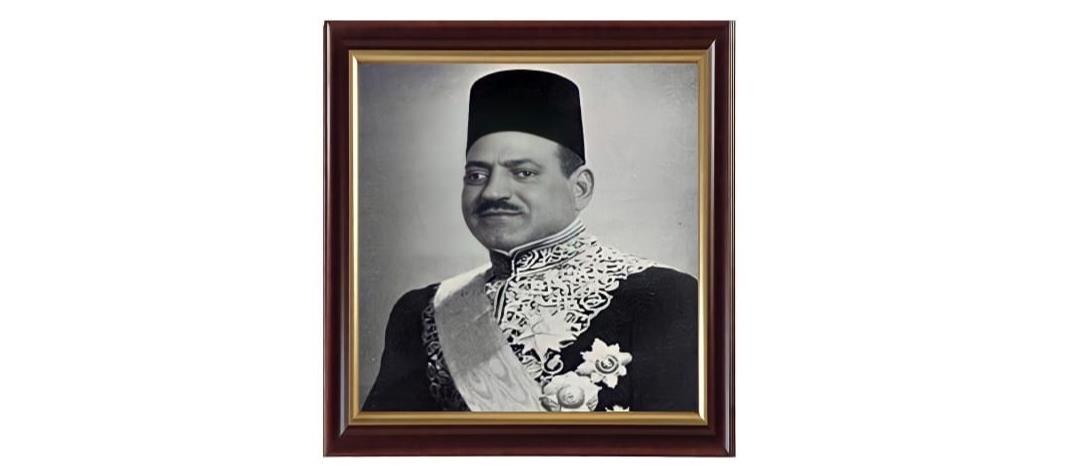
Mustafa al-Nahhas was born in June 1879 in Samannud — a small town in the Gharbia governorate of the Nile Delta, in the densely populated agricultural heartland of Lower Egypt where the fellaheen worked the richest cotton land in the world for the benefit of landowners, cotton merchants, and eventually the British creditors who had assumed effective control of Egyptian fiscal policy after the 1876 default. His father was a schoolteacher — a profession that placed the family in the educated stratum of provincial society without the landed wealth that characterised the larger notable families whose sons would form much of the Wafd's leadership.
This provincial middle-class formation was both a political asset and a political constraint. It was an asset because it gave Nahhas a genuine connection to the majority Egyptian experience — to the world of the provincial schoolteachers and government clerks and small professionals who were the Wafd's most important constituency and whose political loyalty the party needed to maintain across the crises and the compromises of three decades of parliamentary politics. It was a constraint because it meant that his political authority depended entirely on the Wafd — on the party whose leadership he had inherited and whose mass support sustained his political position — in ways that made him more vulnerable to the internal politics of the party and less capable of the independent political action that a leader with independent wealth or an independent institutional base might have been able to exercise.
The Weight of Zaghloul's Shadow
Nahhas's most persistent political problem was the weight of Zaghloul's legacy — the obligation to lead a movement that had been created by a founding figure whose specific qualities Nahhas did not possess and could not replicate. Sa'd Zaghloul had been the 1919 revolution's voice and its face — the man whose exile had triggered the uprising, whose return had been celebrated as a national triumph, and whose specific combination of personal charisma, political courage, and nationalist conviction had given the Wafd a moral authority that went beyond any specific policy position. Leading the Wafd after Zaghloul's death meant being measured permanently against a standard that was both genuinely high and genuinely unreachable for anyone who had not shared Zaghloul's specific personal qualities.
Nahhas managed this challenge by emphasising continuity — by presenting himself consistently as Zaghloul's faithful disciple and the guardian of Zaghloul's legacy — rather than by attempting to establish an independent political identity. This was tactically sensible: the Wafd's mass following was loyal to Zaghloul's programme and to the party that embodied it, and maintaining the connection to Zaghloul was the most effective way of maintaining the loyalty of that following. But it was also strategically limiting: it prevented Nahhas from developing the independent authority that the Wafd's leader needed to manage the organisation's internal conflicts and to take the political risks that leadership of a nationalist movement in a rapidly changing context required.
Five Times Prime Minister: The Arithmetic of Incomplete Sovereignty
Nahhas was prime minister five times — in 1928, 1930, 1936–37, 1942–44, and 1950–52 — and each of these tenures was the product of a specific configuration of the three-way relationship between the palace, the British, and the Egyptian political parties that defined the constitutional period's political arithmetic. He came to and went from office not primarily through the expression of popular will in competitive elections — though the Wafd's electoral dominance when elections were allowed was genuine — but through the specific calculations of British strategic interest and royal political maneuvering that made Egyptian governments creatures of the occupation as much as of the constitution.
The 1928 premiership lasted seven months before King Fuad dismissed the Wafd government and dissolved parliament. The 1930 premiership lasted three months before another dismissal. The 1936–37 premiership — the most substantively significant, during which the Anglo-Egyptian Treaty was negotiated — lasted fourteen months. The 1942–44 premiership was the one preceded by the tanks at Abdin Palace. The 1950–52 premiership was the last, ending with the abrogation of the 1936 treaty and the descent into the violence of 1952. Each tenure was shaped by the specific political conditions of its moment, and each demonstrated the specific limits of Egyptian sovereignty in the constitutional period: a prime minister who served at the intersection of British military power and royal prerogative rather than purely at the will of the electorate.
The 1936 Treaty: Achievement and Compromise
The Anglo-Egyptian Treaty of 1936 was the product of four months of negotiations between Egyptian and British delegations, conducted under the specific pressure of the Italian invasion of Ethiopia and the general darkening of the European strategic situation that was making British military planners anxious about the security of the Suez Canal. Nahhas led the Egyptian delegation with skill — extracting concessions from the British that the specific strategic moment made available in ways that a different moment might not have — and the treaty that resulted was genuinely better for Egypt than the arrangements it replaced.
The treaty recognised Egyptian sovereignty, ended the formal British occupation of Egypt proper (while maintaining British forces in the Canal Zone), provided for Egyptian membership of the League of Nations, and established a framework for Egyptian-British military cooperation that gave Egypt some agency in the security arrangements that the British military presence had previously managed unilaterally. For the Egyptian majority that had been demanding British withdrawal since 1882, these were real gains, and Nahhas's ability to achieve them gave him the moment of greatest nationalist legitimacy of his long career.
The critique of the treaty — articulated immediately by the National Party tradition and sustained by the broader Egyptian left — was that it had conceded too much. The British military presence in the Canal Zone, maintained under the treaty for twenty years, was the continuation of the occupation under a different legal framework. The specific provisions about Sudan — which the treaty did not resolve and which left the Sudan question as a source of continued British leverage — were a significant concession. And the treaty's implicit acceptance that Egyptian sovereignty was a matter for Anglo-Egyptian negotiation rather than Egyptian unilateral assertion was itself a concession to the premise that Egypt's independence required British permission.
The Tanks at Abdin: The Occupation's True Face
The events of 4 February 1942 have become the most discussed single episode of the British occupation's constitutional period — partly because of their dramatic character, partly because of what they revealed about the nature of Egyptian sovereignty under the occupation, and partly because of their consequences for the subsequent decade of Egyptian politics.
Ambassador Lampson's decision to surround the Abdin Palace with British tanks and deliver an ultimatum to King Farouk was the product of specific wartime strategic calculation: Rommel's Afrika Korps was advancing toward Egypt from the west, the British military position was precarious, and Lampson calculated that the political uncertainty created by Farouk's palace governments — which were not reliably pro-British — was an unacceptable risk in the current military situation. Nahhas and the Wafd, despite their nationalist rhetoric, were regarded by the British as reliably anti-Axis, and getting Nahhas installed as prime minister was worth the political cost of demonstrating so openly that Egyptian political sovereignty was subject to British override.
The cost was enormous. The spectacle of British tanks surrounding the royal palace to install a specific Egyptian politician as prime minister was the most visible possible demonstration that Egyptian constitutional independence was a fiction — that the British would override it whenever their interests required, without the legal pretexts and the indirect pressures that they normally preferred. That the politician installed was the leader of the nationalist Wafd — the movement that claimed to represent Egyptian sovereignty — made the episode's irony complete and its political consequences lasting. Egyptian officers who witnessed or learned of the Abdin incident — including a young colonel named Gamal Abdel Nasser — drew the conclusion that Egypt's independence could not be achieved through the mechanisms of constitutional politics that had proven so easily overridden, and that a more fundamental change was necessary.
Corruption, the Black Book, and the Wafd's Moral Decline
The publication of Makram Ebeid's Black Book in 1943 — documenting the specific acts of corruption, nepotism, and financial irregularity that had characterised the Wafd government that the Abdin crisis had installed — was the most damaging single event in Nahhas's political career after the Abdin crisis itself. The Black Book's allegations were specific and documented: the influence of Nahhas's wife Zeinab al-Wakil in the patronage decisions of the Wafd government; the financial arrangements through which Wafd ministers and their associates had enriched themselves at the public expense; the specific contracts and appointments through which the nationalist party had compromised the nationalist principles it proclaimed.
The allegations were not entirely new — the Wafd's internal critics and the party's political enemies had been making similar claims for years — but the Black Book's specific documentation, and the specific authority of its author as a former Wafd secretary-general who had been at the centre of the government he was exposing, gave them a credibility and a public impact that previous criticism had not achieved. The Black Book accelerated the erosion of the Wafd's moral authority that the Abdin crisis had begun, contributing to the broader disillusionment with the constitutional political order that the 1952 revolution would eventually harvest.
The Treaty Abrogation and the Road to Revolution
Nahhas's final premiership — his most radical — contained the act that most directly contributed to the 1952 revolution's political conditions. The unilateral abrogation of the 1936 Anglo-Egyptian Treaty in October 1951 was a genuine assertion of Egyptian sovereignty — the Egyptian parliament's declaration that the treaty's terms were unjust and that Egypt refused to be bound by them — and it was an act of nationalist courage that the Nahhas of earlier years might not have risked. But the abrogation without a replacement agreement, and the armed resistance in the Canal Zone that the abrogation triggered, created a political crisis that the Wafd government proved unable to manage.
The Ismailia massacre of 25 January 1952 — in which British forces attacked Egyptian auxiliary police barracks, killing approximately fifty Egyptian officers — triggered the Cairo Fire of 26 January 1952, in which crowds burned the foreign-owned commercial and entertainment establishments of central Cairo in an outbreak of anti-colonial rage that destroyed significant parts of the city centre. The Nahhas government's response — its failure to prevent the fire, its inability to restore order — was the immediate occasion of his dismissal by King Farouk. Six months later, the Free Officers staged their coup and the constitutional era ended.
Legacy: The Leader Who Was Simultaneously Egypt's Best and Not Enough
Mustafa al-Nahhas Pasha's legacy is the legacy of the leader who was, for most of his career, simultaneously the best available option and fundamentally inadequate to the challenge his country faced. He was the most capable parliamentary politician of his generation, the leader who maintained the Wafd's mass following through three decades of crises and compromises, the negotiator who extracted the best achievable terms from a British government that had a strong hand and used it. He was also the leader who accepted power from British tanks, whose government's corruption was documented in one of Egyptian politics' most damaging public exposés, and whose three decades of nationalist politics ended with the constitutional order he had served being swept away by military officers who had concluded that the system within which he had operated was itself the problem.
His is the specific tragedy of the constitutionalist nationalist in a colonial situation that constitutionalism cannot resolve — the tragedy of a man who believed in the parliamentary framework and played within it with skill and integrity, within the specific limits that the occupation set on both, and who found that the framework was insufficient because it was operated within an occupied country where the occupying power reserved the right to override it whenever necessary. The tanks at Abdin were the clearest possible expression of that insufficiency, and the fact that Nahhas accepted the premiership that the tanks had made available — rather than refusing it on the grounds that power delivered by foreign force was not power worth having — was the choice that permanently defined the limits of his nationalism and permanently damaged the claim of the constitutional framework he served to represent genuine Egyptian sovereignty.